
Running a healthcare or aesthetic clinic means juggling a great deal of responsibility. You want to provide the highest standard of care, while managing phone calls, booking appointments, responding to enquiries and keeping on top of everyday administration. It can quickly become overwhelming.
This is where a virtual receptionist for healthcare and aesthetic clinics can make a real difference. Think of a virtual receptionist as an extra pair of reliable hands for your front desk. They help manage calls, enquiries and bookings, so you and your team can focus on what matters most – your patients and clients.
In this article, we explain what virtual receptionists do, how they work in a UK context, and how they can help your clinic run more smoothly while supporting a better patient and client experience.
Key Takeaways
A virtual receptionist for healthcare and aesthetic clinics handles calls and administrative tasks, freeing up clinic staff to focus on patient and client care.
They improve patient and client experience by providing quick responses, professional communication and, in many cases, round-the-clock availability.
Automating tasks such as appointment booking, confirmations and reminders improves clinic efficiency and helps reduce missed appointments.
Using virtual support can lower operational costs, reduce staff stress and support more sustainable growth for your practice.
Technology such as virtual receptionists and AI-powered tools helps clinics scale their services while maintaining clear, consistent patient communication.
Enhancing Patient Experience With Virtual Receptionists
The Importance of a Seamless First Impression
When a patient or aesthetic client first contacts your clinic – whether it is for a routine check-up or a more sensitive aesthetic consultation – that initial interaction sets the tone for their entire experience. It is easy to underestimate the impact of that first phone call or online enquiry.
If a potential patient struggles to get through, faces long hold times, or has to navigate a complex automated system, they may simply look elsewhere. A positive first impression is vital for patient retention and for attracting new clients to your healthcare or aesthetic clinic.
Many people feel anxious or self-conscious when calling about their health or appearance. Being left on hold or passed around different departments does little to build confidence. A virtual receptionist service helps ensure that every enquiry is met with a friendly, professional and well-trained voice, making patients and clients feel heard, respected and valued from the very start.
A consistent, well-handled first contact is not just good manners; it is an important part of patient experience, clinic reputation and aesthetic clinic marketing.
Providing Compassionate Care Around the Clock
Healthcare and aesthetic needs do not always fit neatly into a 9-to-5 schedule. Patients might have questions in the evening, at weekends or during public holidays. Missing these calls can mean losing potential patients or, more importantly, delaying appropriate care or advice.
Virtual receptionists can offer extended or even 24/7 support, meaning your clinic is far more accessible. This constant availability is particularly helpful for:
Patients and clients with busy work schedules
Those who feel more comfortable enquiring about aesthetic treatments outside normal office hours
Individuals needing reassurance about aftercare, side effects or follow-up appointments
By making it easier to reach your clinic at a time that suits them, you show that you are committed to their well-being and respectful of their time. Even when your physical doors are closed, your clinic can still feel present and responsive.
Transforming Patient Communication
Effective communication is the bedrock of any successful healthcare or aesthetic practice. However, traditional communication methods often struggle to keep pace with modern expectations. This can lead to missed appointments, lost messages, double-bookings or frustrated patients.
A virtual receptionist can help streamline communication by:
Handling appointment bookings and rescheduling
Sending out appointment confirmations and reminders
Answering frequently asked questions about treatments, pricing, location and policies
Managing initial patient intake information, so clinicians have key details before consultations
This makes life easier for your administrative team and gives patients clear, consistent information at the right time. When communication is well-organised and responsive, patients feel more confident in your clinic and more inclined to return and recommend you to others.
In short, virtual receptionists play a key role in making communication easy, accessible and supportive for everyone involved.
Streamlining Clinic Operations Through Virtual Support
Running a busy healthcare or aesthetic clinic often feels like a constant juggling act. Between patient appointments, administrative duties and day-to-day operations, it is easy for things to become overwhelming.
Virtual support can remove a significant portion of this workload, freeing up your team and improving efficiency across the clinic.
Automating Administrative Tasks for Efficiency
Consider how much time your team spends on repetitive tasks such as data entry, filing and managing patient records. These activities are essential, but they take valuable time away from direct patient care and client interaction.
Virtual receptionists and supporting digital systems can take over many of these duties. For example:
Digital intake forms can be completed by patients before their appointment and automatically added to your patient management system.
Standardised email or SMS templates can be used for confirmations, reminders and follow-up messages.
Routine enquiries can be captured and triaged so only more complex questions reach clinical staff.
This results in a more organised flow of information and fewer opportunities for errors or missed details. By allowing technology and virtual support to handle the background work, your clinic can run more like a well-coordinated, professional operation.
Optimising Appointment Scheduling and Patient Flow
Scheduling appointments can be a major drain on time and energy. Patients call at all hours, and managing cancellations, rescheduling and waiting lists can quickly become complicated.
A virtual receptionist can help by:
Providing consistent cover for phone lines, even during lunch breaks and busy clinics
Allowing patients to book, amend or cancel appointments via phone or integrated online systems
Coordinating waiting lists and filling gaps created by cancellations
Automated reminders sent via text or email help to reduce no-shows and late arrivals, supporting a smoother patient flow. Over time, this leads to:
Fewer gaps in your clinicians’ schedules
More predictable days for your team
Better use of rooms, equipment and resources
Optimised scheduling translates into a more efficient clinic, where staff spend less time firefighting and more time delivering excellent care.
Reducing Operational Costs and Staff Burden
Hiring, training and retaining full-time reception staff can be expensive, especially for smaller or growing clinics. A virtual receptionist service offers a more flexible and often more cost-effective alternative.
With virtual support, you can:
Access professional reception support without the overheads of office space, equipment and full-time salaries
Scale coverage up or down based on call volume or seasonal demand
Reduce the risk of staff burnout by easing the daily administrative pressure on your in-house team
This combination of cost control and workload reduction can create a more positive working environment. Staff are less overwhelmed, more focused on meaningful tasks and better able to deliver high-quality, patient-centred care.
The Role of Virtual Receptionists in Healthcare

Improving Accessibility for Patients
Virtual receptionists play a significant role in making healthcare and aesthetic services more accessible. People do not always require support during standard office hours, and many patients work shifts or have family responsibilities that make daytime calls difficult.
Having a virtual receptionist means your clinic can be reachable for longer periods, and in some cases, round the clock. This can be particularly valuable when:
Patients need advice about post-treatment care
Someone wants to discuss treatment options but feels more comfortable doing so outside busy clinic hours
Urgent but non-emergency questions arise that do not require A&E or urgent care
Some services can also offer support in multiple languages, helping patients feel understood and included, regardless of background.
Ensuring Consistent and Professional Communication
One of the biggest advantages of virtual receptionists is the consistency they bring to patient communication. Virtual receptionist services are trained to handle every call with a professional, courteous and structured approach, following agreed scripts and protocols.
This means that every patient, whether they are calling about:
A routine check-up
A new aesthetic treatment
Test results
An aftercare concern
receives a polite, helpful and informative response. Consistent communication helps to build trust, reinforces your clinic’s standards and reassures patients that they are in safe, organised hands.
Freeing Up Clinical Staff for Patient Care
Administrative tasks can take up a large part of a clinician’s day. Scheduling appointments, managing records, answering basic queries and chasing paperwork all add to the workload.
Virtual receptionists take a significant portion of this workload off the plates of your doctors, nurses, practitioners and therapists. This allows them to:
Spend more time on consultations and treatments
Focus on clinical decision-making rather than logistical tasks
Build stronger patient and client relationships through unhurried interactions
By separating administrative work from clinical responsibilities, your team can spend more time doing what they do best: providing high-quality care and aesthetic treatments.
Here is a quick overview of how virtual receptionists support your clinic:
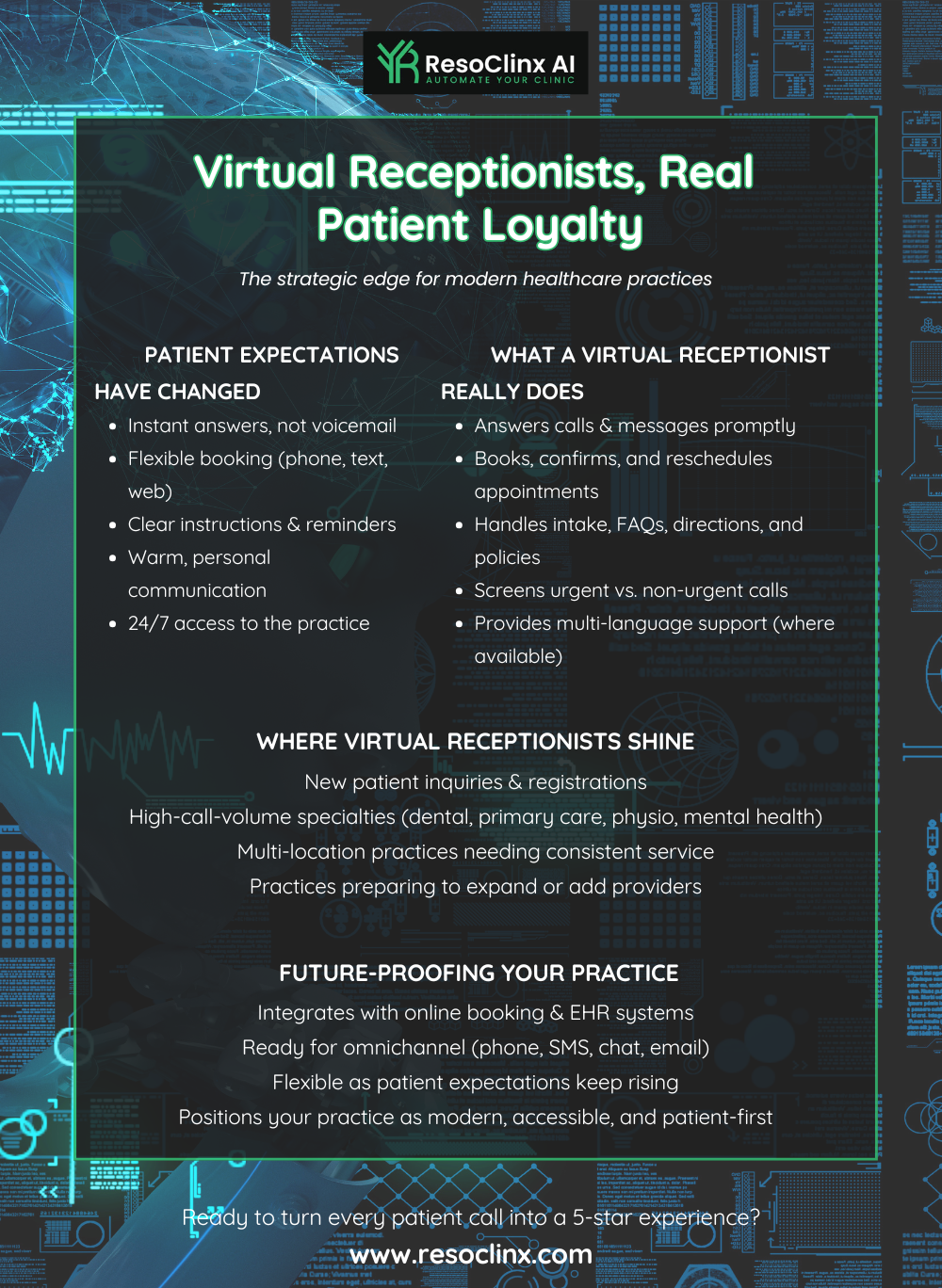
Availability: Extended or 24/7 support means fewer missed calls and better access for patients.
Efficiency: Automates scheduling and reduces administrative burden, supporting smoother workflows for healthcare and aesthetic clinic teams.
Professionalism: Ensures consistent, well-structured and high-quality communication.
All of these contribute to an environment where patients feel supported and staff can work more effectively.
Leveraging Technology for Enhanced Patient Engagement
In today’s world, patients expect quick and convenient ways to interact with your clinic, similar to how they engage with other services every day. Technology is key to meeting these expectations and ensuring patients feel supported and informed, even when they are not physically in the clinic.
When used well, digital tools help:
Patients book and manage appointments with ease
Clinics maintain clear, timely communication
Teams reduce time spent on repetitive tasks, focusing more on patient-facing work
This also complements local SEO for clinics and broader aesthetic clinic marketing, as patients who find you online are more likely to contact and stay with a clinic that responds quickly and professionally.
The Evolution of Client Scheduling Systems
Gone are the days when booking an appointment meant a long game of phone tag. Modern scheduling systems allow patients to:
See real-time availability
Book, change or cancel appointments online
Choose appointment times that fit their work and family commitments
This level of convenience is a major factor in patient satisfaction. It means fewer missed calls, less frustration and a smoother start to the patient journey.
Integrated with a virtual receptionist, these systems ensure that every booking channel – phone, email, web forms or online portals – works together rather than in isolation.
Real-Time Availability and Automated Reminders
Automated reminders are a powerful tool for reducing no-shows and late arrivals. Sending appointment confirmations and reminders via text or email is both efficient and effective.
Automated systems can:
Send confirmation messages as soon as an appointment is booked
Provide reminders a few days and/or hours before the appointment
Deliver follow-up messages after treatment, checking on recovery and sharing appropriate advice
Here is how these tools support your clinic:
Reduced no-shows: Automated SMS or email reminders can significantly reduce missed appointments, helping clinics maintain a steady flow.
Increased satisfaction: Timely communication makes patients feel valued, supported and remembered.
Staff efficiency: By reducing the need for manual reminder calls, your team can focus on higher-value tasks.
Building Trust Through Responsive Communication
When patients and clients can easily get answers, confirm details or reschedule appointments without a long wait on the phone, it builds confidence in your clinic.
Technology can support this by:
Using secure messaging systems for simple queries
Integrating basic chat tools or FAQs to handle routine questions
Allowing patients to update details or send information ahead of time
This does not replace human contact. Instead, it ensures that when patients do speak to someone, it is often about more meaningful or complex matters, rather than routine admin.
Using technology to manage communication does not mean losing the personal touch. It frees your staff to handle more complex needs, provide reassurance where it is most needed and build deeper connections during in-person or more detailed interactions.
Integrating Virtual Receptionists into Your Practice

Bringing a virtual receptionist into your healthcare or aesthetic clinic might seem like a big step, but it is ultimately about making things work better for patients and staff. It is not just about answering phones; it is about how you manage daily operations and how patients feel every time they contact you.
In practice, a virtual receptionist is like adding a reliable team member who is consistently available and does not become overwhelmed during busy periods.
Assessing Your Clinic’s Needs
Before choosing a service, it is important to look closely at what your clinic actually needs. Ask yourself:
What are the biggest time drains for your current reception or administrative staff?
How many calls are missed, abandoned or not answered promptly each week?
What are the most common reasons patients and clients contact your clinic?
Are there specific times of day or week when your phone lines are consistently busy?
What feedback have you received from patients about their experience contacting the clinic?
Understanding these pain points is the first step. You may find that certain tasks, such as managing appointment changes or handling routine enquiries, are taking up far more time than they should.
By mapping out where a virtual receptionist can add value, you can ensure the service is tailored to your clinic’s priorities, whether that is reducing missed calls, supporting local SEO and online enquiries, or improving patient experience.
Choosing the Right Virtual Receptionist Solution
Once you know what you are looking for, you can start comparing different virtual receptionist services. Not all services are the same, and some may be better suited to a busy GP practice, while others are designed with boutique aesthetic clinics in mind.
Look for providers who understand the healthcare or aesthetic sector, including the importance of confidentiality, sensitivity and regulatory compliance.
Key features to consider include:
Extended or 24/7 availability: Can they answer calls outside your regular business hours when patients often have questions?
Appointment management: Can they book, reschedule and cancel appointments directly in your system or via an agreed process?
Patient intake: Are they able to handle initial registration and basic intake information securely?
Data protection compliance: Ensure the provider complies with UK GDPR, the Data Protection Act 2018 and relevant healthcare data security standards, and that they follow your policies for handling confidential information.
Customisation: Can the service be tailored to your clinic’s tone of voice, brand and specific workflows?
Reporting and analytics: Do they offer insights into call volumes, call reasons, appointment bookings and other useful metrics?
Selecting the right partner is not just about features. It is about finding a service that feels like an extension of your team, representing your clinic professionally every time they pick up the phone.
Training Your Team for Seamless Integration
Introducing a new system works best when your existing team is informed and involved. A virtual receptionist is not there to replace your staff, but to support and complement them.
Think about:
How will your internal team communicate with the virtual receptionists?
What are the protocols for escalating urgent patient requests or clinical questions?
How will appointment confirmations and reminders be coordinated between your systems and the virtual service?
Who is responsible for updating scripts, FAQs and protocols as your services evolve?
Clear communication, agreed processes and a small amount of training can make a big difference. When everyone understands how the system works, patients experience a joined-up, consistent service, whether they speak to someone in your clinic or to the virtual receptionist team.
Implementing a virtual receptionist can be a strategic way to improve patient access and operational efficiency. When planned carefully, it helps build patient trust and allows clinical staff to spend more time on treatments and care, rather than administration.
The Future of Front Desk Operations
AI-Powered Assistants for Scalability
The front desk is no longer just a place for answering phones and booking appointments. It is evolving into a central communication hub that can significantly impact patient experience and operational efficiency.
As technology advances, artificial intelligence (AI) is increasingly used to handle certain tasks. AI-powered virtual assistants can be viewed as highly efficient team members capable of managing a high volume of enquiries and administrative duties without fatigue.
This can help clinics to:
Handle more patient interactions during peak times
Maintain consistent responses even when call volumes are high
Support patients outside standard working hours without continually expanding human staffing
By making sure no reasonable patient query goes unanswered, you help to build trust, reliability and satisfaction.
Maintaining the Human Touch with Technology
While AI can handle many routine tasks, the human element remains extremely important in healthcare and aesthetic clinics. The goal is not to replace warmth and empathy, but to augment and support it.
AI tools and virtual receptionists can manage:
Simple, repetitive queries
Basic booking and rescheduling
Standard information about treatments, opening hours or directions
This allows your human receptionists and administrative staff to focus on:
More complex patient needs
Sensitive or emotional conversations
Building stronger long-term relationships with patients and aesthetic clients
The aim is to find the right balance, where technology supports and enhances human connection rather than diminishing it.
Driving Efficiency and Patient Satisfaction
The future of front desk operations is about creating a smoother, more responsive experience for everyone involved. By integrating smart technologies such as virtual receptionists and AI assistants, clinics can achieve:
Fewer administrative errors
Better appointment and diary management
Reduced operational costs
More time for direct patient care and aesthetic consultations
For patients, this translates into:
Quicker responses
Easier booking processes
A more professional, reassuring overall experience
Here is how these advancements can benefit your practice:
Consistent service: Standardised responses and processes reduce errors and miscommunication.
Cost savings: Reduced overhead compared with solely human-staffed front desks.
Staff focus: Human staff can concentrate on high-value patient interactions and clinical tasks.
The integration of technology at the front desk is not about removing the personal connection, but about refining it. By automating routine tasks, clinics can dedicate more time and energy to providing compassionate, individualised care, which sits at the heart of any successful healthcare or aesthetic practice.
Bringing It All Together
Virtual receptionists can play a valuable role in both healthcare and aesthetic clinics. They do more than simply answer phones; they support smoother operations, help patients and clients feel well looked after, and give clinical teams more time to focus on care, safety and outcomes.
By introducing virtual support, clinics can:
Handle more enquiries and bookings
Offer extended or round-the-clock access
Improve the patient journey from first contact through to follow-up
Used thoughtfully, these services can contribute to a more efficient, patient-friendly practice, support local reputation and online visibility, and help your clinic attract and retain clients in a competitive healthcare and aesthetic market.