

Running a modern aesthetic clinic means balancing multiple responsibilities — from managing bookings and maintaining patient records to processing payments and ensuring exceptional client experiences.
If you’re still relying on manual systems or spreadsheets, inefficiencies can quickly arise. That’s where aesthetic clinic software solutions make all the difference. These tools streamline operations so you can focus on what matters most: helping clients look and feel their best.
Key Takeaways
Aesthetic clinic software solutions help manage appointments, client details, and clinical notes efficiently.
Digital tools improve patient communication through automated reminders and secure consultation options.
Compliance with data security and regulatory standards is a core function of good software.
Marketing and analytics features within these solutions can drive business growth and client loyalty.
Choosing the right aesthetic clinic software involves evaluating features, pricing, and getting team input.
Streamlining Operations With Aesthetic Clinic Software Solutions
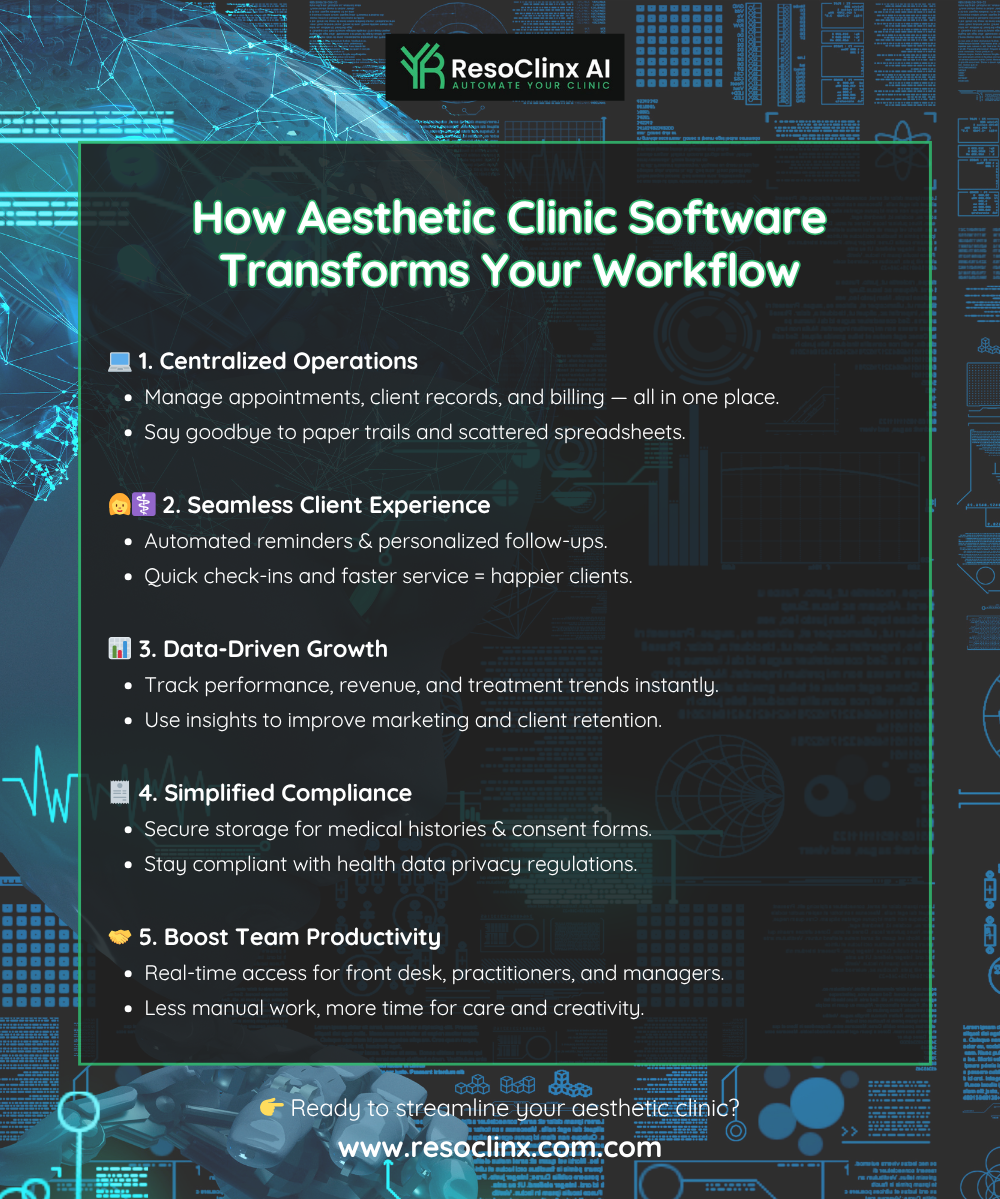
Managing an aesthetic clinic requires balancing clinical excellence with operational efficiency.
If you’re still relying on paper files or a messy collection of spreadsheets, things can get overwhelming pretty fast. That’s where specialised software comes in. It’s designed to take the stress out of the day-to-day running of your practice, letting you focus on what you do best – caring for your clients.
Optimising Appointment Scheduling And Client Management
Getting appointments booked and managed efficiently is the backbone of any busy clinic. Gone are the days of endless phone calls and double bookings. Modern software offers intuitive online booking systems that clients can use anytime, anywhere. This not only saves your reception staff time but also reduces the chances of missed appointments.
Think about features like automated confirmations and reminders; these simple additions can significantly cut down on no-shows. Furthermore, a good system keeps all your client information in one place. You can easily access contact details, treatment history, and preferences, which helps in providing a more personalised service and makes client recall much simpler.
Enhancing Clinical Documentation And Record Keeping
Accurate and organised clinical records are vital for patient safety and legal compliance. Aesthetic clinic software provides a digital solution for storing all patient notes, treatment plans, consent forms, and progress photos. No more searching through filing cabinets or worrying about lost paperwork — everything is securely stored, searchable, and accessible when needed.
Many systems allow you to use templates for common treatments, speeding up the documentation process while maintaining consistency. Being able to quickly pull up a client’s history before a consultation or treatment ensures continuity of care and helps you remember important details about their journey with your clinic.
Integrating Billing And Payment Processing Seamlessly
Managing finances can be a real headache, but integrated billing and payment systems make it much smoother. Aesthetic clinic software often includes point-of-sale (POS) features that allow you to process payments directly within the system.
This could be for treatments, product sales, or even package deals. You can generate invoices, track payments, and manage different payment methods all from one dashboard. This integration reduces manual data entry errors and provides a clear overview of your clinic’s financial performance.
Some systems even offer options for setting up payment plans or managing membership subscriptions, which can be a great way to boost client loyalty and predictable revenue.
Elevating Patient Experience Through Digital Tools

In today’s world, people expect things to be easy and convenient, and that includes their visits to aesthetic clinics. Software solutions can really help make the whole process smoother for your clients, from the moment they think about booking an appointment right through to after their treatment.
Personalised Communication And Automated Reminders
Sending out appointment reminders is a standard practice, but you can do so much more. Modern software allows for personalised communication.
Imagine sending a follow-up email after a facial that includes specific skincare tips tailored to the client’s skin type, or a text message a week before a filler appointment with advice on what to avoid. This level of detail shows you care about their individual needs.
Automated reminders are a lifesaver for busy clinics. They cut down on no-shows and reduce the time your staff spends on the phone. But don’t just stick to basic appointment reminders. You can set up automated messages for:
Pre-appointment instructions (e.g., ‘avoid sun exposure for 48 hours before your laser treatment’).
Post-treatment care advice.
Follow-up messages to check on their recovery and satisfaction.
Birthday greetings with a special offer.
Reminders for recommended follow-up treatments based on their history.
This kind of proactive and personalised communication builds a stronger connection with your clients, making them feel valued and well-looked after.
Facilitating Secure Telehealth Consultations
For aesthetic clinics, offering virtual consultations can be a game-changer. It allows potential clients to discuss their goals and concerns from the comfort of their own homes, making the initial step into aesthetic treatments feel less daunting.
Offering secure remote consultations is now a standard part of patient care. For UK aesthetic clinics, this supports accessibility while aligning with CQC and GMC guidance on virtual patient interactions. Ensure your software provides encrypted video, clear identity verification, and robust consent workflows to maintain confidentiality and compliance.
Prioritise security and ease of use. An encrypted platform protects sensitive information and supports UK data protection requirements. During a telehealth session, you can:
Conduct initial consultations and assessments.
Discuss treatment options and expected outcomes.
Answer questions and address any anxieties.
Provide pre-operative instructions.
Offer post-operative check-ins and advice.
This not only adds convenience for the client but also helps you qualify leads and plan treatments more effectively before they even step foot in the clinic.
Leveraging Client Feedback For Service Improvement
Happy clients are your best advertisement, and understanding what makes them happy (or not so happy) is vital for growth. Digital tools make collecting and acting on feedback much simpler.
After a treatment or consultation, you can automatically send out a short survey. This could be a simple star rating or a few open-ended questions about their experience. The insights you gain are incredibly useful:
Identify areas for improvement: Are clients consistently mentioning long wait times? Is there confusion about aftercare? Feedback highlights where you can make changes.
Recognise staff achievements: Positive feedback can be a great way to acknowledge and reward your team’s hard work.
Build trust: Showing clients that you listen and make changes based on their input builds a strong sense of trust and loyalty.
Collecting feedback isn’t just about finding problems; it’s about understanding what you’re doing well and how you can do even better. It’s a continuous loop of improvement that benefits everyone involved.
By integrating these digital tools, you’re not just managing your clinic; you’re actively creating a better, more connected experience for every client who walks through your door (or logs in for a virtual chat).
Ensuring Compliance And Data Security

Running an aesthetics clinic means you’re dealing with sensitive personal information, and that comes with a big responsibility. It’s not just about offering great treatments; it’s about making sure everything you do is above board and that your clients’ data is kept safe. This is where good software really steps in to help.
Adhering To Regulatory Standards For Patient Data
Keeping patient data secure and private is a legal requirement. In the UK, the UK GDPR and Data Protection Act 2018 govern how personal data is collected, stored, and processed. Choose software that supports encrypted storage, role-based access, clear consent capture, and auditable activity logs.
However, several regulations and guidelines are in play. For instance, the General Data Protection Regulation (GDPR) sets strict rules on how you collect, store, and process personal data. Failing to comply can lead to hefty fines and serious damage to your clinic’s reputation. Your software needs to be built with these regulations in mind, offering features like encrypted data storage and clear consent management.
Implementing Robust Security Measures For Sensitive Information
Beyond just following the rules, you need to actively protect the information your clinic holds. That includes controlling who can access data, where it’s stored, and how to respond if a breach occurs.
Modern clinic software should offer multi-factor authentication to prevent unauthorised access, regular data backups so you don’t lose anything, and audit trails that show who accessed what and when. Aim for layered security that protects everything from appointment details to medical histories.
Navigating State-Specific Regulations For Aesthetic Practices
While this guidance is UK-focused, if you operate internationally (e.g., in the US), state-level rules may add complexity around licensing, supervision, and advertising. For example, different states might have unique rules about practitioner licensing, medical director oversight, or even how you can advertise treatments.
Software designed for these markets often includes features that can adapt to these varying requirements, helping you stay compliant no matter where your clinic is located. It’s always wise to check with your local governing bodies to understand the precise rules that apply to your practice.
Driving Business Growth With Marketing And Analytics
To really make your aesthetic clinic thrive, you need to think beyond just offering great treatments. It’s about understanding your audience and making informed, measurable marketing decisions. This is where smart marketing and looking at your data come into play.
Utilising CRM For Targeted Marketing Campaigns
Think of your Customer Relationship Management (CRM) system as your clinic’s memory. It holds all the details about your clients – their past treatments, preferences, and even their birthdays. This information is gold for marketing. Instead of sending out generic emails to everyone, you can use your CRM to send really specific messages.
For example, you could send a special offer on a particular treatment to clients who have had similar procedures before, or a birthday discount to everyone celebrating next month. This makes your marketing feel more personal and is much more likely to get a positive response, leading to more bookings.
Segment your client list based on treatment history, interests, or demographics.
Create personalised email campaigns with tailored offers and content.
Track campaign performance to see what’s working and what’s not.
Using your CRM effectively means you’re not just sending out messages; you’re starting conversations with your clients that are relevant to them. This builds stronger relationships and encourages them to choose your clinic time and time again.
Leveraging Data Analytics For Business Insights
Your clinic software collects a lot of data, and if you ignore it, you’re missing out on some serious opportunities. Looking at your analytics can tell you things like which treatments are most popular, which days of the week are busiest, or even which marketing efforts are bringing in the most new clients. This kind of information helps you make smarter decisions. You can adjust your staffing, focus your marketing budget on what works, and even identify new services that your clients might be interested in.
Here’s a quick look at what you might track:
Acquisition sources: where new clients originate (GBP, organic search, paid, referrals)
Treatment demand & revenue mix: top services by bookings and income
No-show and late-cancellation rates
Client lifetime value (CLV) and retention by cohort
Building Client Loyalty Through Membership Programs
Getting new clients is great, but keeping the ones you have is even better. Membership or loyalty programs are a fantastic way to do this. They give your regular clients a reason to keep coming back to you instead of looking elsewhere.
You could offer a tiered system where clients earn points for treatments, which they can then redeem for discounts or special services. This not only encourages repeat business but also makes your clients feel valued and appreciated. It’s a win-win: your clients get perks, and you get a steady stream of loyal customers.
Choosing The Right Aesthetic Clinic Software Solutions
Picking the right software for your aesthetic clinic can feel like a big decision, and honestly, it is. You’re not just buying a tool; you’re investing in how your entire practice runs day-to-day. It’s easy to get lost in all the options out there, each promising to be the magic bullet for your business.
Ultimately, the best aesthetic clinic management software is the one that aligns seamlessly with your clinic’s workflow.
Evaluating Key Features And Functionality
When you’re looking at different software packages, think about what you actually need. Don’t get swayed by bells and whistles you’ll never use. Focus on the core functions that will make your life easier and your clients happier. Here are some things to really consider:
Appointment Scheduling: Can clients book online easily? Does it handle multiple practitioners and rooms? Are there automated reminders to cut down on no-shows? This is usually the first thing clients interact with, so it needs to be smooth.
Client Management (CRM): How does it store client information? Can you track treatment history, preferences, and notes? A good CRM helps you personalise the client experience and remember important details.
Clinical Documentation: This is vital for patient safety and record-keeping. Look for features such as secure photo storage (before-and-after galleries), treatment charting, and compliant record keeping. It needs to be easy to use during a consultation.
Billing and Payments: Does it integrate payment processing? Can you generate invoices and track payments efficiently? A clunky billing system can really slow things down.
Reporting and Analytics: What kind of insights can you get? Understanding your busiest times, popular treatments, or revenue per client can help you make smarter business decisions.
Understanding Pricing Models And Scalability
Software costs can vary wildly, and it’s not just about the monthly fee. You need to think about the total cost of ownership and whether the software can grow with you.
Subscription Tiers: Many systems offer different plans based on features or the number of users. Make sure the tier you choose actually gives you what you need without paying for extras you won’t use.
Setup Fees: Some providers charge an initial fee for setting up the software, migrating data, or training your team. Factor this into your budget.
Add-on Costs: Be aware of any extra charges for specific modules, integrations, or increased storage.
Scalability: Can the software handle more clients, more practitioners, or even multiple locations as your clinic expands? You don’t want to outgrow your system too quickly and have to go through the whole process again.
Requesting Demos And Involving Your Team
Reading reviews and looking at feature lists is one thing, but actually seeing the software in action is another. And don’t forget the people who will be using it every day!
Schedule Demos: Always ask for a live demonstration. This is your chance to see the software work in real-time and ask specific questions about your clinic’s workflow.
Trial Periods: If possible, take advantage of any free trial periods. This lets you test the software with your own data and see how it fits into your daily routine.
Team Input: Get your receptionists, nurses, and practitioners involved in the evaluation. They’ll have practical insights into what works and what doesn’t from their perspective. Their buy-in is crucial for successful adoption.
Choosing the right software isn’t just about ticking boxes; it’s about finding a partner that supports your clinic’s growth and helps you provide the best possible care to your clients. Take your time, do your homework, and involve your team – it’ll pay off in the long run.
The Future Of Aesthetic Clinic Management
The world of aesthetic medicine is always on the move, and keeping up means looking ahead. What’s next for managing your clinic? Well, it’s all about smarter tech and changing patient needs. We’re seeing a big push towards things like artificial intelligence (AI) and more advanced ways to connect with patients remotely.
Embracing Artificial Intelligence In Practice Management
AI isn’t just a buzzword anymore; it’s becoming a real tool for clinics. Think about how AI could help analyse patient data to suggest the best treatments for them, or even predict potential issues before they happen.
It can also streamline things behind the scenes, like optimising appointment schedules to cut down on waiting times and make sure your staff are used efficiently. This intelligent automation is key to staying competitive. It frees up your team to focus more on what really matters: the patient.
Adapting To Evolving Patient Expectations
Patients today expect more than just great treatments. They want a smooth, digital experience from start to finish. This means easy online booking, clear communication, and feeling looked after even after they leave the clinic.
They’re also more informed, often coming in with ideas from social media. It’s our job to guide them with realistic advice and personalised care. Being able to offer telehealth consultations is also becoming standard, letting you connect with patients who can’t easily visit in person.
Integrating Advanced Technologies For Competitive Advantage
Beyond AI, other technologies are shaping the future. Think about more precise laser systems, advanced imaging for better treatment planning, or even virtual reality for patient consultations.
These aren’t just fancy gadgets; they can genuinely improve treatment outcomes and patient satisfaction. It’s about using these tools to offer something unique and stay ahead of the curve. The clinics that embrace these advancements will likely be the ones that thrive in the coming years.
Conclusion
Investing in the right aesthetic clinic management software can transform day-to-day operations. Beyond simplifying administration, these tools enhance patient safety, strengthen compliance, and support sustainable growth.
By selecting a solution that fits your clinic’s needs, you’ll deliver consistently excellent care and build long-term client trust.