

Online reviews play a significant role in how potential patients choose an aesthetic clinic. Many people rely on them before deciding whether to book a consultation, so your responses can strongly influence their confidence in your practice.
Managing patient reviews professionally shows that you value feedback, prioritise patient experience, and maintain high clinical standards. This guide outlines the best ways to respond to reviews—positive, neutral, or negative—with clarity, professionalism, and confidentiality.
Key Takeaways
Acknowledge each patient’s experience to show empathy and understanding.
Thank patients for their feedback, whether positive or negative.
Keep discussions involving sensitive information offline to protect privacy.
Use a calm, respectful, and professional tone in every message.
Tailor your responses instead of relying on generic templates.
Protect confidentiality according to UK GDPR and the Data Protection Act 2018.
Acknowledge Patient Experience

Acknowledging the reviewer’s experience is the simplest way to show that you value their feedback. Even if their perspective differs from your understanding of events, responding with empathy and respect helps de-escalate frustration and demonstrates professionalism.
Useful phrases include:
“We’re sorry to hear that your experience did not meet your expectations.”
“Thank you for sharing this with us.”
“We appreciate you bringing this to our attention.”
Importantly, avoid confirming any treatment details. Keep your acknowledgement general yet sincere. This reinforces that your clinic listens to patients and takes feedback seriously.
Express Gratitude For Feedback
A simple thank you sets a constructive tone for the entire response. Patients who leave reviews—positive or negative—are giving you an opportunity to understand what works well and what could improve.
Showing appreciation can:
Encourage others to share their experiences
Help build goodwill and rapport
Demonstrate that your clinic values open communication
A concise message such as “Thank you for taking the time to leave a review” is both courteous and effective.
Take Conversations Offline
Some reviews raise concerns that cannot be resolved or discussed publicly. To maintain confidentiality and comply with UK GDPR and the Data Protection Act 2018, avoid revealing or confirming any personal information—even if the patient has already shared it.
Instead, guide the patient to a private channel:
“We would welcome the chance to discuss your concerns in more detail. Please contact us on [phone number] or [email address].”
Taking the conversation offline ensures:
Patient privacy is protected
You can gather more information
Concerns are handled respectfully and discreetly
No clinical details are disclosed publicly (even accidentally)
This approach demonstrates responsibility and professionalism.
Moving a discussion offline isn’t about hiding from feedback; it’s about engaging with it more effectively and respectfully. It allows for a more thorough understanding and a greater chance of finding a satisfactory solution, ultimately strengthening your relationship with the patient and demonstrating your commitment to excellent care.
Maintain Professionalism
When responding to patient reviews, it’s really important to keep a cool head and act professionally, no matter what the review says. Think of your reply as a public statement about your practice. It’s not just for the person who wrote the review, but for everyone else who might be looking at your online profile.
Your response reflects directly on your practice’s values and commitment to patient care. Even if a review feels unfair or inaccurate, it’s best to avoid getting defensive or emotional. Take a moment to step away and gather your thoughts before you type anything. This pause can make a huge difference in how your message is received.
Here are a few things to keep in mind:
Stay calm and objective: Try to see the situation from the patient’s perspective, even if you don’t agree with their assessment. A measured tone is always best.
Be respectful: Always use polite language. Avoid sarcasm, accusations, or any language that could be seen as dismissive.
Focus on facts, not feelings: Stick to what you can address or clarify without getting into a debate about subjective experiences.
Uphold patient privacy: Remember that HIPAA rules still apply, even if the patient has shared information online. Don’t confirm or deny specific details about their care.
Responding professionally shows that you take feedback seriously and are dedicated to providing a positive experience for all your patients. It builds trust and reassures potential patients that they’ll be treated with care and respect.
Avoid Generic Replies
Copy-and-paste responses may save time but can make patients feel unheard. Tailoring each response—while still protecting confidentiality—shows genuine engagement.
Instead of simply saying:
“Thank you for your review.”
Try something more personalised (but still general):
“Thank you for sharing your feedback. We’re pleased to hear that our team made you feel welcome during your visit.”
Small adjustments make a big difference in how your clinic is perceived.
Be Brief And Concise

When responding to patient reviews, it’s important to get straight to the point. Long, rambling replies can sometimes come across as defensive or even evasive, which isn’t ideal. A short, clear response shows you’ve read the feedback and are taking it seriously.
Think about it from the patient’s perspective. They’ve taken the time to share their experience, and they want to know you’ve heard them. A concise reply respects their time and gets your message across effectively.
Here’s a simple approach:
Acknowledge their experience briefly.
Express gratitude for their feedback.
Offer a way to discuss further offline.
For example:
“Thank you for sharing your experience with us. We’re sorry to hear that your recent visit didn’t meet your expectations. We’d appreciate the opportunity to discuss this further with you directly. Please feel free to contact us at [Phone Number] or [Email Address] at your convenience.”
This kind of response is polite, to the point, and shows you’re willing to listen without getting bogged down in unnecessary detail online. It keeps the focus on resolution and professionalism.
Address Concerns Directly
When a reviewer highlights a specific issue—such as delays, communication challenges, or appointment availability—acknowledge the theme of their concern without confirming any patient or treatment details.
For instance:
“We are sorry to hear about your concerns regarding communication and appreciate you bringing this to our attention.”
Then add a general reassurance:
“We are frequently reviewing our processes to enhance the experience for all patients.”
This balances transparency with confidentiality.
Tailor Tone To Review
It’s really important to remember that not all reviews are the same, and your response shouldn’t be either. Think about the person who took the time to write it – what are they trying to tell you? A glowing five-star review deserves a different kind of thank you than a more measured three-star one that points out a few areas for improvement.
Your tone should reflect the sentiment of the review. For positive feedback, a warm and enthusiastic tone works best. You can really lean into the praise and express genuine appreciation for their kind words. For example, if someone mentions how friendly the staff were, you could say something like, “We’re so pleased to hear that our team made your visit a pleasant one!” It shows you’ve actually read what they said.
When you get a review that’s a bit mixed, or perhaps leans towards the negative, your tone needs to shift. It should become more empathetic and understanding. Acknowledge the specific points they’ve raised without being defensive. If a patient mentions a long wait time, you might say, “We understand that waiting times can be frustrating, and we’re sorry if this impacted your experience.” This shows you’re listening and taking their concerns seriously.
Different types of reviews call for different tones:
Positive reviews: warm, appreciative, and encouraging
Neutral reviews: balanced, attentive, and open
Negative reviews: calm, empathetic, and focused on resolution
Matching the tone shows emotional intelligence and demonstrates that you truly understand the feedback being shared.
Remember, your response is not just for the person who wrote the review; it’s also for everyone else reading it. A well-tailored response shows you care about all your patients’ experiences and are committed to making things right.
Offer Solutions
When a patient leaves a review, especially a less-than-glowing one, it’s a chance to show you’re not just listening, but you’re also ready to act. Think of it as an opportunity to turn a negative experience into a positive outcome. It’s not always about fixing what went wrong in the past, because, well, you can’t rewind time. But it is about showing that you’re committed to making things better moving forward.
The goal here is to demonstrate a proactive approach to patient care and satisfaction.
Here are a few ways to approach offering solutions:
Acknowledge and Validate: Start by acknowledging the specific issue they raised. Phrases like, “We’re sorry to hear about the difficulty you experienced with appointment scheduling,” or “We understand your concern regarding the wait time,” show you’ve read and understood their feedback.
Explain (Briefly) and Reassure: If there’s a simple explanation for what happened, you can offer it briefly, but avoid making excuses. The key is to reassure them that this isn’t the standard you aim for. For example, “We typically strive for prompt service, and we regret that this was not your experience on this occasion.”
Propose a Concrete Next Step: This is where you offer a solution. It could be inviting them to discuss their experience further offline, offering a specific remedy if appropriate, or explaining changes you’re implementing based on their feedback.
Sometimes, the best solution isn’t a direct fix for the past event, but a clear commitment to future improvement. Showing that you take feedback seriously and are willing to adapt can go a long way in rebuilding trust.
For instance, if a patient mentions long wait times, you might respond with something like:
“We’re sorry to hear about the extended wait you experienced during your recent visit. We understand how frustrating that can be. We’ve recently reviewed our scheduling system to better manage appointment flow and reduce wait times. We’d appreciate the opportunity to discuss your experience further. Please feel free to contact us directly at [Phone Number] or [Email Address] so we can learn more and ensure your future visits are more comfortable.”
Review UK GDPR and Confidentiality Requirements
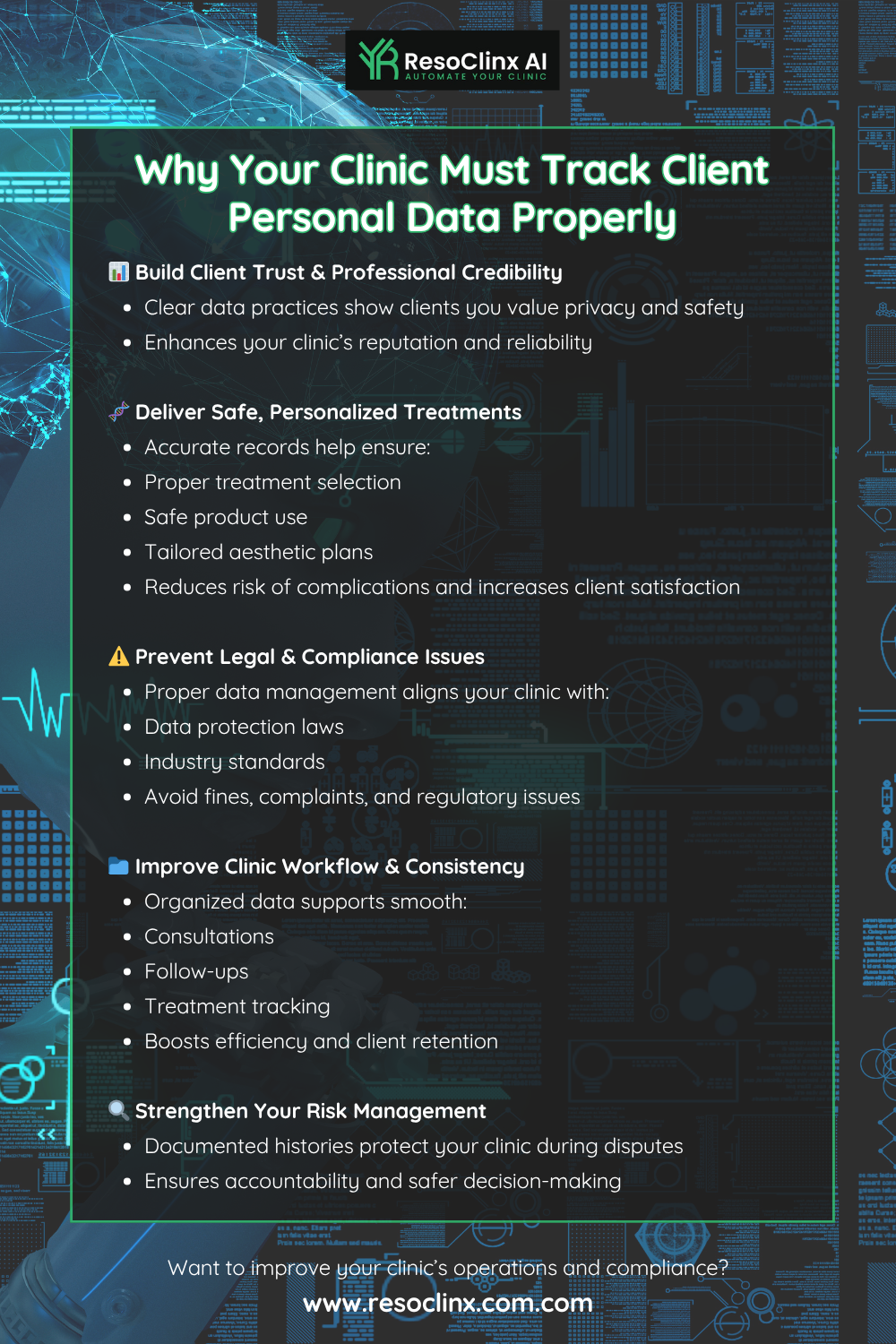
Aesthetic clinics must adhere to UK GDPR and the Data Protection Act 2018, which require the protection of personal data—including anything that may identify a patient or their medical care.
When responding to reviews:
Do not confirm whether the reviewer visited the clinic
Do not mention treatments, procedures, or appointment details
Avoid revealing any personal or medical information
Keep responses general and privacy-focused
Respecting confidentiality is essential for maintaining trust, credibility, and legal compliance.
Your Guide to Responding
Responding to patient reviews is a crucial part of shaping your clinic’s online presence. Thoughtful, professional responses demonstrate that you value feedback, prioritise improvement, and care about patient experience.
By acknowledging their comments, maintaining confidentiality, and addressing concerns with clarity and empathy, you help build a reputation for reliability, transparency, and high-quality care.