It can be easy to focus on attracting new clients, but what about the people who have already trusted your clinic? Reactivating past patients is often more cost-effective than acquiring brand new clients and can significantly improve the stability of your clinic’s revenue.
In this article, we explore how to build a structured patient reactivation campaign for aesthetic clinics, including communication strategies, digital marketing tactics and simple offers that encourage previous patients to return for ongoing care.
Key Takeaways
A patient reactivation campaign focuses on bringing back previous clients who have not visited in a while, which is often more cost-effective than acquiring new ones.
Personalised communication, particularly through email and SMS, helps re-engage patients by reminding them of your services and offering timely, relevant incentives.
Digital marketing channels such as social media, Google Ads and your Google Business Profile support local SEO for clinics and help you reconnect with lapsed patients.
Loyalty programmes, referral schemes and membership options encourage repeat visits, reward patient loyalty and help you attract more clients in a sustainable way.
Tracking key metrics such as response rates, reactivation rates and revenue from returning patients is essential for evaluating your patient reactivation campaigns and refining your aesthetic clinic marketing over time.
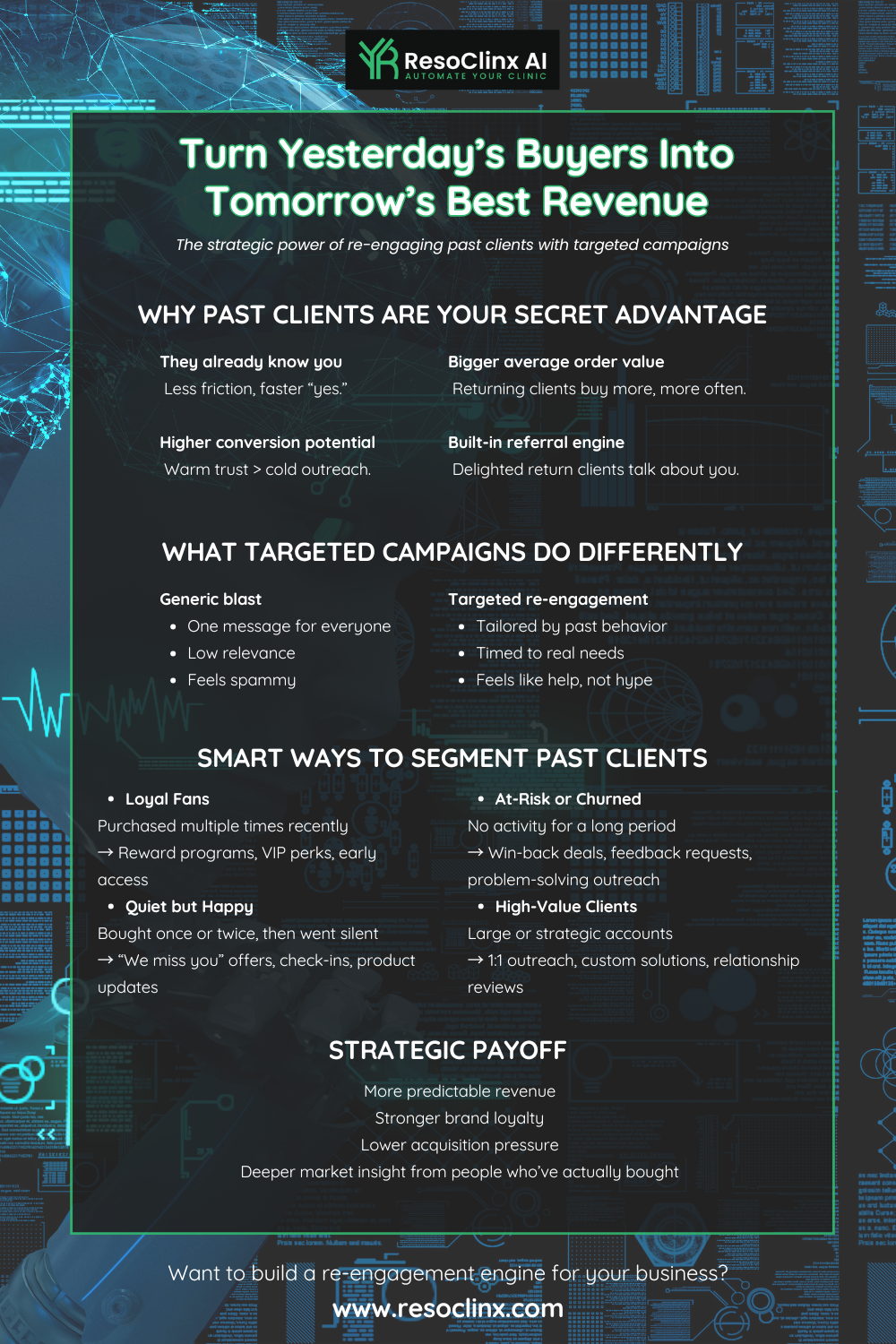
Re-engaging Past Clients With Targeted Campaigns
Understanding Patient Re-engagement
Retaining existing clients is typically much more cost-effective than continually finding new ones. Your current patients already know your clinic, have experienced your treatments and understand your approach. The challenge is that life gets busy, and appointments can be missed or follow-up treatments postponed.
Patient re-engagement focuses on reaching out to clients who have not visited in some time and reminding them of the clinical and aesthetic benefits of staying on track with their treatment plans. It is not just about filling appointment slots; it is about continuity of care and maintaining long-term, trusted relationships.
The Value of a Patient Reactivation Campaign
A well-planned patient reactivation campaign can bring significant benefits to your aesthetic clinic:
It typically leads to higher conversion rates, stronger treatment uptake and better returns on your marketing spend.
It can reduce no-shows by bringing patients back into regular treatment patterns.
It strengthens client loyalty, as patients feel remembered and valued.
When patients feel that the clinic genuinely cares about their results and long-term outcomes, they are more likely to return and recommend your services to others. Over time, this helps your clinic remain front of mind as their preferred provider for aesthetic treatments.
Identifying Dormant Patients
The first step in any reactivation strategy is to define who you consider a “dormant” patient. These are typically clients who have not interacted with your clinic for a set period, based on your standard treatment cycles.
Common inactivity indicators include:
Missed appointments: Patients who have missed one or more scheduled appointments.
Incomplete treatment plans: Patients who started a course of treatment but did not complete it.
No recent bookings: Patients who have not booked any service for 6–12 months.
Lack of response: Patients who have not responded to any emails or text messages over a defined period.
You can then assign typical timeframes and suggested actions:
Inactivity Indicator | Typical Timeframe | Suggested Action |
|---|---|---|
Missed Appointment | 30-60 days | Immediate follow-up call or personalised message. |
Incomplete Treatment Plan | 90 days | Offer a consultation to review progress. |
No Response to Communications | 45 days | Try an alternative contact method (e.g., SMS). |
No Appointment Booked | 6-12 months | Targeted promotional offer or ‘We Miss You’ campaign. |
Understanding when a patient becomes dormant gives you a clear starting point for your patient reactivation strategy. It allows for timely and relevant outreach, increasing the chances that they will rebook and stay engaged with your clinic.
Crafting Compelling Communication Strategies
Getting in touch with past clients is about making them feel remembered and valued. Rather than sending generic messages, effective patient reactivation campaigns show that you understand their needs and have something clinically relevant to offer. When done well, this type of communication can be the bridge that reconnects patients with your clinic.
Personalised Email Outreach
Email remains a powerful tool for aesthetic clinic marketing, especially when used in a personalised, patient-centred way.
Think about:
Which treatment they had last time.
Whether they were mid-way through a treatment plan.
Which services might logically complement their previous treatments.
A simple but tailored “We miss you” email, sent a few months after their last visit, can be effective when it:
Reminds them of the specific treatment they completed.
Highlights the benefits of maintenance or follow-up.
Offers an easy route to book or enquire.
A basic structure that works well:
Greeting:
“Hi Sarah,”Context:
“It’s been a little while since your last skin rejuvenation treatment with us.”Value:
“Maintaining your skin’s hydration and texture is important, especially as the seasons change.”Offer or suggestion:
“If you’re considering a review, we’d be happy to arrange a follow-up consultation to discuss your skin and any next steps.”Clear call to action:
“You can book online here [link], or call our team on [phone number].”
Always respect patient privacy and only send marketing emails where you have a lawful basis, such as explicit consent or a valid “soft opt-in” under UK GDPR and PECR (for existing patients and similar services), and include a clear unsubscribe option in every message. Sprintlaw UK+4ICO+4ICO+4
Leveraging SMS for Timely Offers
For quick, direct communication, SMS can be highly effective. People tend to check their texts more frequently than their emails, making SMS ideal for time-sensitive updates, such as:
Appointment reminders and confirmations.
Late-cancellation alerts (“We have a space at 2pm today if you’d like to bring your review forward.”).
Short-term offers during quieter periods.
Birthday messages with a relevant, low-pressure perk (for example, a complimentary consultation or small add-on treatment, if appropriate).
When using SMS as part of your patient reactivation campaign:
Keep messages short, clear and respectful.
Make it obvious who the message is from (clinic name).
Include an easy opt-out, such as “Reply STOP to opt out of future SMS updates.”
Ensure SMS is used for genuinely useful, relevant communication, not constant discounting.
A carefully timed, consent-based SMS campaign can help fill gaps in your schedule and support a smoother appointment book, without feeling intrusive.
The Power of Video Testimonials
Authentic patient stories can be hugely reassuring for people considering an aesthetic treatment. Short, genuine video testimonials from happy clients can:
Show realistic before-and-after results.
Demonstrate your clinic’s standards of care and professionalism.
Build trust in a way that written text alone often cannot.
When creating video content:
Always obtain written consent before sharing any images or videos of patients.
Follow UK advertising and aesthetics guidelines by avoiding exaggerated claims or misleading “miracle” language.
Invite patients to briefly describe their treatment journey and how they felt supported.
Include short clips of clinicians explaining common treatments in clear, accessible language (for example, “What to expect during a HydraFacial”).
These videos can be shared via email, social media or embedded on your website and your Google Business Profile. They add a personal, human element to your aesthetic clinic marketing and can gently encourage lapsed patients to reconnect when they see real people with real results.
Optimising Your Digital Presence for Reactivation
In today’s digital landscape, a website alone is no longer enough. To bring past clients back and attract more clients locally, your aesthetic clinic needs to be visible wherever patients are searching and researching treatments. That means ensuring your wider online presence is working hard for you, not simply existing.
Strategic Social Media Campaigns
Social media is a powerful channel for re-engaging past patients and reminding them of the results you can help them achieve. Consider:
Targeted ad campaigns on platforms such as Instagram and Facebook.
Retargeting audiences, who have previously visited your website or engaged with your content.
Content focusing on:
Before-and-after stories (shared with consent).
Patient journeys and FAQs.
Short educational videos on treatment options and aftercare.
Behind-the-scenes glimpses of your clinic and team.
Make sure each post or ad includes a clear call to action, such as:
“Send us a message to discuss your treatment options.”
“Tap to book a consultation.”
“Find out more on our website.”
Used consistently, social media supports your patient reactivation campaigns, your brand positioning and your local SEO for clinics.
Utilising Google Ads for Active Searchers
When patients are actively searching for treatments—typing terms like “anti-wrinkle injections near me” or “skin clinic in [your town]” into Google—you want your clinic to appear prominently.
Google Ads can help you:
Target specific treatment keywords, such as “laser hair removal” or “chemical peel clinic”.
Focus on your local area, ensuring ads appear to people within realistic travel distance.
Direct traffic to dedicated landing pages optimised for a particular treatment or reactivation offer.
For patient reactivation, you can also use Google Ads to:
Reconnect with previous website visitors through remarketing campaigns.
Highlight new services or technologies that may be relevant for existing patients.
The aim is not to rely solely on paid ads, but to use them alongside your Google Business Profile and organic search efforts as a targeted way to reach people who are ready to take action.
Enhancing Your Google Business Profile
Your Google Business Profile (GBP) is often the first impression a potential client has when they search for your clinic on Google Search or Maps. A well-optimised profile is a key part of local SEO for clinics and supports both new enquiries and patient reactivation.
Make sure your profile is complete, accurate and regularly updated:
Core information:
Check that your clinic name, address, phone number, website URL and opening hours are correct and consistent with your website and other listings.Services and treatments:
Add your main treatment categories (for example, injectables, skin rejuvenation, laser hair removal, medical facials). This helps patients quickly understand what you offer and improves relevance in local searches.Photos and videos:
Upload high-quality images of your clinic environment, treatment rooms and team. Where appropriate, include treatment-related visuals that represent your brand professionally.Reviews:
Encourage satisfied patients to leave honest reviews and respond professionally to all feedback, whether positive or negative. Avoid incentivising reviews or any practice that could be seen as generating fake feedback, especially given increased scrutiny of online reviews in the UK.Posts and updates:
Use Google Business Profile posts to share relevant updates, such as changes in opening hours, new treatments or educational content. This keeps your profile active and can improve engagement.Booking options:
Where available, add a clear “Book” or “Enquire” link to your online booking system or contact form, making it simple for people to take the next step.
Think of your Google Business Profile as your clinic’s digital front door. If it is inviting, accurate and up to date, patients are more likely to contact you and feel confident in your professionalism.
Keeping clients coming back is smart, sustainable business. It is often less costly than acquiring new patients, and happy, returning patients are some of your best advocates. Well-designed membership, referral and loyalty schemes can support your patient reactivation efforts without relying on constant discounting.
Exclusive Membership Programmes
Membership programmes can position your most engaged patients as VIP members of your clinic community. They might include:
Preferential pricing on certain treatments.
Inclusive monthly or quarterly treatments (for example, a regular facial or skin review).
Early access to new technologies or treatment options.
Invitations to educational events or webinars.
The goal is to make membership feel like an opportunity to maintain their results consistently, rather than a discount club. This type of structure can support long-term treatment plans and encourage ongoing engagement with your clinic.
Rewarding Referral Partnerships
Your existing patients are a trusted source of recommendations. A straightforward referral scheme can:
Thank patients who recommend your clinic to friends or family.
Offer a modest benefit to both the existing and new patient, such as a small credit towards treatment or a complimentary add-on (where appropriate and compliant).
Reinforce the message that you value word-of-mouth trust.
Make sure any referral scheme is:
Simple to understand and easy to use.
Clearly explained in your clinic and in patient communications.
Consistent with relevant professional and advertising guidelines.
Implementing Loyalty Schemes
Loyalty schemes reward ongoing engagement and can be structured in different ways:
Points-based systems where patients earn points for each pound spent, redeemable against future treatments.
Visit-based rewards, such as a complimentary express facial after a set number of appointments.
Tiered levels (for example, silver, gold, platinum) with increasing benefits for patients who visit more regularly.
These schemes help patients feel appreciated and give them a tangible reason to choose your clinic again rather than trying somewhere new. Over time, they support longer-term relationships that go beyond a single appointment.
Measuring Success and Refining Your Approach

Once you start investing time in patient reactivation, it is important to understand whether your efforts are working. It is not enough to send a few emails and hope for the best; you need to monitor performance and adjust your strategy over time. In practice, this means reviewing key metrics regularly, identifying what is working well and making informed changes when needed.
Key Metrics for Campaign Tracking
To really understand what’s happening, you’ve got to look at the numbers. Don’t get bogged down in too much data, though. Focus on what actually tells you if your reactivation efforts are paying off. Here are a few important ones to keep track of:
Reactivation Rate: This is probably the most straightforward. It’s the percentage of patients who were inactive but have now booked an appointment after your campaign. It tells you directly how many people you’ve brought back.
Response Rate: How many people actually replied to your emails or texts? A good response rate suggests your message is getting noticed and is interesting enough for them to engage.
Conversion Rate: This is a step beyond just responding. It’s the percentage of those who responded who then went on to book a treatment. This shows how effective your follow-up communication is at actually getting them to commit.
Revenue Generated: Ultimately, you want to see if these campaigns are bringing in money. Track the total income from reactivated patients over a specific period.
Cost Per Acquisition (CPA): How much did it cost you to get each of those reactivated patients back? This helps you see if your campaigns are financially sensible.
Here’s a simple way to visualise some of these:
Metric | Description |
|---|---|
Reactivation Rate | (Number of reactivated patients / Total inactive patients) * 100 |
Response Rate | (Number of replies / Number of messages sent) * 100 |
Conversion Rate | (Number of bookings from replies / Number of replies) * 100 |
Revenue Generated | Total income from reactivated patients within the campaign period |
Cost Per Acquisition | Total campaign cost / Number of reactivated patients |
Testing and Optimising Message Content
Not every message will resonate equally with your patients. Treat your communication as something you test and refine, rather than something fixed.
Elements you can experiment with:
Subject lines:
Compare more benefit-led lines (“Maintain your skin results this season”) with more direct ones (“Time for your skin review?”).Calls to action (CTAs):
Try different phrasings such as “Book your consultation”, “Arrange a review” or “Speak to our team” to see what drives more responses.Offer structure:
Test whether patients respond better to complimentary reviews, small loyalty benefits or clear explanations of treatment plans.Tone and length:
Some audiences prefer concise, direct messages; others may engage more with slightly longer, educational content.
By making small, controlled changes and observing your metrics, you can steadily improve your patient reactivation campaigns and ensure your content stays relevant and engaging.
Ensuring Data Privacy and Compliance
When you are contacting past patients, data protection is just as important as marketing performance. UK aesthetic clinics must comply with UK GDPR, the Data Protection Act 2018 and the Privacy and Electronic Communications Regulations (PECR) when sending email or SMS marketing.
Key points to consider:
Lawful basis and consent:
Confirm whether the patient has consented to receive marketing communications or whether you can rely on a valid “soft opt-in” (for example, where they are an existing client and you are promoting similar services). If not, obtain permission before sending promotional messages.Clear opt-out:
Every email or SMS should include a simple, prominent way to stop receiving marketing (for example, an unsubscribe link in emails or “reply STOP to opt out” in texts).Secure data handling:
Keep patient data secure by using reputable practice management and marketing platforms, limiting access to authorised staff and regularly reviewing your data protection processes.Transparency:
Make it clear in your privacy notice how you use patient data for communication and marketing, and direct patients to this information when they opt in.
Taking a privacy-by-design approach allows you to run effective patient reactivation campaigns while respecting patient confidentiality and staying compliant with UK regulations.
Creative Offers to Fill Appointment Gaps
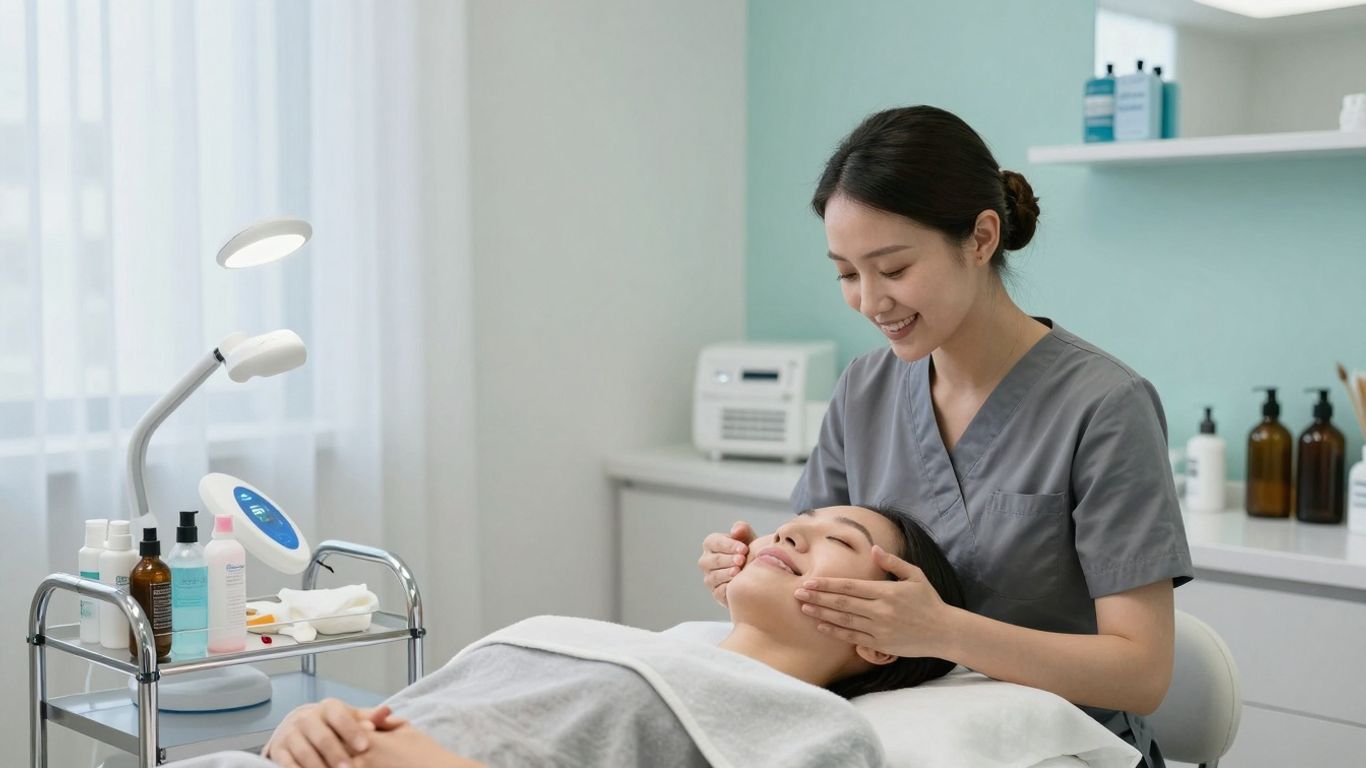
Every clinic experiences quieter periods or last-minute cancellations. Instead of waiting for the phone to ring, you can design creative, structured offers that help fill these gaps while still aligning with your brand and clinical standards.
Introducing ‘Reverse Happy Hour’ Specials
A “Reverse Happy Hour” is a simple way to make quieter periods in your schedule more attractive to suitable patients. Rather than discounting evenings, you might:
Offer a modest benefit for midday appointments (for example, between 11am and 2pm on weekdays).
Focus on treatments that fit comfortably into a lunchtime visit, such as certain facials or skin health reviews.
Promote these slots via social media stories or a short, targeted SMS to appropriate patients.
The emphasis should be on convenience and value, not heavy discounting. This can be a useful tool to smooth out demand while maintaining a professional, ethical positioning.
Bundling Treatments into Package Deals
Many patients appreciate clear, structured treatment packages that help them plan their journey and understand the expected results. Bundling can also support patient reactivation by:
Encouraging patients to complete a full course of treatment.
Introducing them to complementary services they may not have considered.
Providing a clear, transparent way to invest in longer-term results.
Examples might include:
A series of three microneedling sessions with a post-treatment skin review.
A “Seasonal Skin Reset” including targeted peels and recommended at-home skincare.
A review package for patients who completed injectables several months ago and would benefit from a structured follow-up plan.
The goal is to add clarity and value, not to encourage over-treatment. Packages should be clinically appropriate and communicated with realistic expectations.
Seasonal Promotions and Themed Offers
Aligning offers with seasons or key dates can provide a natural reason to reach out to past patients. For example:
Winter warmers:
Hydrating and barrier-repair treatments after colder weather or central heating.Spring renewal:
Gentle detoxifying treatments and skin-refreshing protocols.Summer ready:
Focus on sun-safe skincare advice, skin health maintenance and suitable pre-summer treatments.Autumn glow:
Treatments that help restore radiance after sun exposure and prepare skin for the colder months.
You can also create carefully designed offers around events such as Mother’s Day or wedding season, provided the messaging stays sensitive and informative rather than purely promotional.
Bringing It All Together
We have explored a range of ways to bring past clients back into your aesthetic clinic, from more personalised communication to smarter use of digital channels and loyalty initiatives. There is no single tactic that works for every clinic; success usually comes from consistent, well-planned activity and a focus on patient experience.
By combining structured patient reactivation campaigns, clear measurement and a strong commitment to data privacy and ethical practice, you can:
Strengthen relationships with existing patients.
Support more predictable, sustainable clinic growth.
Build long-term authority for your website through informative, educational content rather than hard selling.
Over time, this approach helps you attract more clients who value both your clinical expertise and your commitment to thoughtful, responsible aesthetic care.