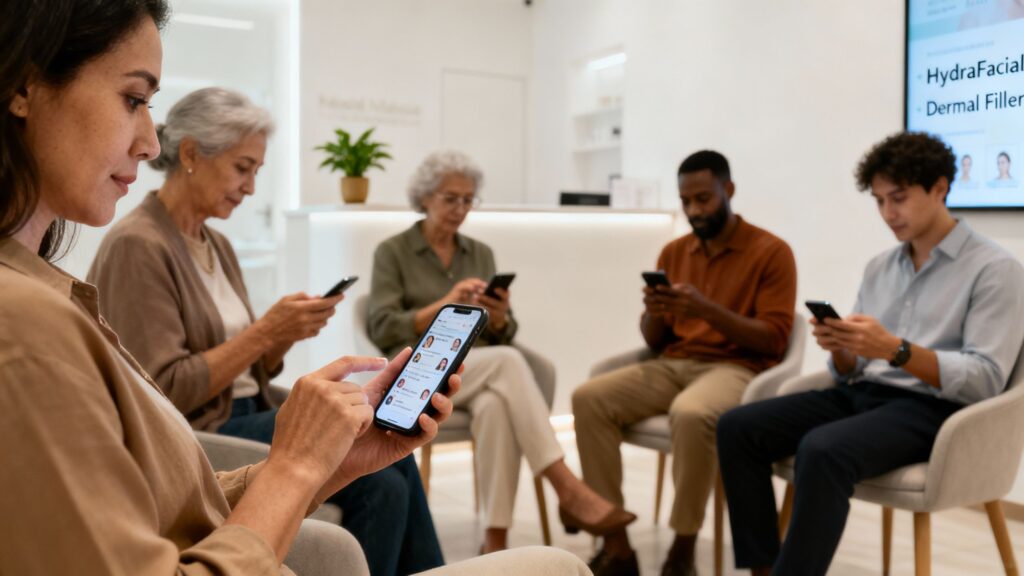
So, you’re looking to get more people through the door at your med spa, and you’ve heard that Facebook ads might be the way to go. It makes sense – your ideal clients are already spending time on Facebook and Instagram. However, running ads without a clear strategy can quickly waste budget.
This guide walks you step by step through how to use local Facebook ads for a med spa in a way that leads to real enquiries and bookings, not just likes. The focus is on practical, data-led aesthetic clinic marketing that helps you attract more local clients in a sustainable, compliant way.
Key Takeaways
- Know who you’re trying to reach locally. Use Facebook’s targeting tools to pinpoint people in your area who are likely to want your aesthetic treatments.
- Make your ads interesting and relevant. Use strong visuals and clear copy that focus on the benefits and outcomes your clients care about, not just the list of services you provide.
- Set up your campaigns properly. Pick the right goals and avoid simply hitting “Boost”. Use Meta Ads Manager for better control, targeting, and tracking.
- Don’t forget about the people who show interest. Follow up quickly and clearly with leads – that is often where the actual booking happens.
- Keep an eye on what’s working and what’s not. Track key metrics to see if your ads are profitable and make regular tweaks based on the data.
Understanding Your Local Audience

To make your med spa’s Facebook ads work well, you really need to know who you’re trying to reach. It is not just about putting an ad out there; it is about making sure the right people see it. Think about your current clients – what do they have in common? What are they looking for when they come to you?
Effective local Facebook ads are most powerful when they are rooted in a clear picture of your ideal local client and how they behave.
Defining Your Ideal Local Client
Start by picturing your ideal local client. Are they typically looking for anti-ageing treatments, or are they more interested in preventative skincare? Do they value convenience above all else, or are they driven by specific results?
Understanding these details helps you tailor your message. For example, if your clinic is in a busy city centre, convenience and quick lunchtime treatments might be key talking points. If you’re in a more suburban area, a focus on relaxation and a more extensive treatment experience may resonate more.
Being specific about your ideal client makes all of your aesthetic clinic marketing more focused and effective.
Leveraging Location-Based Targeting
Facebook and Instagram let you get very specific with who sees your ads. For a med spa, this is a game-changer. You don’t want to waste money showing ads to people who are miles away and unlikely to visit.
Consider
- Set a tight radius: Start by targeting a small area around your spa, perhaps a 5–10 mile radius. This captures people who can realistically travel to you.
- Target specific postcodes: If you know certain neighbourhoods have a higher concentration of people who might be interested in your services, you can target those specific areas.
- Consider commuter routes: Think about where people travel from for work or leisure. They might be more receptive to ads if they see them while spending time on their phones during regular commutes.
You don’t want to waste budget on people who are unlikely ever to visit your clinic, especially when the goal is to attract more local clients from your immediate catchment area.
Analysing Local Demographics and Interests
Once you’ve set your location, dig deeper into demographics and interests. What are the age groups most likely to use your services? What are their interests? Facebook’s ad platform gives you tools to explore this.
Here’s a general idea of what to consider:
| Demographic Group | Potential Interests |
|---|---|
| Age 25-40 | Skincare, wellness, fitness, beauty treatments, self-care |
| Age 40-60+ | Anti-ageing, skin rejuvenation, luxury goods, spa days |
Layering these interests with your location targeting means your ads are shown to people who are not only nearby but also more likely to be interested in what you offer.
This kind of targeting effectively supports local SEO for clinics by ensuring your paid traffic is highly relevant and local. It is about making your ad spend work smarter, not harder.
Crafting Compelling Ad Content
Your Facebook ads are often the first impression potential clients have of your med spa. Making that impression count means creating content that grabs attention, speaks to their desires, and clearly shows the value you provide.
It’s not just about showing off your services; it’s about connecting with people on an emotional level and showing them how you can help them achieve their goals.
Developing Benefit-Driven Ad Copy
Avoid overly clinical jargon. Most people are not searching for specific product names; they are looking for smoother skin, a fresher appearance, or more confidence. Your ad copy should focus on the results and emotions your treatments provide.
Think about what your clients truly want – to look refreshed, to feel more confident, and to maintain healthy, youthful-looking skin.
Here’s a simple way to structure your copy:
- Attention: Start with a headline that speaks directly to a common desire or concern. For example, “Tired of fine lines?” or “Want brighter, clearer skin?”
- Interest: Briefly explain how your service addresses that desire. Focus on the unique benefits, not just the features. Instead of “We offer laser hair removal”, try “Enjoy smoother skin with our advanced, low-discomfort laser treatments.”
- Desire: Paint a picture of the outcome. How will their life be better? For instance, “Imagine waking up with glowing skin every day” or “Feel more confident in every photo.”
- Action: Tell them exactly what to do next. A clear call-to-action (CTA) is vital: “Book your free skin consultation today” or “Enquire now to check availability.”
This approach keeps your Facebook ad copy firmly centred on benefits and client outcomes, which is crucial for effective aesthetic clinic marketing.
Utilising Authentic Visuals
Generic stock photos do not perform as well as they used to. People want to see the real environment and real people behind your brand. High-quality images and videos of your actual spa, your team, and your treatments in action build trust and make your ads more relatable.
Consider these visual ideas:
- Before & After (with caution): While powerful, be mindful of Facebook’s and UK advertising policies. Focus on subtle, natural-looking transformations and ensure you have client consent. Avoid unrealistic or exaggerated results.
- Behind-the-Scenes: Short videos showing your team preparing for a treatment, a quick tour of a treatment room, or a snippet of a consultation can humanise your brand.
- Staff Spotlights: Introduce your practitioners. People like to know who will be treating them and what their expertise is.
- Client Testimonials (Video): Seeing and hearing a happy client share their experience is very persuasive and builds social proof.
Authentic visuals are key to building trust, standing out in the feed, and making your local Facebook ads feel more personal and credible.
Creating Irresistible Offers for New Clients
To get people through the door for the first time, your offer needs to be compelling and low-risk. It’s not always about deep discounts; often it is about providing a clear, simple reason to take that first step.
Here are some ideas for introductory offers:
- Percentage Off First Treatment: A straightforward “20% off your first facial” can be appealing if it is clearly explained.
- Introductory Packages: Bundle a couple of popular services at a special price for new clients, such as a “New Client Glow Package” including a skin consultation and a facial.
- Free Consultation: For higher-value services such as body contouring or advanced skin rejuvenation, a free, no-obligation consultation is an excellent way to start the conversation.
- Voucher for a Specific Service: Offer a set amount off a popular treatment, such as “£50 off your first laser hair removal session”.
The goal is to make it easy and attractive for someone to visit your med spa for the first time. Once they experience your standard of care, they are far more likely to return and explore additional treatments.
Strategic Campaign Setup
Getting your Facebook ad campaigns set up correctly is like laying the foundation for a house – do it right, and everything else stands stronger. It’s not just about spending money on ads; it’s about making smart choices from the start.
This section will guide you through the key decisions that make a real difference to your results.
Choosing the Right Campaign Objective
Your main goal for running ads should directly influence the objective you select in Facebook Ads Manager. Think about what you want people to do after seeing your ad. For a med spa, the most common goals are generating new client leads or driving direct bookings.
- Leads: This is often the best choice for med spas. It allows you to use Facebook’s built-in lead forms, which pre-fill much of a user’s information. This makes it very easy for potential clients to enquire about services without leaving the platform and is excellent for capturing interest.
- Sales/Conversions: If you have a robust online booking system on your website, this objective can work well. It is designed to drive people to take a specific action on your website, such as booking an appointment or purchasing a treatment package.
Choosing the correct objective ensures that Facebook’s algorithm is optimising for the behaviour that actually matters to your business.
Selecting Optimal Ad Placements
Where your ads show up matters. Facebook and Instagram offer a lot of placement options, from the main feed to Stories and Reels. While it might be tempting to be everywhere, it’s often better to be strategic.
- Automatic Placements: Facebook will automatically show your ads across its platforms (Facebook, Instagram, Messenger, Audience Network) where it predicts they will perform best. This can be a sensible starting point if you are unsure.
- Manual Placements: As you gather data, you may want to choose specific placements. For example, if you notice that your ads perform particularly well in Instagram Stories, you might allocate more budget there. If Audience Network brings in low-quality leads, you might exclude it.
Different placements suit different ad formats. A short video might work well in Stories, while a carousel ad can be ideal for the main feed to showcase multiple treatments.
Setting a Smart, Scalable Budget
You do not need a huge budget to start seeing results. The key is to be consistent and to scale gradually based on performance.
- Starting Small: Many successful campaigns begin with a daily budget of around £20–£50. This allows you to test your ads and targeting without a large initial outlay.
- Scaling What Works: Once you identify which ads, audiences, and placements are bringing in the best leads at a good cost, you can gradually increase the budget for those specific campaigns or ad sets.
- Budget Types: You can set a daily budget (an average amount you want to spend each day) or a lifetime budget (a total amount for the campaign’s duration). For ongoing campaigns, a daily budget is usually more practical.
Remember, the goal is not just to spend money, but to spend it wisely. Focus on getting quality leads that turn into paying clients. A smaller, consistent budget that is optimised based on data will usually outperform a larger, unfocused spend.
Here’s a simple way to think about budget allocation:
| Objective | Initial Daily Budget | Scaling Strategy |
|---|---|---|
| Lead Generation | £20 – £50 | Increase by 15-20% every 2-3 days if CPL is good. |
| Conversions | £30 – £70 | Increase by 20-25% when ROAS is consistently high. |
By setting up your campaign with the right objective, choosing placements wisely, and managing your budget carefully, you’re building a stronger foundation for long-term results.
Maximising Lead Conversion
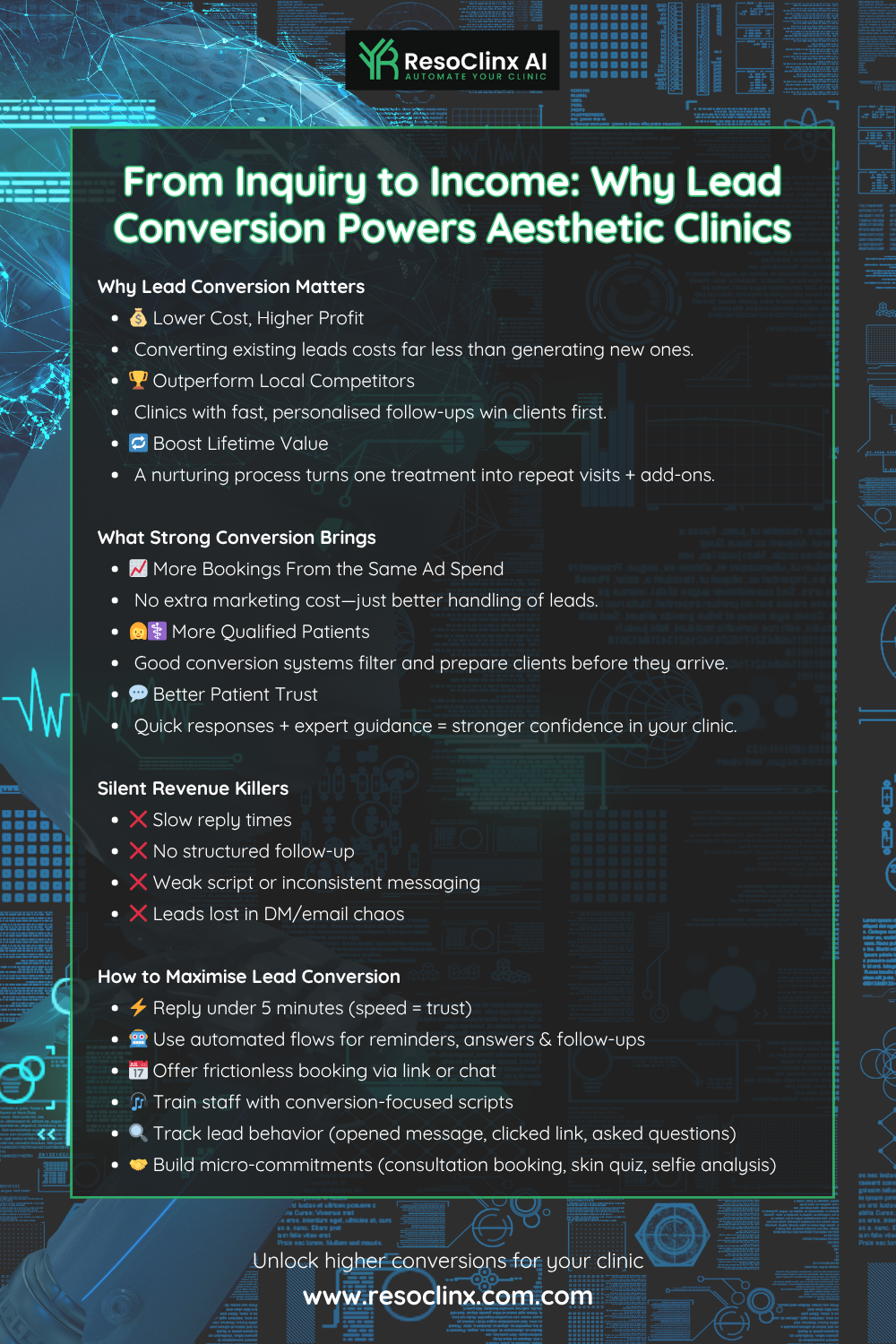
Once people start clicking on your ads and showing interest, the real priority is turning that interest into booked appointments. It is not enough to collect leads; you need a clear process that helps those enquiries become committed clients.
This stage is about removing friction, building trust, and making the next step feel straightforward.
Implementing Swift Lead Nurturing
When someone shows interest, they are often comparing options. The faster you can get back to them, the better your chances of securing the booking. Setting up a simple lead-nurturing process is essential.
- Respond within the hour: Ideally, aim to have a team member or an automated system reach out within 60 minutes of a lead coming in. This is especially important for time-sensitive offers.
- Personalise follow-ups: Use the information they provided in the ad or form. Mentioning a specific service they enquired about makes the follow-up feel less like a generic sales pitch.
- Offer clear next steps: Don’t leave them guessing. Tell them exactly what will happen next – will they receive a call, an email, or a text? When can they expect it?
Optimising Landing Pages for Bookings
Your landing page is where the conversion really happens. It needs to be clear, convincing, and make booking incredibly easy. If it’s confusing or slow, people will just leave.
- Match the ad’s promise: The offer and visuals on your landing page should reflect what they saw in the ad. If the ad promised a free consultation for a specific treatment, keep that as the headline and main focus.
- Simplify the booking process: Use a clear call-to-action button such as “Book Your Appointment Now” or “Claim Your Free Consultation”. The fewer steps it takes to book, the better.
- Mobile-friendly design: Most people will see your ad and landing page on their phones. Make sure it loads quickly, looks good, and is easy to use on a small screen.
A smooth landing page experience ensures your ad spend is not wasted at the final step of the journey.
The Importance of Client Testimonials and Social Proof
People trust other people. Seeing that others have had positive experiences at your med spa can make a huge difference in convincing new leads to book.
- Feature reviews prominently: Display testimonials on your landing page, website, and even within your ad creative if possible. Use real first names and photos where you have permission.
- Showcase before-and-after photos: For treatments where visual results are key, these can be powerful, provided you have consent and the images are realistic.
- Highlight awards or recognition: If your spa has received any local awards or positive press, include this. It adds a layer of credibility and supports your authority.
Converting leads is not just about collecting contact details; it is about building enough trust that taking the next step feels safe and worthwhile.
Measuring and Refining Performance

So, you’ve launched your Facebook ads, and things are starting to happen. To see a good return on your investment, you need to monitor performance and make adjustments.
Think of it as ongoing optimisation: you are not starting from scratch each time, but gradually improving what already works.
Tracking Key Metrics for ROI
When we talk about measuring success, we are not just looking at how many people saw your ad. That is a “vanity metric” – it looks impressive, but it does not necessarily indicate that business is growing. Instead, you should focus on the numbers that show whether your ads are bringing in real clients and generating profitable revenue.
Key metrics include:
- Cost Per Lead (CPL): This tells you how much you’re spending to get one person to enquire about your services. For a high-value treatment, a higher CPL can still be profitable if those leads convert well.
- Lead-to-Booking Rate: This shows how many of the people who enquired actually went on to book an appointment. If this is low, your follow-up process or offer may need improvement.
- Return on Ad Spend (ROAS): This is the total revenue generated from your ads divided by the amount you spent. A ROAS of 5:1 means that for every £1 spent, you generated £5 in revenue.
Taking this data-driven approach strengthens your overall aesthetic clinic marketing strategy, because you can clearly see which campaigns are genuinely contributing to revenue.
Understanding Cost Per Lead vs. ROAS
It is easy to focus on Cost Per Lead, but CPL only tells part of the story. A low CPL looks good on paper, yet it does not matter if those leads never book.
ROAS looks at the bigger picture. You might have a slightly higher CPL, but if those leads are well qualified and convert into high-value treatments, your ROAS can still be excellent.
In other words, a slightly higher CPL with strong conversion can be far more valuable than very cheap leads who never become clients.
A/B Testing for Continuous Improvement
A/B testing involves running two slightly different versions of your ad to see which performs better. You might change the image, the headline, or the call to action.
By showing version A to one group of people and version B to another, you can see which one gets more clicks, more leads, or more bookings. This means you do not have to guess what works – you can test it.
Regular testing helps you:
- Avoid ad fatigue by refreshing images and copy.
- Understand which messages resonate most with your local audience.
- Gradually improve your overall ROAS over time.
Avoiding Common Pitfalls
Running Facebook ads for your med spa can feel complex at times. It is easy to make mistakes that cost you money without bringing in the clients you want. Being aware of common pitfalls can save you a lot of frustration.
The Pitfalls of ‘Boosting’ Posts
The ‘Boost Post’ button on Facebook is designed to be a quick shortcut, but for most clinics it is not the most effective way to run campaigns. Boosting offers limited targeting options, meaning you’re often showing ads to people who are not particularly interested in your services.
Tracking is also less detailed, which makes it harder to understand whether those boosts are actually leading to bookings.
For serious, trackable results, use Facebook (Meta) Ads Manager. It gives you much more control over who sees your ads and how success is measured.
Preventing Ad Fatigue with Fresh Creative
Seeing the same advert repeatedly can quickly become boring. If you keep running the exact same ad for weeks or months, people will start to ignore it, or even hide it. This is ad fatigue, and it makes your ad spend less effective over time.
To reduce ad fatigue:
- Refresh your main ad creatives every few weeks.
- Test different images, videos, headlines, and angles (for example, focusing on comfort in one ad and results in another).
- Rotate offers and treatment focuses through the year.
Keeping your creative fresh helps your clinic stay visible without irritating your audience.
Ensuring Compliance with Advertising Policies
Facebook has pretty strict rules about advertising, especially for services like those offered by med spas. It’s really important to understand these. You can’t make unrealistic promises or use language that might make people feel bad about themselves. For example, instead of focusing on ‘fixing flaws’, talk about ‘enhancing natural beauty’ or ‘achieving radiant skin’.
Also, be careful with specific medical claims or before-and-after photos, as these can be tricky. You also can’t use brand names like ‘Botox’ or ‘Juvederm’ directly in ads; you’ll need to use more general terms like ‘wrinkle relaxers’ or ‘dermal fillers’.
Getting your ads rejected or your account flagged can be a real headache, so it’s worth taking the time to read and understand Meta’s advertising policies for health and beauty.
Here are a few key things to keep in mind:
- Be truthful and avoid exaggeration: Focus on the benefits and realistic outcomes of your treatments.
- Respect privacy and avoid sensitive claims: Don’t make claims about medical conditions or use language that could be seen as discriminatory.
- Use compliant terminology: Stick to general descriptions for treatments and products where specific brand names are prohibited.
It’s easy to get caught up in the excitement of running ads and forget the finer details. But paying attention to these common pitfalls can save you a lot of wasted money and frustration, ultimately leading to more clients walking through your door.
Putting It All Together for Your Med Spa
Bringing all these elements together shows that effective Facebook advertising for med spas is not about guesswork. It relies on a clear understanding of your local audience, strong creative, structured campaign setup, and consistent optimisation.
When each part works together, your ads become a reliable source of qualified enquiries rather than a drain on budget.
By focusing on sustainable, data-led improvements and staying compliant with UK advertising standards, you can use Facebook as a steady, long-term channel for growing your clinic and supporting the client experience you want to deliver.