
Booking appointments for your med spa can sometimes feel like a juggling act, especially when your clinic is busy. When scheduling becomes disorganised, it can lead to missed slots, last-minute chaos, and frustrated clients. But getting your appointment system right isn’t just about filling your diary — it’s about creating a smooth, reliable, and professional experience from the very first click.
This guide walks you through how to streamline and optimise the way you book appointments, turning what feels like a chore into a valuable asset for your clinic.
Key Takeaways
Set clear booking windows (usually 2–3 months ahead) to keep your diary organised and encourage client commitment.
Implement a firm 24–48 hour cancellation policy to safeguard your time and revenue.
Automate confirmations and reminders to reduce no-shows and improve communication.
Add buffer time between appointments to allow for cleaning, preparation, and delays.
Streamline your booking menu and provider matching to give clients an easy, efficient experience.
Establishing Your Med Spa’s Booking Foundation
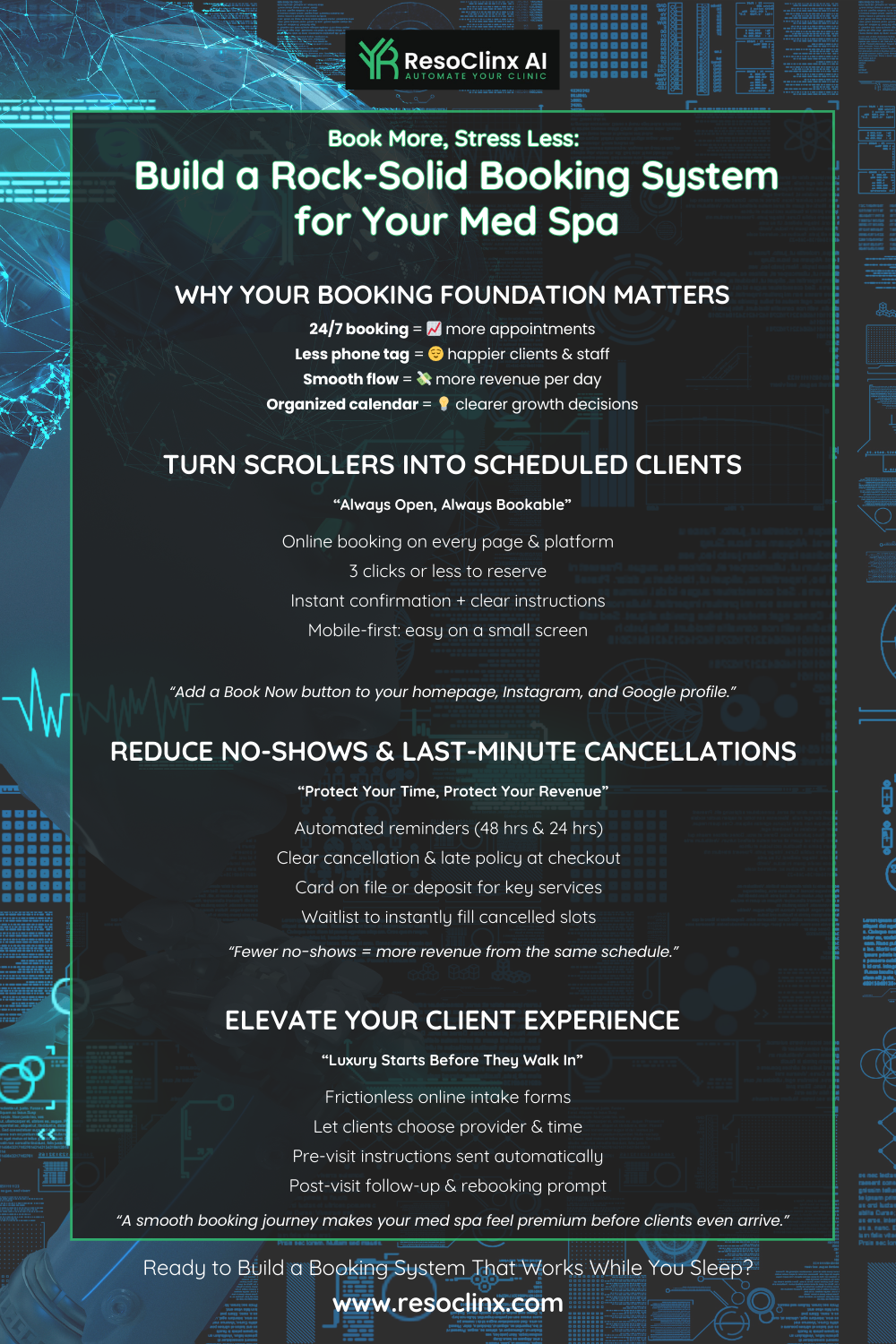
Getting your med spa’s booking system right from the start is essential. It’s not only about filling appointment slots — it’s about building a smooth operational foundation that supports your team and reassures your clients. Think of it as the backbone of your business; if it’s strong and organised, everything else becomes easier.
Defining Your Ideal Booking Window
Determining how far in advance clients can book is a balancing act. You don’t want people booking so far ahead that they forget, but you also don’t want your diary fully booked for weeks, pushing new clients elsewhere.
A practical approach is to allow bookings from the same day (when possible) up to around two to three months in advance. This timeframe keeps your schedule manageable while still accommodating clients who like to plan ahead. Finding this sweet spot helps maintain flexibility, reduce cancellations, and keep your availability appealing to both new and returning clients.
Implementing Clear Cancellation Policies
A clear cancellation policy is one of the simplest and most effective tools for reducing no-shows. A standard policy of 24–48 hours’ notice is widely accepted and ensures clients respect your time and resources.
It’s not about being punitive — it’s about setting expectations and encouraging commitment. Your policy should be visible at every touchpoint: on your website, within your booking system, and inside confirmation messages.
A helpful breakdown could look like this:
Cancellation Timing | Fee/Charge |
|---|---|
More than 48 hours before appointment | No charge |
Less than 48 hours before appointment | 50% of service fee |
No-show | 100% of service fee |
Clear policies remove awkward conversations, improve reliability, and reinforce professionalism.
Leveraging Buffer Time Effectively
Running behind schedule is stressful for both your team and your clients. Often, the issue stems from back-to-back appointments with no buffer time.
Adding 10–15 minutes between appointments can dramatically improve workflow. These short buffers allow staff to:
Reset and clean rooms
Prepare equipment
Apply numbing cream when required
Handle unexpected delays
This small structural change enhances your client experience and keeps your clinic running smoothly, even on the busiest days.
Optimising The Client Booking Journey
A well-designed booking journey makes clients feel confident and valued before they even arrive at your clinic. If the booking process feels confusing, time-consuming, or cluttered, potential clients may simply click away.
Your goal is to make booking simple, intuitive, and reassuring.
Streamlining Your Booking Menu
A cluttered booking menu can overwhelm clients and lead to abandoned bookings. Instead, aim for clarity, simplicity, and structure.
You can enhance your booking menu by:
Using clear, benefit-focused descriptions so clients know exactly what they’re booking
Grouping treatments into logical, easy-to-navigate categories
Highlighting popular or signature services to guide choice
For example, instead of only listing “Advanced Skin Rejuvenation,” break it down into familiar treatments such as “Microneedling for Collagen Boost” or “Chemical Peel for Brighter Skin.”
Ensuring Provider and Resource Matching
Clients often have a specific practitioner in mind, or they might need a particular piece of equipment. Your booking system should make it simple to match these needs. If a client always sees Dr. Anya for her injectables, they should be able to easily select her. Likewise, if a specific laser is required for a treatment, the system needs to know when that resource is available. This prevents double-bookings and ensures the right person is with the right equipment for the right treatment.
Here’s a quick look at what to consider:
Provider Specialities: Clearly list each practitioner’s areas of expertise.
Equipment Availability: Link specific treatments to the required equipment and its schedule.
Client Preferences: Allow clients to request a specific provider if they have one.
Meeting High Client Expectations for Digital Convenience
Modern clients expect seamless digital booking experiences. If your clinic relies heavily on phone bookings, you may be unintentionally creating barriers.
Offering 24/7 online booking is now a baseline expectation. Clients want to book:
On their phone
Outside of working hours
At their own pace
Your booking system should be mobile-friendly, intuitive, and responsive, with clear calls to action like “Book Now.” Instant feedback on availability also prevents frustration.
A convenient digital journey improves satisfaction and boosts bookings.
Automating Appointment Confirmations And Reminders
Automated communication can dramatically reduce no-shows and ensure clients feel informed and supported. Think of automation as your administrative assistant — consistent, reliable, and always on time.
Sending Instant Confirmation Communications
Once an appointment is booked, clients should receive an immediate confirmation via email or SMS. This message should clearly include:
Appointment date and time
Treatment booked
Practitioner assigned
Clinic location and contact details
Pre-appointment instructions
A reminder of your cancellation policy
Adding an “add to calendar” link is a simple but powerful way to keep your clinic firmly on your client’s radar.
Scheduling Timely Pre-Appointment Reminders
Forgetfulness is one of the most common reasons clients miss appointments. Well-timed reminders significantly reduce the likelihood of no-shows.
An effective reminder strategy includes:
An initial reminder 48–72 hours before the appointment
A final reminder 24 hours before
SMS reminders often achieve the highest engagement, but email works well too. These gentle nudges help clients feel prepared and valued.
Utilising Add-to-Calendar Functionality
When clients add appointments directly to their personal calendars, attendance rates improve dramatically. Most modern booking systems can generate calendar links for Google, Apple, and Outlook.
This feature:
Prevents double-bookings
Keeps appointments visible
Reduces forgotten sessions
It’s a small detail that contributes to a more professional and seamless experience.
Enhancing Your Booking System With Technology
If you’re still using a paper diary or manual spreadsheets, it may be time to modernise. Technology doesn’t just streamline your workflow — it enhances client experience and strengthens your clinic’s overall efficiency.
Exploring Med Spa Scheduling Software
Managing appointments manually in a busy med spa can lead to errors and unnecessary stress. Dedicated scheduling software offers:
Real-time availability
Online booking for clients
Automated communications
Data insights
Many clients prefer online booking over phone calls, especially outside working hours. Implementing a professional system ensures your clinic stays competitive and reduces administrative workload.
Automating Routine Tasks and Policies
Automation ensures that your clinic’s policies are followed consistently without relying on manual management. A good scheduling system can:
Send confirmation emails and SMS reminders
Allow clients to reschedule themselves
Apply deposits automatically
Enforce cancellation rules
Insert buffer times
Sync calendars across your team
This creates a standardised, efficient, and professional process without additional effort from your staff.
Leveraging Data for Schedule Optimisation
Your booking system contains a wealth of data that can help you optimise your operations. For example:
Identify your busiest days and times
Pinpoint the most frequently booked services
Analyse drop-off points in your online booking flow
Spot opportunities to add new appointment slots
If Tuesday afternoons are always quiet, you could promote those times. If a service consistently books up, consider offering additional availability. This data-driven approach supports long-term growth and smarter decision-making.
Using technology isn’t just about keeping up with the times; it’s about making your med spa run more smoothly, reducing errors, and ultimately, making it easier for clients to book and return. It transforms a potentially stressful administrative task into a streamlined process that supports your business growth.
Proactive Strategies For Increased Bookings
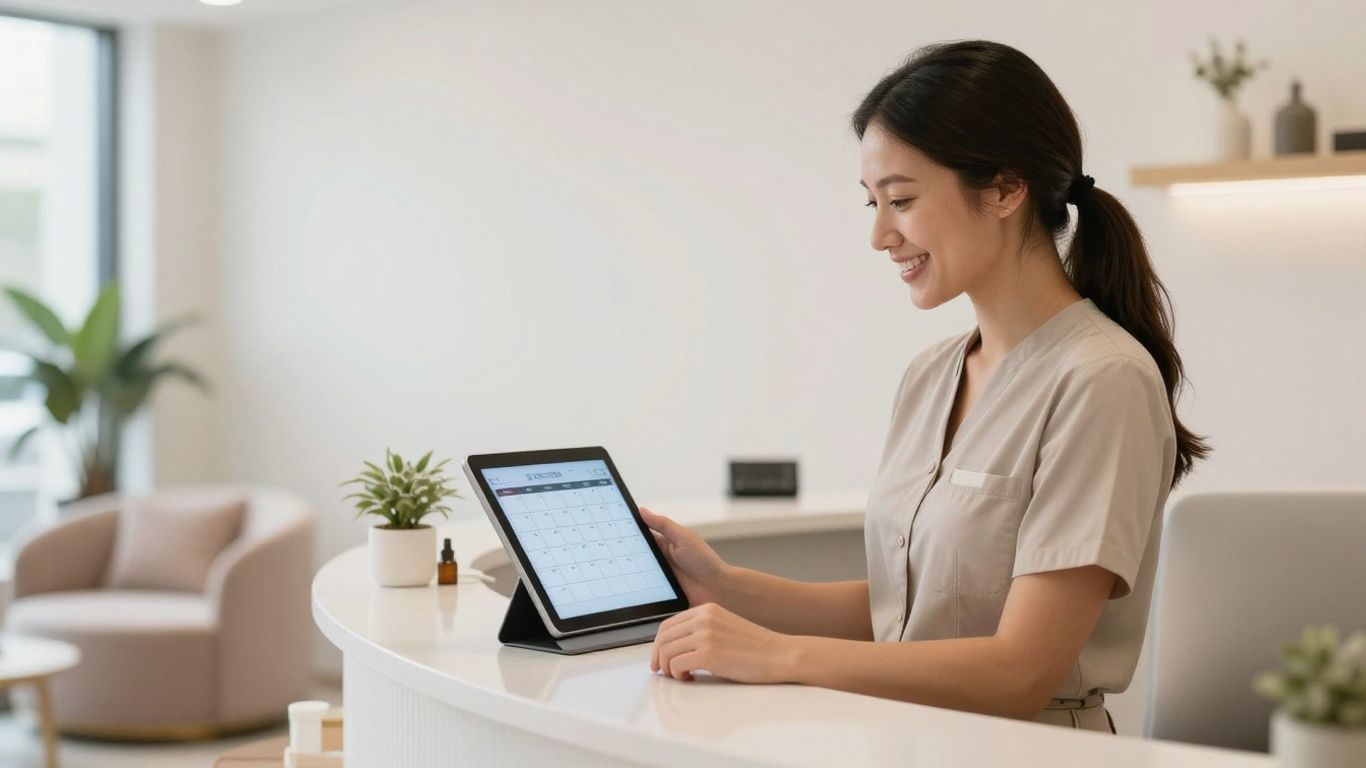
Once your booking system is running smoothly, you can use it as a tool for business growth, not just scheduling.
Maintaining a Soonest Availability Goal
Clients often want treatment quickly. If they see your next available slot is two weeks away, they may look elsewhere. Aim to maintain availability within three to five days.
You can achieve this by:
Keeping a small number of flexible slots
Using a waitlist system
Allowing staff to take on extras during busy times
This approach improves client acquisition and reduces the chances of losing enquiries to competitors.
Showcasing High-Value Services in Prime Slots
Not all treatments are created equal when it comes to revenue. You know those pricier, more in-demand services – maybe a package deal, a specific laser treatment, or a combination of procedures? It makes sense to give these the spotlight.
Visibility is Key: When you’re sending out newsletters or running social media promotions, make sure those high-value services are front and centre on your booking page. Some booking software even lets you create special links that automatically filter to a specific service or package, which is super handy for marketing campaigns.
Strategic Scheduling: Consider reserving your most sought-after time slots – think Saturday mornings or late weekday evenings – specifically for these premium treatments. Alternatively, you could offer these prime slots to your VIP clients or members who tend to book them anyway.
Online Presentation: On your booking website, feature your most profitable services at the top of the list or even as a prominent banner. Making them easy to find and book can steer clients towards the treatments that bring in the most income.
By being smart about what you promote and when, you’re not just filling slots; you’re guiding clients towards bookings that really benefit your business.
Encouraging Rebooking Through Targeted Prompts
Getting a client through the door is one thing, but getting them to come back is where the real success lies. Your booking system and communication channels are perfect for this.
Soft Upsells in Communications: In your confirmation emails or reminder messages, you can gently suggest add-on services or complementary treatments. For example, after booking a facial, you could add a line like, “Considering adding a hydrating mask to enhance your results? Reply to this email to add it to your appointment.” It’s a subtle way to increase the value of each booking.
Post-Treatment Follow-Ups: After a client has had a treatment, send a follow-up message asking how they’re feeling and suggesting their next step. For instance, “We hope you’re loving your new glow! Your next session of [Treatment Name] is recommended in 4-6 weeks. Click here to rebook your next appointment.” This proactive approach makes it easy for them to schedule their next visit.
Loyalty Incentives: If you have a loyalty program, make sure your booking system can prompt clients about their rewards or next steps. “You’ve earned enough points for a discount on your next facial! Book now to redeem.” This encourages repeat business and makes clients feel appreciated.
By integrating these prompts into your existing booking flow, you can turn a standard appointment into an opportunity for continued client engagement and increased revenue.
Transforming Scheduling Into A Growth Lever
It’s easy to think of your appointment book as just a way to keep track of who’s coming in and when. But honestly, it’s so much more than that. When you get it right, your scheduling system can actually be a powerful tool for growing your med spa. It’s not just about filling slots; it’s about making smart choices that bring in more clients and keep them coming back.
Understanding Scheduling’s Impact on Revenue
Think about it: every empty slot in your calendar is potential income that’s just… gone. And clients who have to wait too long to get an appointment might just go somewhere else. We’ve seen stats that say a good chunk of people will choose a new provider if they have to wait too long.
So, keeping your availability open within a few days is a smart move, especially for new clients. It’s not about having loads of free time, but about managing your schedule so there’s always something available soon.
Here’s a quick look at how availability can affect things:
Scenario | Potential Outcome |
|---|---|
Long wait times (2+ weeks) | Lost new clients, reduced revenue |
Availability within 3-5 days | Higher conversion rates, increased client acquisition |
Prime slots consistently booked | Opportunity to upsell or offer premium packages |
Reducing No-Shows Through Smart Systems
Aesthetics Clinic no-shows are a real drain. They waste your staff’s time, your resources, and that valuable appointment slot. But you can fight back. Automated reminders are a good start, but you can also look at things like requiring a small deposit for certain treatments. This isn’t about being difficult; it’s about showing that the appointment time is valuable to both you and the client. When people have a small stake in the booking, they’re much more likely to turn up.
Automated confirmations: Sent immediately after booking.
Pre-appointment reminders: Sent 24-48 hours before.
Deposit requirements: For longer or high-value treatments.
Cancellation policies: Clearly communicated and enforced.
Implementing these systems doesn’t have to feel harsh. When done with clear communication, it’s simply about respecting everyone’s time and resources. It helps maintain a smooth workflow and prevents those frustrating last-minute cancellations from derailing your day.
Creating a Seamless Client Journey
From the moment a client decides to book, every step should feel simple, professional, and reassuring. A smooth booking journey sets the tone for the entire experience.
Clients who enjoy this journey are more likely to:
Attend appointments
Return regularly
Recommend your clinic
Streamlined scheduling is not just operational — it’s part of your brand.
Your Booking Strategy
Getting your med spa’s booking system running smoothly is entirely achievable with the right structure, tools, and communication. When you refine your scheduling processes, you create a ripple effect across your entire clinic: better organisation, happier clients, fewer no-shows, and improved efficiency.
Don’t hesitate to embrace technology or adjust your systems as your clinic grows. Even small improvements can make a significant difference to your day-to-day operations and long-term success.