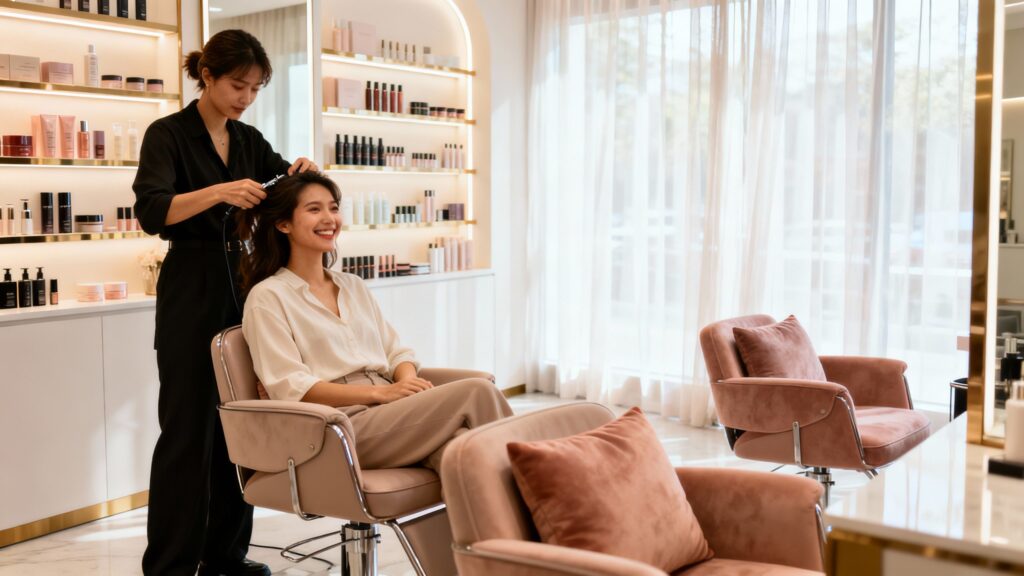
So, you’re thinking about building a website for your beauty salon, and you’ve heard WordPress is the way to go. It can seem like a lot, especially if you’re not particularly tech-savvy. But it’s absolutely achievable, even if you’ve never built a site before.
This guide walks you through how to build a WordPress website for a beauty salon, from picking a name to getting it live and looking professional. We’ll keep things simple, practical and focused on real clients, so you can concentrate on what you do best – making your clients feel fabulous, while your website quietly does the work of attracting and organising them in the background.
Key Takeaways
Choose WordPress for your salon website; it’s a reliable, flexible platform that can grow with your business.
Secure a domain name and hosting to get your site online and accessible to clients.
Pick a theme that reflects your salon’s style and showcases your services, images and reviews clearly.
Use high-quality photos and client testimonials to build trust and attract more customers.
Make sure online booking is easy and your website works smoothly on mobiles and tablets.
Establishing Your Online Presence: The Foundation
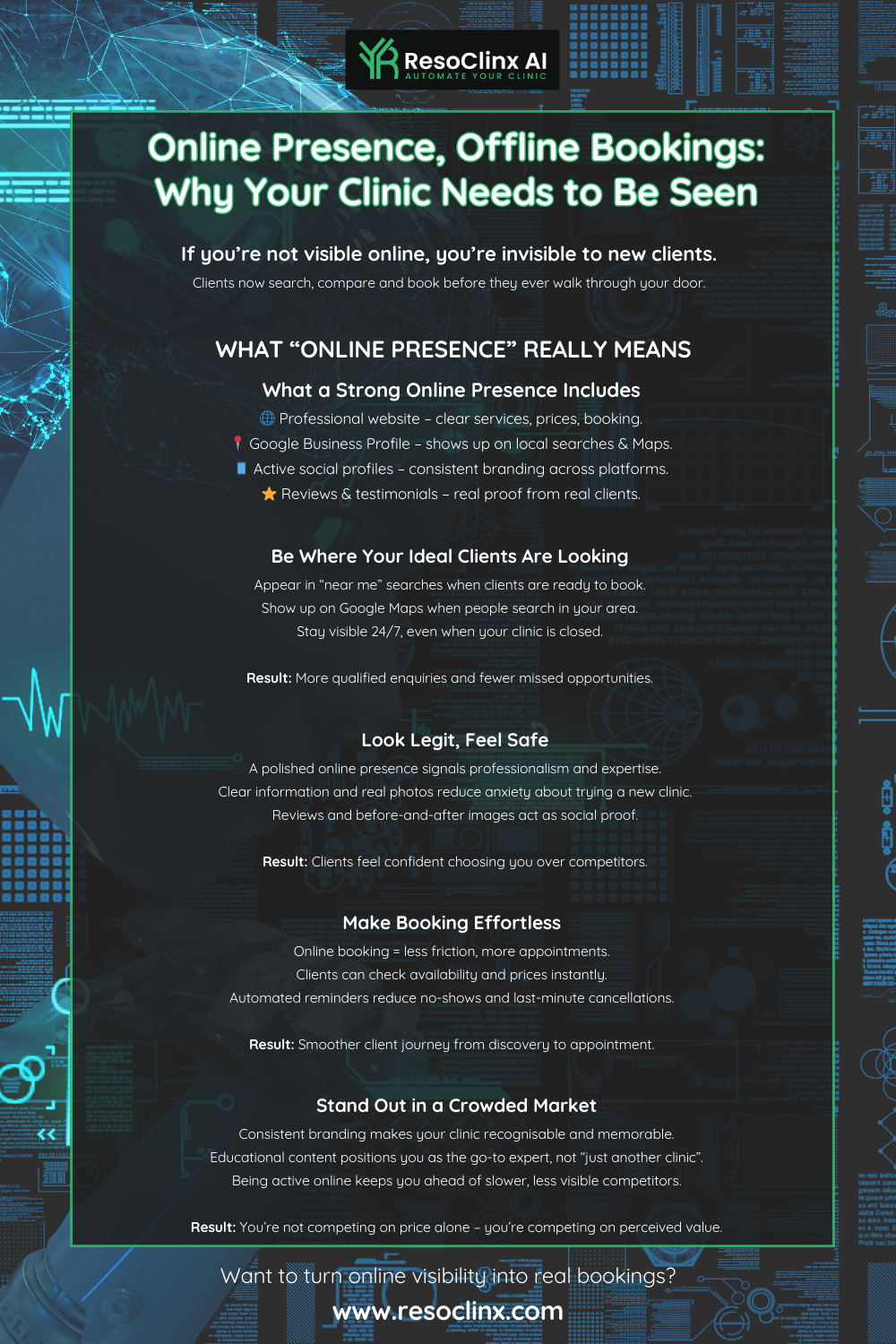
Creating a professional online presence starts with getting the foundations right. Once these pieces are in place, everything else – from design to bookings – becomes much easier to manage.
Choosing Your Website Platform: WordPress Power
Setting up your beauty salon’s online home starts with choosing the right platform. For a salon website, WordPress is a solid, future-proof choice.
It’s:
Flexible – you can create anything from a simple brochure site to a fully featured online booking hub.
Widely used – millions of websites and a huge community mean plenty of tutorials and support.
Highly customisable – themes and plugins allow you to tailor your site to your salon’s brand and services.
Think of WordPress as a blank canvas that you can shape to fit your salon’s style and needs. It’s not just about looking good; it’s about building a functional space that works for you and your clients – from showcasing treatments to taking bookings.
WordPress gives you a robust foundation that can grow with your business, whether you’re a single-chair salon or a multi-location brand.
Securing Your Domain Name and Hosting
Next, you need an address for your website – that’s your domain name (for example, yourbeautysalon.co.uk). It’s often the first thing people see, so choose something:
Memorable
Easy to spell
Relevant to your salon’s name or services
Once you have a domain, you’ll need web hosting – this is the space where your site lives on the internet. Think of hosting as renting a unit on a busy high street.
When comparing hosting providers, look for:
Good uptime – your site should be online and available when clients search for you.
Decent loading speed – a faster website gives a better experience and supports your local SEO efforts.
Helpful customer support – ideally with live chat or quick ticket responses.
An SSL certificate included – this gives you https:// and the little padlock in the browser, which helps keep data secure.
Tip: For a UK-based salon, using a .co.uk domain can help signal that you serve local clients.
Essential WordPress Setup for Your Salon
Once WordPress is installed on your hosting, it’s time to put the basic structure in place.
Start with:
A clean, professional theme suitable for beauty salons.
Core pages:
Homepage – your main “shop window”.
Services – clear descriptions and pricing.
About Us – your story, expertise and team.
Contact – address, map, phone, email and contact form.
Policies – a privacy policy and terms of service, ideally aligned with UK data protection requirements.
These seemingly small details go a long way in building trust and professionalism. Getting these foundational elements right means you’re building on solid ground, and it makes everything else – from design to bookings – much smoother later on.
Designing a Captivating Beauty Salon Website
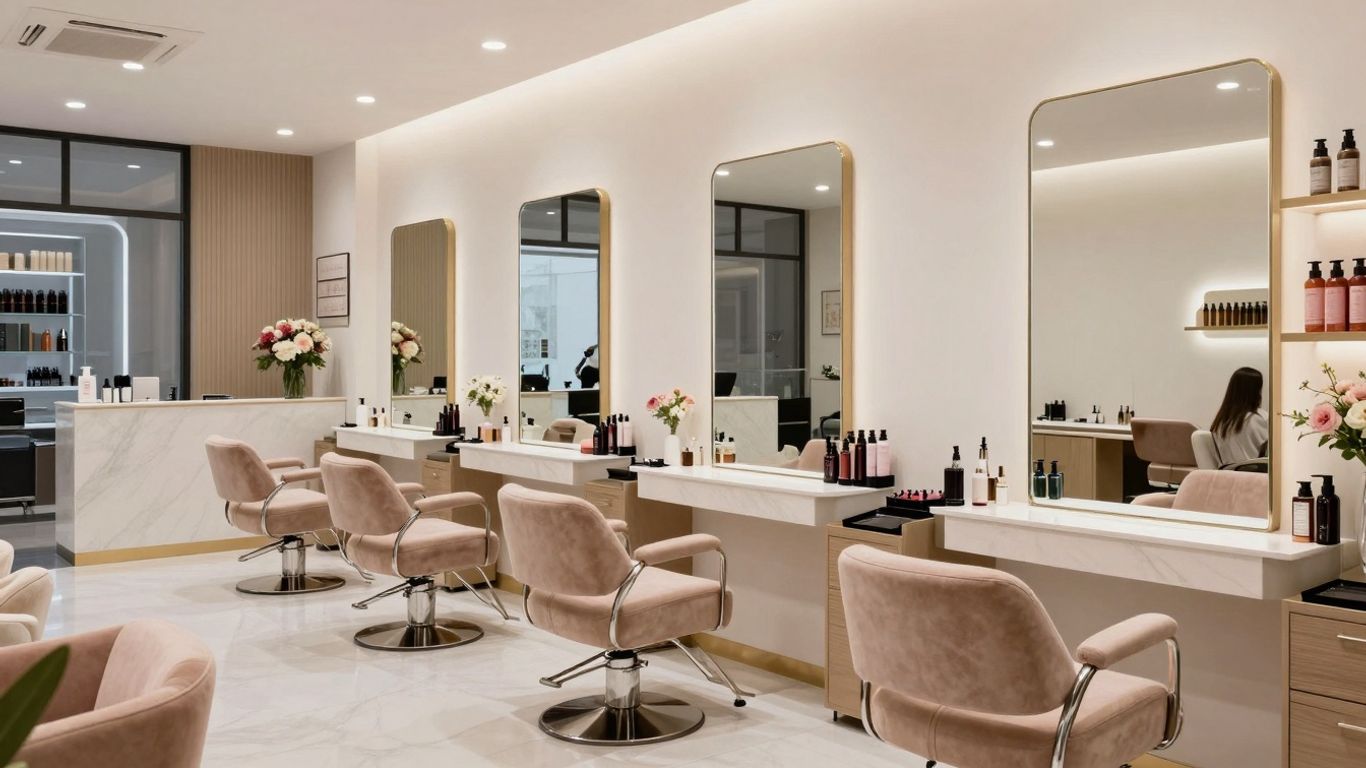
Your website is your digital shopfront. It needs to look professional, feel welcoming, and make it clear what you do and who you help. For many clients, it’s their first impression of your salon – and first impressions matter.
Selecting the Perfect WordPress Theme
Choosing the right theme is like selecting the perfect décor for your salon. It sets the tone and overall feel.
For a beauty salon website, look for themes that:
Are designed for beauty, wellness or lifestyle businesses.
Include built-in layouts for services, galleries and testimonials.
Are mobile-friendly (responsive) – your site must look great on phones.
Offer easy customisation of colours, fonts and layouts to match your branding.
Have a reputation for speed and good coding practices.
Come with positive reviews and responsive support from the developer.
A good WordPress theme will make it simple to present your services, staff, prices and photos in a way that feels cohesive and on-brand.
Crafting a Visually Appealing Homepage
Your homepage is your salon’s introduction. It should grab attention quickly and make it obvious what you offer and how to book.
Consider including:
A clear headline that states who you are and what you do (e.g. “Modern beauty salon in [Town], specialising in hair, nails and skincare treatments.”).
A short, friendly intro paragraph explaining your approach and what clients can expect.
A prominent “Book Now” button above the fold (near the top of the page).
A snapshot of your key services with links to full details.
A selection of client testimonials or review snippets.
A brief “Why choose us” section with 3–4 key reasons that set you apart (experience, expertise, environment, products, etc.).
Use high-quality, well-lit images of your salon, your team and your work. Avoid stock images where possible; real photos help build trust and authenticity.
Your homepage should answer these questions quickly:
What services do you offer?
Where are you located?
Why should I book with you?
Showcasing Your Services Effectively
People visit your website to understand what you offer, how much it costs and how to book. Make this information simple and easy to scan.
Create a dedicated Services page (and, where needed, subpages for specific categories such as hair, nails, skincare). For each treatment:
Use clear headings (e.g. Cut & Blow Dry, Balayage, Gel Manicure).
Add a short, benefit-focused description (not just the technical details).
Include price and approximate duration.
Highlight who the treatment is best for or the main result (“ideal for dry, damaged hair”, “perfect before a special event”, etc.).
You can also present your services in a simple table for quick comparison:
Service Category | Specific Treatment | Price (£) | Duration |
|---|---|---|---|
Hair | Cut & Blow Dry | 55 | 1 hour |
Balayage | 120 | 3 hours | |
Nails | Gel Manicure | 40 | 45 mins |
Acrylics | 60 | 1.5 hours | |
Beauty | Facial (60 min) | 75 | 1 hour |
Brow Lamination | 45 | 30 mins |
Don’t just list services; describe the benefits:
What problem does the treatment solve?
How will the client feel afterwards?
Is it part of a course or package?
This shifts your services from being just a price list to a set of solutions that genuinely help clients look and feel their best.
Building Trust and Credibility Online
In the beauty industry, trust is everything. Your website is often the first place a potential client gets to know you, so it needs to feel reliable, professional and safe. This is your chance to demonstrate your skills, standards and client care.
Creating a Professional Portfolio of Your Work
Your portfolio is your visual story. It’s where you let your results speak for themselves.
To make it effective:
Showcase a variety of services – hair, nails, brows, facials, etc.
Use before-and-after photos where appropriate (with written consent from clients).
Aim for consistent lighting and angles, so visitors can clearly see the results.
Add brief descriptions beneath images (e.g. “Full head balayage for a softer, low-maintenance blonde”).
High-quality photography makes a significant difference to how visitors perceive your salon’s professionalism and attention to detail. If possible, consider investing in a photographer for key images.
Leveraging Client Testimonials and Reviews
What other people say about you is often more convincing than anything you could write yourself. Testimonials and reviews act as powerful social proof.
Here’s how to make the most of them:
Ask satisfied clients if they’re happy to provide a short testimonial.
Encourage clients to leave reviews on your Google Business Profile and other relevant review platforms.
Feature your best testimonials on:
Your homepage
A dedicated Reviews or Client Feedback page
Service pages, next to relevant treatments
Respond to feedback professionally – especially if it’s critical. A calm, solution-focused response shows that you care about client experience and are willing to improve.
Highlighting Health and Safety Protocols
Clients want to feel safe and comfortable in your salon. Clearly outlining your health and safety measures reassures them that you take their wellbeing seriously.
You might include:
Your cleaning and sanitisation procedures between appointments.
Hygiene practices such as handwashing, use of disposable tools where appropriate, and sterilisation of equipment.
Any ventilation or air quality measures, if relevant.
Any certifications or training your staff have undertaken related to health, safety or infection control.
By being transparent about your practices, you demonstrate that client wellbeing is a top priority, strengthening your credibility.
Optimising for Client Bookings and Engagement
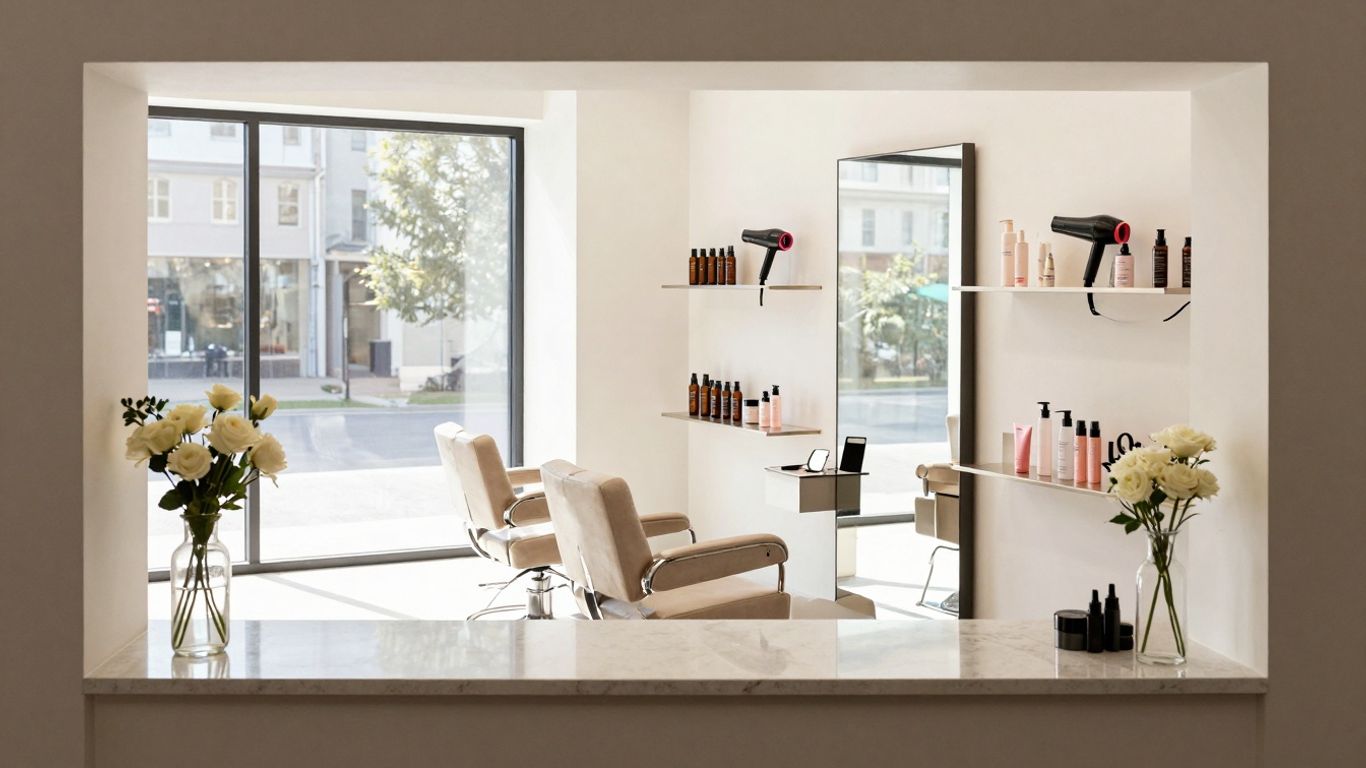
A beautiful website is only part of the picture. To be truly effective, it also needs to make booking easy and encourage clients to stay connected with your salon.
Integrating Seamless Online Appointment Booking
Your online booking system is one of the most important features of your salon website. If clients can’t book easily, they are more likely to look elsewhere.
A good booking system should offer:
Real-time availability – clients can see when you’re free without having to call.
Instant confirmation – no need for back-and-forth emails.
Service selection – clients can choose the exact treatment and staff member.
Options for deposits or full payment – this can help reduce no-shows.
You can also add online consultation or intake forms for new clients. This:
Saves time on the day.
Ensures you have any relevant medical or skin information in advance.
Creates a more organised and professional first impression.
Enhancing User Experience with Mobile Responsiveness
Most people now browse the internet on their phones. If your website is difficult to use on a mobile, you could be losing bookings without ever knowing.
A mobile-responsive website will:
Adjust its layout to suit different screen sizes.
Use readable font sizes and enough spacing between buttons and links.
Display images in a way that doesn’t slow down the page.
This matters because:
It makes your website more accessible – clients can book anywhere, anytime.
It improves user satisfaction – fewer frustrations mean visitors stay longer.
It supports search engine rankings, as Google favours mobile-friendly sites.
Regularly test your site on several devices to ensure it remains smooth and intuitive to use.
Implementing Clear Calls-to-Action
Once visitors are on your site, you need to guide them towards the next step with clear calls-to-action (CTAs).
Effective CTAs might include:
“Book Now” – leading directly to your booking page.
“View Services” – taking visitors to your services overview.
“Contact Us” – linking to your contact page or form.
Place CTAs:
At the top of your homepage.
On service pages, near treatment descriptions.
In your header or footer, so they’re visible on every page.
Use action-oriented language, such as “Book your appointment” or “Discover our treatments”, to make it clear what will happen when someone clicks.
Marketing Your Salon Through Your Website
Once your beauty salon website is live, you want it to actively help you attract more clients, not just sit there as a static brochure. Think of it as your digital marketing hub, working alongside your local SEO and social media.
Understanding Local SEO for Beauty Businesses
Local SEO (Search Engine Optimisation) is all about helping people in your local area find your salon when they search online.
When someone searches “hairdresser near me” or “beauty salon [your town]”, you want your business to appear as high as possible in the results.
To improve your local visibility:
Set up and optimise your Google Business Profile
Add your name, address and phone number (NAP).
Include opening hours, a link to your website and high-quality photos.
Choose relevant categories (e.g. beauty salon, hairdresser, nail salon).
Encourage clients to leave reviews and keep your details up to date.
Use local keywords on your website
Naturally include phrases such as “beauty salon in [Town]”, “gel nails in [Town]”, or “facials in [Neighbourhood]” in your headings and content.
This helps search engines connect your website with local search queries.
List your salon in reputable local directories
Ensure your NAP details are consistent wherever they appear online.
Encourage and respond to reviews
Positive reviews help build trust and support your local SEO, especially on Google.
Utilising Social Media Integration
Your website and social media should support each other. It’s not necessary to be on every platform; instead, focus on where your ideal clients spend their time (often Instagram and Facebook for beauty businesses).
You can:
Add social media icons with links in your header, footer or contact page.
Share website content via your social channels – for example, a new blog post on seasonal skincare tips linked back to your site.
Embed your Instagram feed on your homepage or gallery page to showcase your latest work and keep your site feeling fresh.
Use social media ads targeting people in your local area and direct them to a relevant landing page or booking page on your website.
By linking your website, social media and local SEO, you create a joined-up system that makes it easier for people to discover your salon, see your work and book appointments.
Developing a Content Strategy for Engagement
Content is not just about selling; it’s about educating, reassuring and engaging your audience. A thoughtful content strategy positions you as a knowledgeable expert in your field.
Useful content ideas include:
Blog posts
Topics such as “How to look after coloured hair between appointments”, “What to expect from your first facial”, or “How often should you have a manicure?”.
These posts help answer common questions and build trust.
Service spotlights
Dedicated pages or articles for your most popular treatments, explaining:
What the treatment involves
Who it’s suitable for
How to prepare
Aftercare tips
Behind-the-scenes content
Introductions to your team.
A look at your salon environment.
Short, simple explanations of products or equipment you use.
Client features
With permission, share client transformations or stories.
This acts as both education and powerful social proof.
Your website becomes more than a static brochure; it turns into an ongoing resource that keeps clients informed and engaged.
Launching and Maintaining Your Salon Website
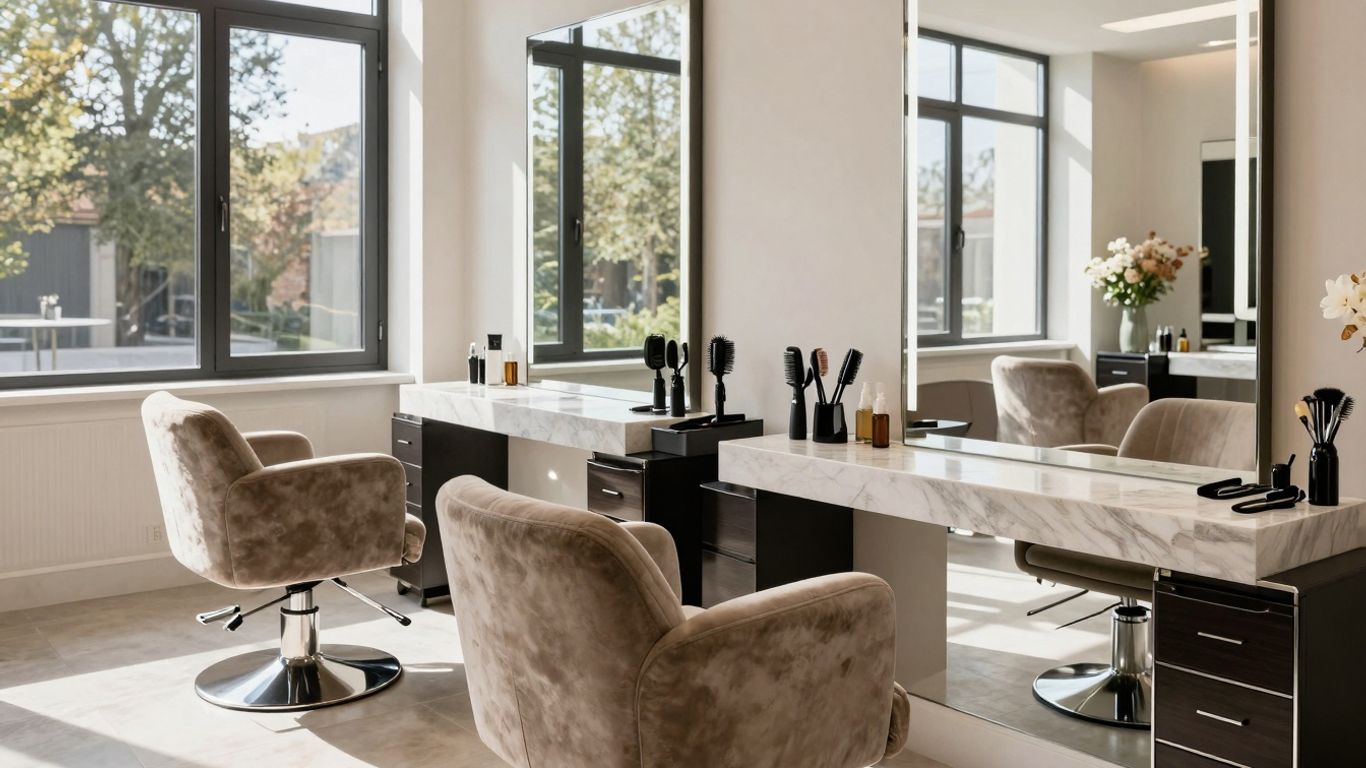
Once your beauty salon website is looking good and working well, it’s time to launch it – but the work doesn’t stop there. A website is an ongoing asset that needs regular care.
Streamlining the Website Launch Process
Launching your salon’s website doesn’t have to be a long, complicated process. With a clear plan and your content prepared, you can often have a professional site ready in around 10 to 14 days.
A simple launch timeline might look like this:
Days 1–2: Planning & Content Gathering
Collect your photos, service descriptions, price list, staff bios and policies.
Decide what you need from your booking system and contact forms.
Days 3–7: Design & Development
Customise your chosen theme with your branding (colours, logo, fonts).
Build your pages (homepage, services, about, contact, reviews, gallery).
Integrate your online booking system.
Add key elements like contact forms and maps.
Days 8–9: Review & Revisions
Check all pages on desktop, tablet and mobile.
Test forms and booking functionality.
Refine any text, headings or images that don’t feel quite right.
Day 10: Launch & Visibility
Make your site live.
Submit it to search engines.
Announce the launch across your social media channels and update your Google Business Profile with the website link.
Having a structured approach and all your materials ready in advance makes the launch quicker and less stressful, so you can start benefiting from your new website sooner.
Essential Website Maintenance and Security
Your website, like your salon, needs regular upkeep to stay in good condition. It isn’t something you set up once and forget.
Key areas to maintain include:
Technical updates
Regularly update WordPress, your theme and plugins to keep everything secure and functioning.
Keep your SSL certificate active.
Set up automatic backups, so your site can be restored if something goes wrong.
Content updates
Review your services and pricing periodically to ensure they’re accurate.
Add new photos, seasonal offers and recent testimonials.
Update your opening hours and contact details if they change.
Many web designers and agencies offer maintenance packages, typically charging a monthly fee for updates, security checks and support. For many salon owners, this is more cost-effective than dealing with unexpected technical problems later.
Measuring Your Website’s Performance
Once your site is live, it’s important to understand how well it’s working for your business.
Some useful metrics to track include:
Website traffic – How many people visit your site, and where do they come from (Google, social media, direct, etc.)?
Booking conversions – How many visitors complete an online booking?
Bounce rate – What percentage of people leave after viewing only one page?
Top-performing pages – Which pages attract the most interest?
Tools such as Google Analytics and other website statistics platforms can provide this information. By reviewing these metrics regularly, you can make data-informed decisions about:
Which services to highlight more prominently
What content to create next
Whether your booking process needs simplification
This ensures your website continues to support your salon’s growth, rather than simply existing in the background.
Wrapping Up Your Beauty Salon’s Online Presence
You’ve now seen the key steps to getting your beauty salon website up and running on WordPress – from choosing a platform and domain, through design and content, to bookings and ongoing maintenance.
At first, the process can feel overwhelming. However, with a clear plan and sensible structure, it becomes a manageable project rather than a mystery.
A well-built website acts as your virtual front door, open 24/7:
Showcasing your services and results
Reflecting your brand and values
Making it easy for clients to book and stay in touch
Keep your site updated with your latest work, reviews and information, and it will remain a valuable asset that supports your business and strengthens your professional reputation.