
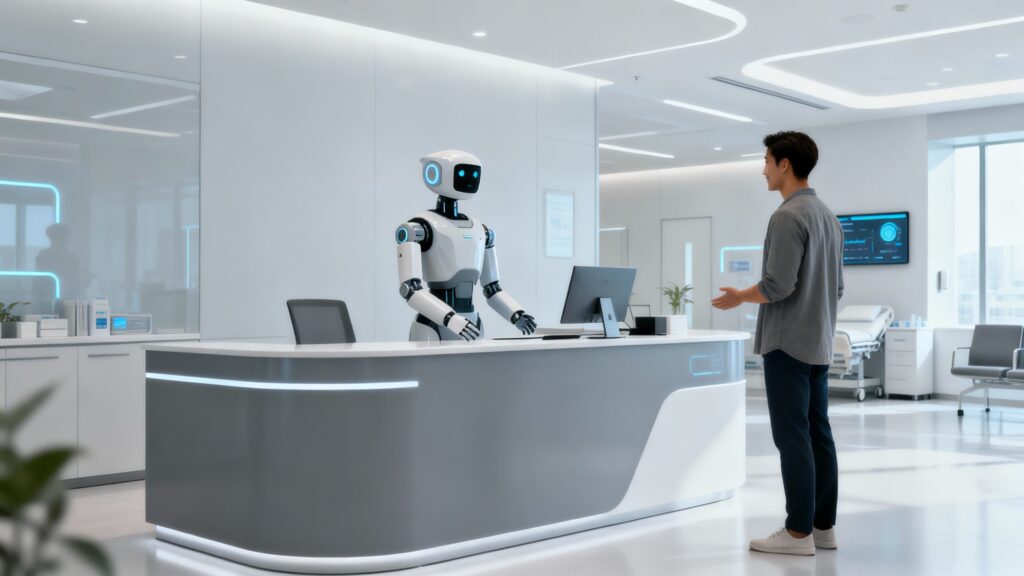
Running a modern healthcare or aesthetics clinic involves managing multiple responsibilities — from booking appointments and maintaining patient records to handling payments and ensuring patient satisfaction. But what if there were a way to make operations smoother, free up your team’s time, and enhance the patient experience?
That’s where automation comes in. It’s not about replacing the human touch; it’s about making it more efficient and meaningful. Let’s explore how automation is transforming the way healthcare and aesthetic clinics operate.
Key Takeaways
- Streamlining clinic operations through automated appointment scheduling and administrative task management improves overall efficiency and reduces workload.
- Automated communication channels, such as AI chatbots and follow-up messages, enhance patient engagement and satisfaction.
- AI-driven clinical decision support tools assist in accurate diagnostics and enable the creation of personalised treatment plans.
- Automation in financial processes simplifies billing, invoicing, and payment collection, leading to better revenue control and reduced errors.
- Implementing automation is essential for data security, GDPR compliance, and maintaining patient trust.
Streamlining Clinic Operations Through Automation
Running a clinic often feels like juggling multiple priorities. Between patient consultations, appointment scheduling, and paperwork, it’s easy for things to become overwhelming.
But automation can simplify these everyday tasks, freeing up valuable time for what truly matters — patient care. It’s not about replacing the human touch but enhancing it through greater efficiency and consistency.
Optimising Appointment Scheduling And Patient Flow
Consider how much time is spent on booking appointments, sending reminders, and managing cancellations. Automated systems can handle these processes efficiently.
Online booking platforms enable patients to view available slots and book appointments 24/7 — improving convenience while reducing reception workload.
Automated reminders sent via text or email can cut no-shows by up to 50%, helping maintain a steady patient flow, reduce downtime, and ensure more consistent revenue.
- Automated appointment reminders can slash no-show rates.
- Online booking systems offer patient convenience and reduce administrative burden.
- Intelligent scheduling software can help manage patient flow, minimising wait times.
For aesthetic clinics, optimising scheduling through automation can directly improve client satisfaction and boost retention — a key component of effective aesthetic clinic marketing.
Automating Administrative Tasks For Enhanced Efficiency
Administrative tasks can be time-consuming — manual data entry, filing, and following up on information all take up valuable hours. Automating these processes streamlines operations and reduces errors.
For example, digital intake forms completed before appointments can automatically feed into your patient management system. This frees your staff to focus on higher-value tasks or provide more direct patient support.
Automating repetitive administrative duties allows your team to focus on higher-value tasks, improving both staff satisfaction and the quality of patient interaction.
Leveraging Digital Intake Forms For Seamless Data Capture
Digital intake forms have replaced traditional paper processes, offering greater convenience and accuracy. They can be tailored to collect specific information — from medical history to consent details — and completed by patients on their own devices before arriving at the clinic.
The data is securely integrated into patient records, improving accuracy and accessibility while streamlining the check-in process.
Enhancing Patient Experience With Automated Communication
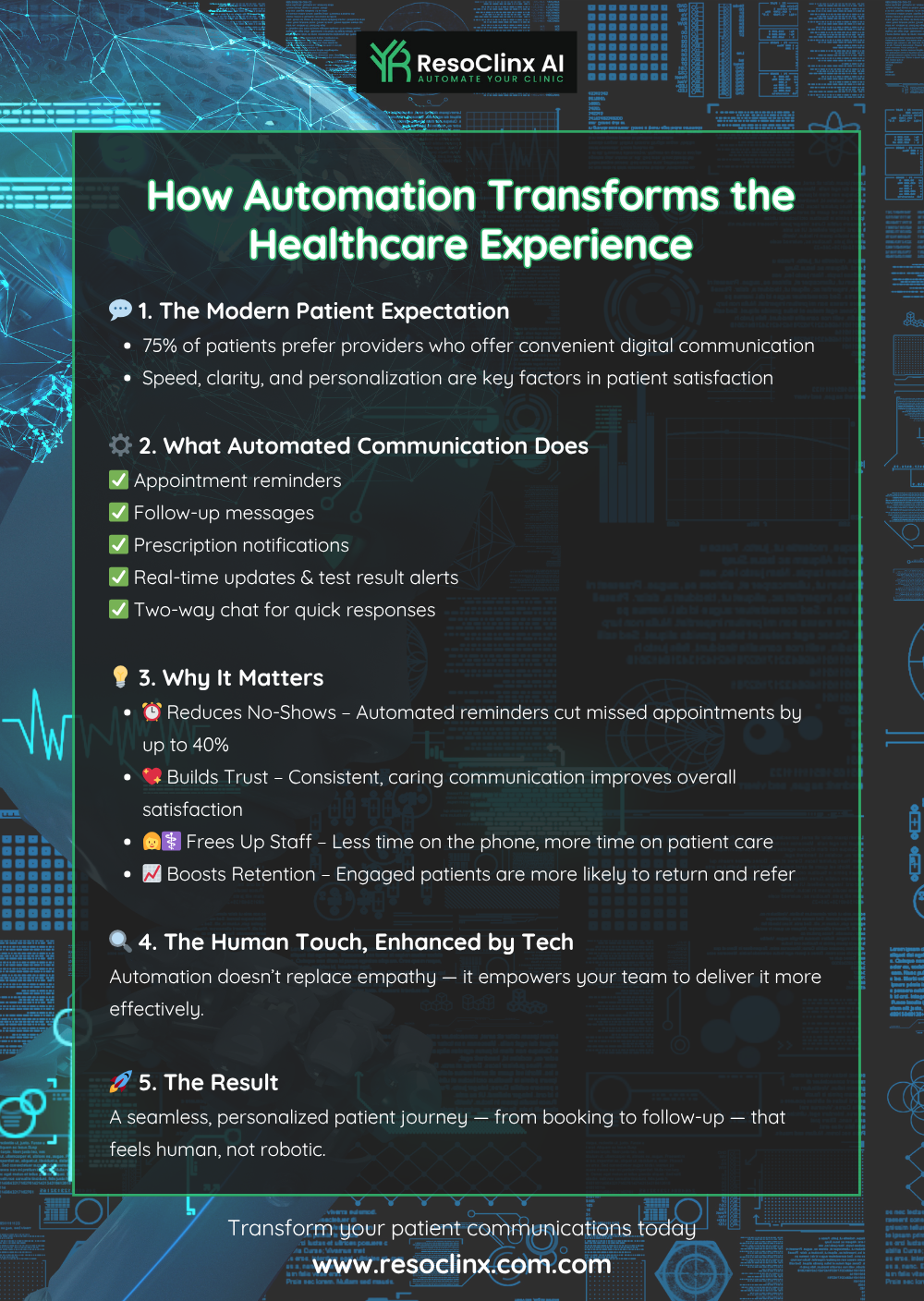
Keeping patients informed and engaged is essential. Automation supports this by ensuring consistent, personalised communication — without adding pressure to your team.
AI-Powered Chatbots For Instant Query Resolution
AI-powered chatbots can handle common patient queries — such as opening hours or treatment details — even outside clinic hours.
These 24/7 tools provide instant responses, ensuring patients receive timely information while freeing your team to focus on complex or in-person interactions.
Automated Follow-Ups For Improved Patient Engagement
Following up after an appointment or procedure is vital for maintaining care quality and patient satisfaction. Automated systems simplify this process, sending reminders and follow-up messages via text or email.
Clinics implementing these tools often report up to a 30% reduction in missed appointments. Beyond reminders, automated check-ins can ask about recovery progress or provide aftercare guidance — reinforcing trust and patient support.
Personalised Communication Strategies Through Automation
Automation can actually enhance personalisation. By leveraging patient data such as treatment history or preferences, clinics can tailor messages to individual needs.
For instance, a patient who recently had a facial treatment might receive follow-up advice or information about complementary services. This thoughtful use of automation strengthens patient relationships and sets modern clinics apart.
Here’s how automated communication can make a difference:
- Reduced No-Shows: Automated SMS or email reminders significantly lower missed appointments.
- Increased Patient Satisfaction: Quick responses and timely follow-ups make patients feel supported.
- Staff Efficiency: Routine communication automation allows staff to focus on more meaningful interactions.
- Targeted Information: Tailored content based on treatment history enhances engagement and relevance.
The Role Of Automation In Clinical Decision Support
While automation is often associated with administrative processes, it’s increasingly influencing clinical decision-making.
Think of it as a data-driven assistant that helps clinicians make faster, more accurate choices. It doesn’t replace professional judgment — it enhances it by providing insights that support better patient outcomes.
AI-Driven Diagnostics For Accurate Assessments
AI-powered diagnostic tools analyse patient data — such as symptoms, medical history, and imaging results — to identify potential conditions or recommend further tests.
These systems process vast amounts of information quickly, helping to detect issues early and reduce diagnostic errors. It’s akin to having an additional expert reviewing each case.
Personalised Treatment Plans Based On Data Analysis
Every patient is unique — what works for one may not work for another. Automation, powered by AI and machine learning, enables deeper personalisation. By analysing data such as genetics, lifestyle, and treatment responses, systems can help design tailored care plans that deliver more effective results and minimise side effects.
Predictive Analytics For Proactive Patient Care
Predictive analytics uses historical data to identify patterns and forecast potential health risks. For instance, systems can flag patients at higher risk of certain conditions based on demographics and medical history.
This enables proactive intervention — such as targeted screening or lifestyle recommendations — shifting the focus from reactive treatment to preventive care.
Automation in clinical decision support isn’t about removing the clinician’s judgment; it’s about augmenting it. By providing data-driven insights and flagging potential issues, these systems free up clinicians to focus on the complex, human aspects of care, building stronger patient relationships and delivering more effective treatments.
Improving Financial Management With Automation
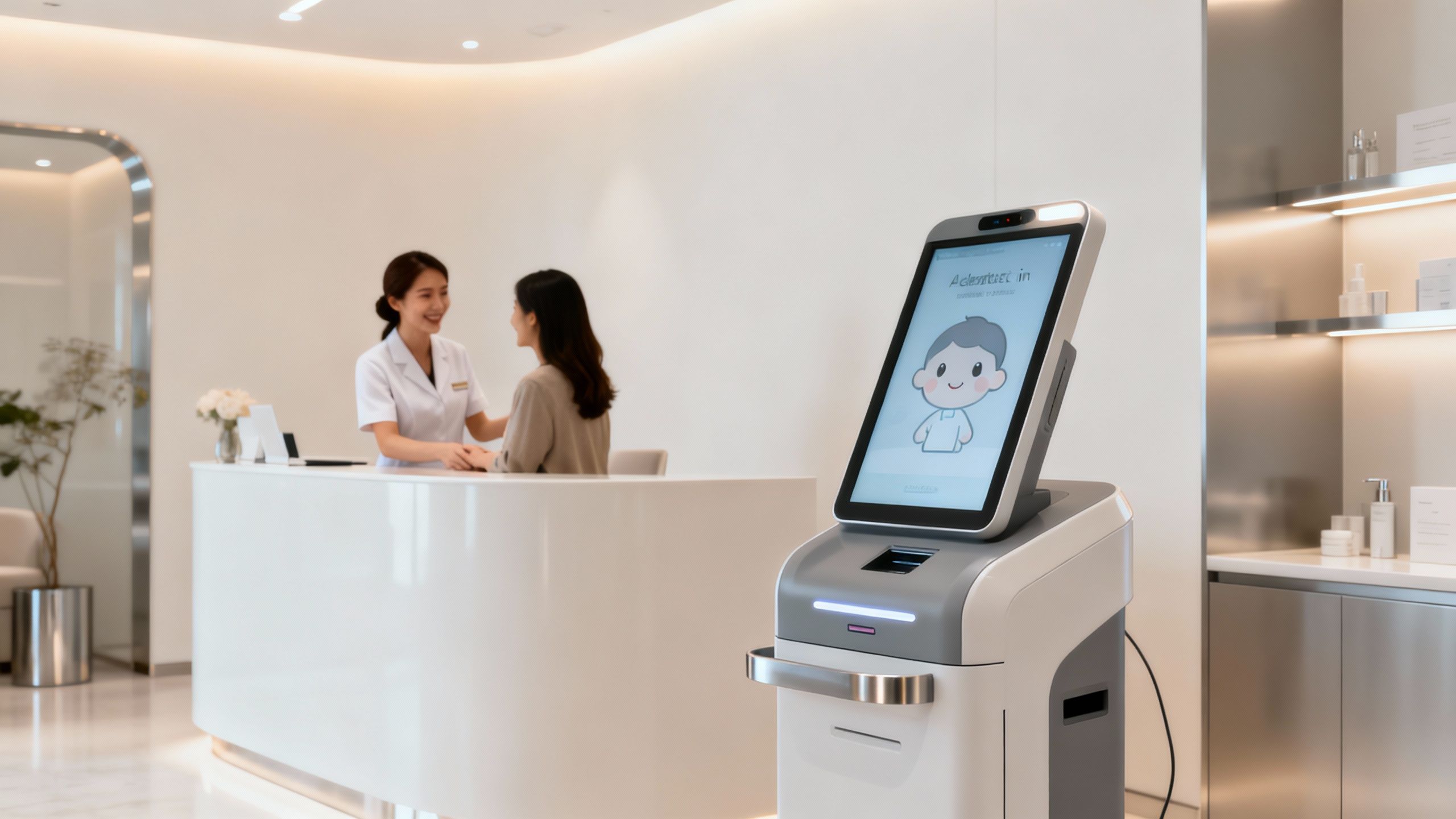
Managing a clinic’s finances can be challenging, but automation simplifies and strengthens these processes. It’s not just about saving time — it’s about ensuring your clinic operates efficiently and profitably.
Handling invoices, payments, and financial records manually is both time-consuming and prone to errors that can affect revenue and patient trust.
Automated Billing And Invoicing Processes
Manual billing consumes valuable resources and increases the risk of human error. Automated systems can instantly generate invoices once a service is completed, using data directly from patient records.
This ensures accuracy, faster turnaround, and improved cash flow. Automated reminders for outstanding balances also reduce the need for manual follow-ups and help maintain positive patient relationships.
Streamlined Payment Processing And Revenue Cycle Management
Making payment processes simple and accessible for patients is essential. Automation can transform revenue cycle management by integrating multiple payment options — including credit cards, digital wallets, and flexible plans for larger treatments.
Payments are automatically recorded and reconciled in real-time, providing clear insight into your clinic’s financial performance while reducing administrative workload and revenue loss.
Real-Time Financial Insights Through Analytics
Automation also delivers valuable financial analytics. Clinics can track performance trends, understand revenue sources, and identify rising costs early.
These insights support informed decision-making, enabling better budgeting, accurate forecasting, and sustainable growth.
Automating financial processes isn’t just about efficiency; it’s about building a more robust and predictable business. By reducing manual errors and speeding up transactions, clinics can see a significant improvement in their bottom line, freeing up resources to focus on what matters most: patient care.
Ensuring Data Security And Compliance With Automation
Protecting patient data and maintaining regulatory compliance is essential. As automation manages increasing amounts of information, clinics must ensure robust systems are in place. Strong data security builds trust and safeguards both patients and the clinic.
Secure Patient Management And EMR Integration
At the core of any automated system is how it handles patient data. Modern platforms often combine patient management with electronic medical records (EMR), creating a single place for all that important information. This integration means less manual data entry, which in turn reduces the chances of errors. When digital intake forms feed straight into a patient’s record, for example, it saves time and makes sure details are captured accurately.
This setup is key for making sure treatment histories and consent forms are easily accessible to the right people. Plus, having a clear audit trail that shows who accessed what patient data and when is non-negotiable for accountability and staying compliant.
HIPAA-Compliant Data Handling And Audit Trails
For clinics in the UK, while HIPAA is a US regulation, the principles of protecting patient data are universal and mirrored in UK data protection laws like GDPR. This means implementing safeguards across the board. Think about appointing someone to oversee data privacy, regularly checking for potential risks, and encrypting data both when it’s being sent and when it’s stored.
It’s also important to have clear agreements with any third-party vendors who might handle sensitive patient information. Documenting all your data protection policies, procedures, and training is also a must, and these records should be kept for a good number of years.
Protecting Sensitive Information With Advanced Security Measures
Data security goes beyond just a strong password. Advanced systems use multiple layers of protection. This includes encrypting data as it travels across networks and when it’s stored, often in secure cloud environments.
Regular security checks and updates are also part of the package. These measures are really important for safeguarding personal and financial details, shielding both the clinic and its patients from potential data breaches. It’s about building a secure environment where sensitive information is protected at all times.
Future Trends In Automation For Healthcare Clinics
Clinic operations continue to evolve, with automation driving many of the latest advancements. Emerging technologies are making processes more streamlined, efficient, and patient-centred.
The Rise Of Hyperautomation In Clinic Operations
Think of hyperautomation as automation on steroids. It’s not just about automating one task; it’s about using a whole bunch of smart technologies together – like AI, machine learning, and clever software – to automate as much as possible.
This means everything from booking appointments to managing patient records can become much more streamlined. It’s about creating a clinic that runs itself, almost.
- Automating repetitive administrative tasks frees up staff time for patient care.
- Predicting patient needs before they even arise.
- Optimising resource allocation based on real-time data.
Hyperautomation aims to connect different automated systems, creating a more integrated and efficient workflow across the entire clinic. This approach helps reduce manual intervention and potential errors, leading to a more reliable and consistent patient experience.
Cloud-Based Platforms For Scalability And Flexibility
As clinics grow, they need systems that can grow with them. Cloud-based platforms are perfect for this. They allow clinics to easily scale up their services without needing to invest in a whole new IT infrastructure.
Plus, they offer flexibility, meaning staff can access patient information securely from anywhere. This is a big deal for modern clinics that might have remote consultations or multiple locations.
Integrating AI For Advanced Personalisation And Virtual Consultations
Artificial intelligence is really starting to shine in how it can personalise patient care. AI can analyse vast amounts of data to help tailor treatment plans specifically for each individual.
We’re also seeing AI play a bigger role in virtual consultations, helping to assess patients remotely and provide initial advice. This makes healthcare more accessible and convenient for everyone.
- AI-driven diagnostics for more accurate assessments.
- Personalised treatment recommendations based on patient data.
- Virtual consultations enhanced by AI for remote patient support.
Looking Ahead: The Automated Future of Healthcare and Aesthetics
Automation is no longer a trend in healthcare and aesthetics — it’s an essential part of clinic operations. From appointment scheduling and patient management to personalised treatment and improved communication, automation drives efficiency and enhances patient care.
Embracing these tools enables clinics to deliver more effective, patient-centred services while maintaining the crucial human touch. The future is bright for clinics that integrate these technologies, resulting in better outcomes for both patients and practitioners.