
Running a clinic can feel like a constant juggle, especially when it comes to all the administrative work – appointment booking, chasing up payments and managing paperwork. These tasks can easily eat up valuable time that could be spent with patients. For aesthetic clinics in particular, efficient admin underpins both a smooth patient experience and your wider aesthetic clinic marketing efforts.
By automating key processes, you can make daily operations run more smoothly, reduce avoidable errors and give your team more time to focus on patient care. This article looks at how you can automate clinic administrative tasks to free up your team, improve how your clinic operates and support sustainable growth.
Key Takeaways
Make appointment booking easier for patients and staff by using online systems, self-service options and automated reminders.
Speed up patient check-ins and reduce paperwork by using digital forms instead of paper.
Simplify financial tasks such as checking insurance and taking payments to reduce manual work and minimise errors.
Reduce administrative workload to help prevent staff burnout and allow your team to focus more on patient care and patient communication.
Integrate new technology with your current systems to improve day-to-day operations, support your clinic’s growth and strengthen your local presence.
Streamlining Appointment Management

Getting your clinic’s appointments managed efficiently is a key part of making sure things run smoothly. When your booking process is disorganised, it can cause delays and frustration for both your patients and your staff.
Consider a typical scenario: a patient calls while you are already on another line, leaves a message, you call back, they miss the call – and the cycle repeats. This back-and-forth eats into valuable time and can leave your diary less full than it should be.
By introducing automation into appointment management, you create a clearer, more predictable schedule and a better experience for everyone.
Optimising Your Booking Process
Making it easier for patients to book appointments is essential. Gone are the days when a phone call was the only option. Offering online booking through your website or a dedicated app means patients can schedule appointments whenever it suits them, day or night.
This approach:
Reduces time spent on the phone by your reception team
Lowers the risk of missed bookings due to busy lines
Meets the expectations of patients who prefer to book online
A well-optimised booking system is often the first step towards a more efficient clinic and can help attract more clients who value convenience.
Here are a few ways to make booking better:
Online Booking Portal: Integrate a booking system directly into your website. This should show real-time availability so patients can choose a slot without needing to call.
Automated Confirmations: Send instant email or SMS confirmations once an appointment is booked. This gives patients peace of mind and a clear record of their appointment details.
Self-Service Options: Offer a patient portal where patients can view upcoming appointments, reschedule if needed or book new ones, all without contacting the clinic.
By taking these steps, you turn booking into a simple, reliable process rather than a daily challenge.
Automating Appointment Reminders And Recalls
No-shows can seriously disrupt a clinic’s schedule and affect revenue. Automated appointment reminders can make a significant difference by helping patients remember their bookings without adding to your team’s workload.
Automated reminder systems can:
Reduce no-shows: Sending reminders by SMS or email a day or two before an appointment significantly cuts down on missed appointments.
Enable two-way communication: Allow patients to confirm or cancel via text or email. When linked to your booking system, the diary can be updated automatically.
Support recall management: Set up reminders for follow-up appointments, treatment reviews or routine check-ups, helping patients stay engaged with their ongoing care.
The goal here is not just to remind people about appointments; it is to create a proactive system that minimises gaps in your schedule and keeps patient care on track.
Enhancing Patient Communication Through Automation
Beyond appointment reminders, automation can support many aspects of patient communication. For example, you can:
Send pre-appointment instructions (e.g. skincare guidance before a treatment)
Share post-visit follow-ups and aftercare information
Provide general clinic updates, such as changes to opening hours or new services
These messages keep patients informed and feeling looked after, without requiring individual phone calls or manual emails for each person.
Used well, automation helps you:
Maintain consistent communication
Reinforce your clinic’s professionalism
Build stronger patient relationships over time
It is about using technology to provide a better overall patient experience, helping your clinic feel organised, professional and easy to interact with.
Elevating Patient Intake And Experience

Making a good first impression is essential in any clinic, from the moment a patient considers booking an appointment through to their check-out. Automating parts of this process can make a significant difference, not just for patients but for your staff as well.
A streamlined patient intake process sets the tone for the entire visit and can drastically cut down on waiting times and paperwork.
Digitising Patient Forms For Seamless Check-Ins
The days of clipboards and lengthy paper forms are largely behind us. Asking patients to fill out demographic information, medical history and consent forms on paper is slow, prone to errors and can feel outdated.
By moving forms online, you allow patients to complete them before they arrive at the clinic, on their phone, tablet or computer. When they walk in, they can head straight to reception or a self-service kiosk, and their information is already in your system.
Key advantages include:
Pre-visit completion: Patients fill out forms at their convenience ahead of their appointment.
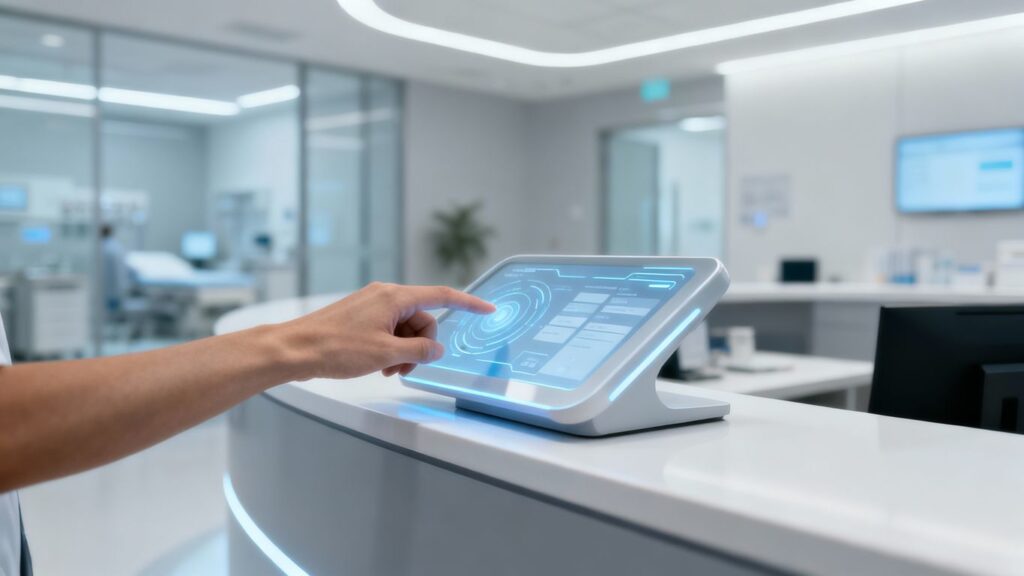
In-clinic digital check-in: Tablets or kiosks offer a quick way to check in upon arrival, reducing queues at the front desk.
EMR integration: Information can automatically sync with your electronic medical records, reducing duplication and manual data entry.
Moving patient intake online means less time spent on paperwork and more time for meaningful patient interaction. This approach improves both efficiency and patient satisfaction.
Reducing Wait Times With Automated Systems
Long waits in the reception area can reduce patient satisfaction, especially in an aesthetic clinic where clients often expect a premium experience. Automation can help smooth out patient flow.
Automated systems can:
Manage appointment confirmations and pre-visit instructions
Notify staff when a patient has checked in and is ready
Provide patients with realistic expectations of timing
Here’s how automation tackles wait times:
Optimised Scheduling: Smart scheduling software can help avoid overbooking and manage appointment durations more accurately.
Automated Notifications: Reminders, confirmations and digital check-in reduce no-shows and keep patients informed about their visit.
Streamlined Check-in: Digital forms and kiosks speed up the initial registration process.
Internal Alerts: Systems can notify clinical staff when a patient is ready, improving room turnover and keeping the day running to time.
When you manage these steps effectively, your clinic can run to a more predictable timetable, which benefits both patients and staff.
Improving Patient Satisfaction Through Efficiency
Ultimately, all these automated processes contribute to a better overall patient experience. When patients feel their time is respected, their information is handled efficiently and their interactions are smooth, satisfaction levels naturally rise.
An efficient clinic:
Reduces confusion and delays
Shows that it values patients’ time
Creates a sense of trust and professionalism
A clinic that runs efficiently, thanks to smart automation, is more likely to build patient loyalty and positive word-of-mouth referrals. Patients appreciate a clinic that makes their healthcare journey as straightforward as possible, and this often translates into stronger online reviews and better visibility in local search for clinics.
Automating Financial And Administrative Workflows
The administrative side of running a clinic can feel like a constant juggling act. Between managing patient records, processing payments and dealing with insurance, it is easy for processes to become slow and fragmented.
Automation offers a way to smooth out these workflows, reduce errors and free up your team’s valuable time. By strategically implementing automated systems, you can transform many of these tasks into efficient, streamlined operations.
Simplifying Insurance Verification Processes
Chasing down insurance details can be a real drain on resources. Manual verification is not only time-consuming but also prone to errors, which can lead to claim rejections and delayed payments.
Automated insurance verification tools can connect directly with insurance providers to check eligibility and coverage in real time. This means your front desk staff spend less time on the phone and more time interacting with patients.
Here’s how automation helps:
Instant eligibility checks: Get confirmation of patient coverage before or at the time of service.
Reduced claim denials: Minimise errors that lead to rejected insurance claims.
Faster reimbursement: Speed up the payment cycle by getting key information right the first time.
Improved patient experience: Patients are less likely to face unexpected bills due to coverage issues.
Even if your clinic works mainly with private pay, similar principles apply when checking finance options, treatment packages or membership plans.
Implementing Online Payment Solutions
Collecting payments should not be a hassle for either your patients or your staff. Offering convenient online payment options can significantly improve cash flow and patient satisfaction.
This might include systems that allow patients to:
Pay outstanding balances online
Manage payment plans
Make deposits for certain appointments
Key benefits:
Convenience for patients: Payments can be made anytime, anywhere through secure portals.
Reduced administrative load: Payment processing, reconciliation and receipt generation can be automated.
Increased payment rates: Easier payment options often lead to quicker settlement of accounts.
Enhanced security: Secure platforms help protect sensitive financial information.
By making the payment process clear and simple, you reduce friction for patients and reduce the risk of missed or delayed payments.
Reducing Manual Data Entry Errors
Manual data entry is a common source of mistakes in any administrative setting. Typos, transposed numbers or missing information can have knock-on effects, from incorrect billing to inaccurate patient records.
Automation minimises the need for manual input by using integrated systems that transfer data directly from one point to another. For example, when a patient’s demographic information is entered into your scheduling system, it can automatically populate their record in your billing software, cutting out a whole step where errors could occur.
Automating repetitive administrative tasks does not just save time; it builds a more reliable foundation for your clinic’s operations. By reducing the chance of human error in critical areas such as billing and record-keeping, you protect both your clinic’s finances and your patients’ trust, which is particularly important for aesthetic clinics dealing with repeat treatment plans and long-term relationships.
Empowering Your Administrative Team

Automating administrative tasks is not just about making the clinic run smoother; it is about improving working life for the people who keep everything going. Your administrative team is the backbone of daily operations, and when they are bogged down with repetitive jobs, it can lead to burnout and frustration.
By introducing automation, you are not replacing your team; you are giving them tools to work smarter, not harder.
Reducing Staff Burnout With Automation
The daily workload often includes endless phone calls for appointment confirmations, chasing up insurance details and manually inputting patient information. These tasks, while necessary, can be incredibly draining.
Automation can take over many of these repetitive duties. For example:
Automated appointment reminders sent via text or email can drastically cut down on no-shows and free up staff time.
Digital form completion allows patients to fill out information before arrival, saving check-in time.
Insurance verification tools streamline the process of confirming coverage.
When these routine tasks are handled by technology, your team can focus on more engaging and rewarding aspects of their roles. This shift can significantly reduce stress levels and improve overall job satisfaction.
By offloading the monotonous, you allow your staff to engage more meaningfully with patients and tackle more complex, problem-solving tasks. This not only boosts morale but also makes their work feel more purposeful.
Reallocating Staff Time To Patient Care
With automation handling the routine tasks, your administrative staff can dedicate more time to what truly matters: patient interaction.
Instead of being tied to a desk managing paperwork, they can:
Greet patients warmly and by name
Answer questions and provide reassurance
Help patients understand treatment plans and aftercare
Support clinical staff with non-clinical tasks that require a personal touch
Here’s how that time can be better spent:
Enhanced patient welcome: Making patients feel valued from the moment they walk through the door.
Proactive communication: Following up with patients post-appointment, answering queries and providing support.
Problem solving: Addressing concerns or issues with more attention and care.
This reallocation means your clinic can offer a more personalised and attentive service, which is often a key differentiator in patient satisfaction and loyalty.
Providing Essential Training For New Technologies
Introducing new technology is only effective if your team knows how to use it. Proper training is essential. It is not enough to implement a new system; you need to invest in your staff by providing them with the skills and confidence to operate it effectively.
This might involve:
Hands-on workshops: Practical sessions where staff can learn by doing.
Online tutorials and resources: Easily accessible materials for ongoing reference.
Dedicated support channels: A clear point of contact for questions and troubleshooting.
When staff feel competent and supported with new tools, they are more likely to embrace the changes and use the technology to its full potential. This investment in training benefits team members by expanding their skill set and ensures the clinic gains the full benefits of its technological investments.
Leveraging Technology For Clinic Growth
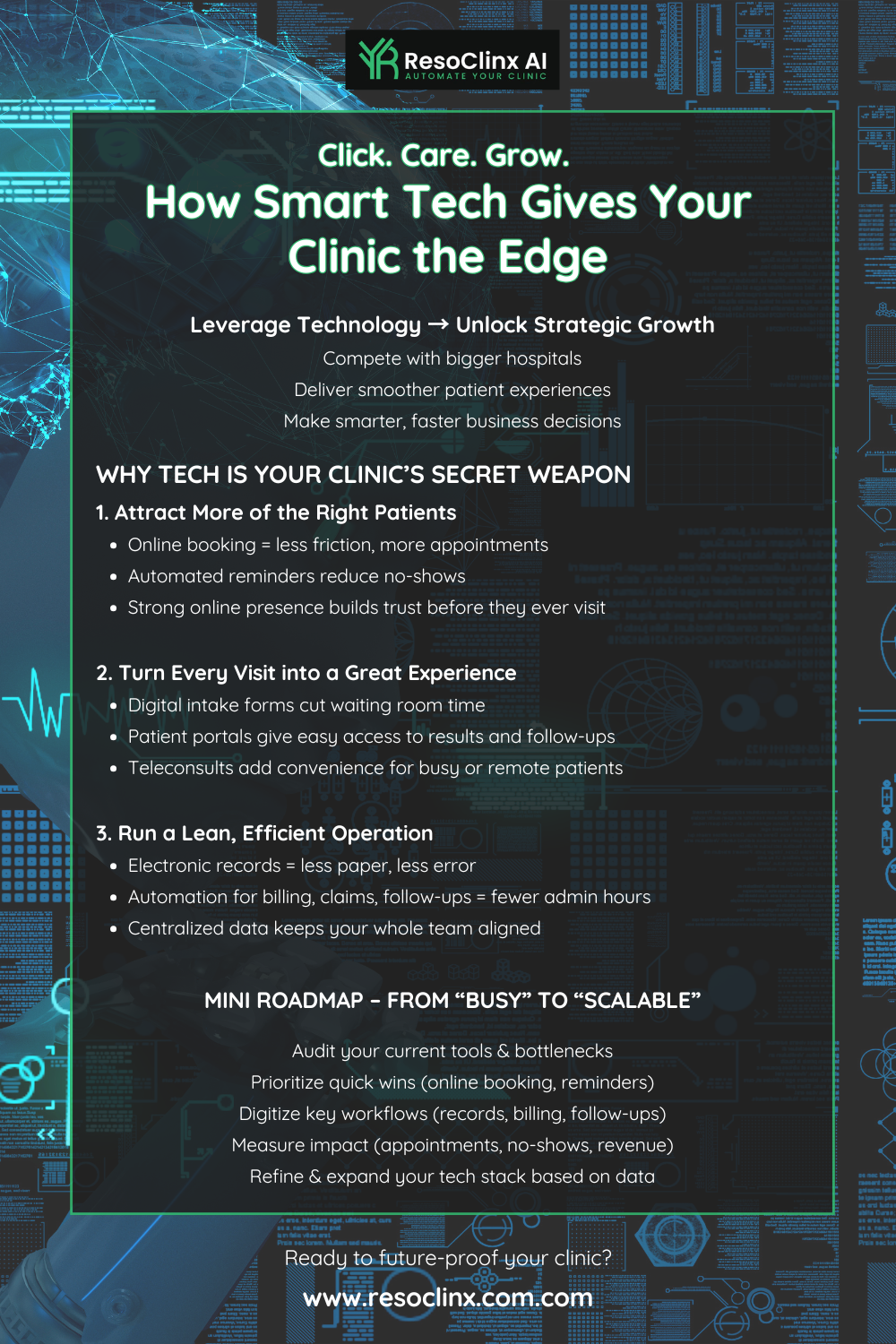
Integrating new technology into your clinic is not just about keeping up; it is about actively growing your practice and improving how you serve your patients. It is easy to focus on technical details, but ultimately technology should make daily work simpler and more effective for everyone involved.
The right tools can open up new avenues for:
Patient care
Operational efficiency
Long-term aesthetic clinic marketing and reputation-building
Integrating Automation With Existing Systems
Making sure your new automated systems work smoothly with the software you already use is essential. Nobody wants more work, so systems that can “talk” to each other – such as your electronic health record (EHR) and your scheduling software – are key.
This approach aims for:
Centralised patient data: A single, reliable source of truth for all patient information.
Reduced duplication: Less time spent re-entering the same details into multiple systems.
Fewer errors: Consistent data across platforms.
To get this right:
Check for API compatibility: Ensure new software can connect with your current EHR and practice management systems.
Test integrations thoroughly: Before going live, run tests to confirm data is transferring accurately and in real time.
When adopting new tools, always consider how they fit into your existing workflow. A system that requires extensive manual data transfer between platforms will likely create more problems than it solves, negating the benefits of automation.
Utilising AI For Enhanced Operations
Artificial intelligence (AI) is moving from theory to practical applications in clinical settings. For aesthetic clinics, AI can assist in several ways:
Predictive analytics: Helping to forecast patient demand, reduce appointment gaps and plan staffing more effectively.
Automated reporting: Generating reports on clinic performance, such as appointment volumes, treatment trends and cancellation rates.
Personalised patient engagement: Tailoring communication based on patient history, preferences and behaviour, such as reminders for repeat treatments or seasonal skincare advice.
While AI should never replace clinical judgement, it can provide useful insights and help your team make better-informed decisions about clinic operations.
Measuring The Impact Of Automation On Efficiency
Once you have introduced new technology, it is important to measure whether it is actually making a difference. Rather than relying on how things “feel”, you can track key metrics to see the real impact of automation.
Examples include:
Average patient wait time
Staff time spent on scheduling and admin tasks
No-show rate and late cancellations
Patient satisfaction scores from surveys or feedback forms
Here’s a simple example of how automation can change key metrics:
Metric | Before Automation | After Automation | Improvement |
|---|---|---|---|
Average patient wait time | 25 minutes | 15 minutes | 40% |
Staff time on scheduling | 10 hours/week | 3 hours/week | 70% |
Patient no-show rate | 15% | 8% | 47% |
Patient satisfaction scores | 7.5/10 | 8.8/10 | 17% |
From a digital marketing perspective, these improvements also support your Google Business Profile and local SEO for clinics. Better processes often lead to higher satisfaction, more positive reviews and more consistent feedback, all of which contribute to stronger online visibility over time.
Tracking these numbers helps you understand where automation is working best and where further adjustments might be needed. It is a continuous process of refinement to ensure your clinic is always moving forward.
Moving Forward with Automation
We have explored how automating everyday administrative tasks can make a meaningful difference in your clinic. Automation is not about replacing people; it is about giving your team more time to focus on what truly matters – looking after patients.
By adopting tools that handle appointment booking, reminders, patient intake and key financial processes, you can cut down on errors, reduce stress and create a smoother experience for everyone involved. For aesthetic clinics, these improvements also support long-term growth, stronger patient loyalty and more consistent online feedback.
Treat automation as an upgrade to your clinic’s toolkit that allows you to work smarter, not just harder. Starting with a few targeted changes can help your clinic run more smoothly, support your aesthetic clinic marketing and build a reliable foundation for future local SEO and Google Business Profile activity.