
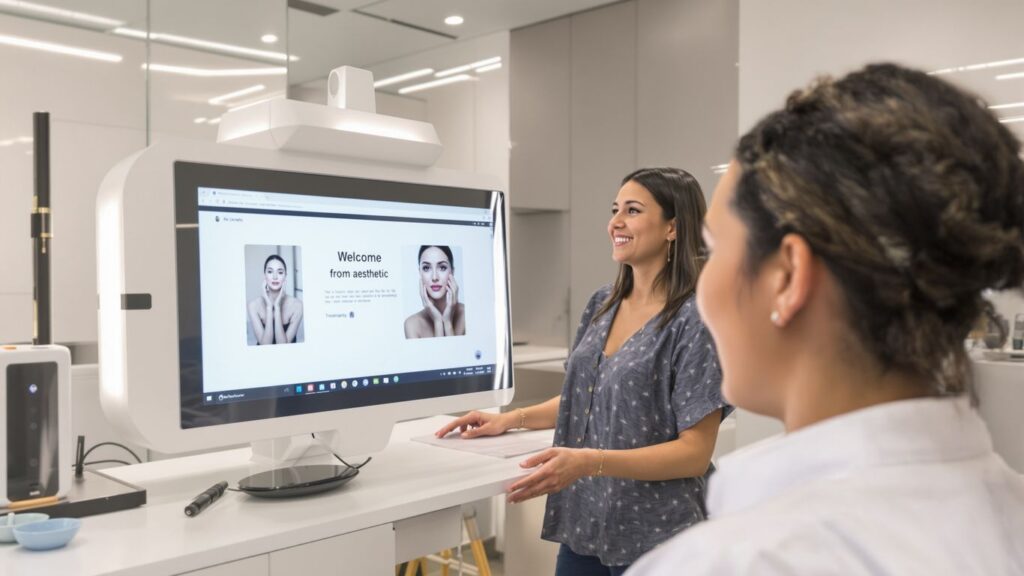
Running an aesthetics clinic means juggling consultations, treatments, follow-ups, and—of course—endless calls and appointment requests. What if you could keep your front desk running smoothly 24/7 without adding extra staff? That’s exactly where an AI receptionist comes in.
In this post, we’ll break down how an AI receptionist actually works in an aesthetics setting, and more importantly, when it makes sense to use one. Whether you’re curious about cutting costs, boosting client satisfaction, or simply reclaiming your time, you’ll find plenty of insights here to help you decide if AI is the right fit for your clinic.
Key Takeaways
- An AI receptionist can handle calls 24/7, meaning no more missed bookings or client queries outside of business hours.
- These systems can automate tasks like appointment scheduling and answering common questions, saving your staff time.
- By using an AI receptionist, clinics can reduce operational costs and improve staff efficiency by letting them focus on client care.
- Implementing AI shows your practice is modern and prioritises a smooth, tech-savvy client experience, attracting new customers.
- Ensuring the AI works with your existing systems and training your staff properly are key steps for a smooth integration.
Understanding the Role of an AI Receptionist

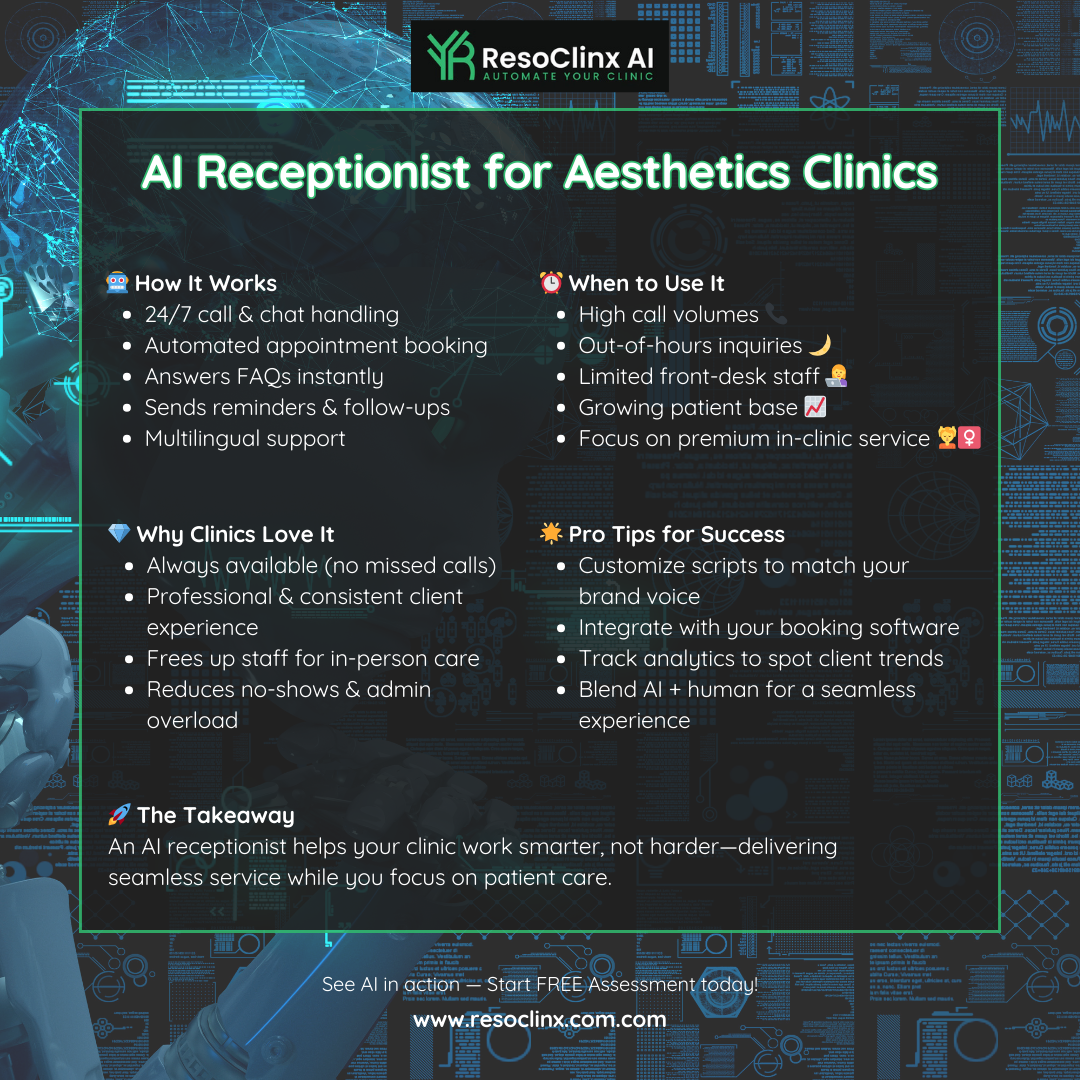
Think of an AI receptionist as your clinic’s digital front desk, working tirelessly to make sure every client interaction is smooth and efficient. It’s not just about answering phones; it’s about creating a positive first impression and handling the day-to-day communications that keep your aesthetic clinic running like clockwork.
This technology is designed to manage a wide range of tasks, freeing up your human staff to focus on what they do best – providing exceptional care and treatments.
Enhancing Client Communication and Accessibility
Clients expect to be able to reach you easily, at any time. An AI receptionist provides 24/7 availability, meaning no client inquiry goes unanswered, even outside of business hours. It can handle common questions about services, opening times, or appointment availability instantly. This constant accessibility significantly improves the client experience, making your clinic feel more responsive and approachable.
Clients can get the information they need without having to wait for a human to become available, which can be particularly helpful for those who are hesitant to call during peak times.
Streamlining Appointment Scheduling and Reducing Bottlenecks
Scheduling can often be a time-consuming process, prone to errors like double bookings. An AI receptionist can manage your appointment calendar with precision. It can understand client requests for specific treatments or practitioners, check availability in real-time, and confirm bookings directly.
If a preferred slot isn’t open, it can suggest alternatives, reducing the back-and-forth communication often needed. This automation helps to fill your schedule efficiently and minimises the chances of administrative mistakes, ensuring your clinic runs with greater predictability.
Automating Administrative Tasks for Enhanced Efficiency
Beyond scheduling, AI receptionists can take on a variety of administrative duties. This might include sending appointment reminders, collecting basic client information before a consultation, or even answering frequently asked questions about pre- or post-treatment care.
By automating these routine tasks, your reception team and other staff members have more time to dedicate to client-facing activities, complex queries, or specialised treatments. It’s about reallocating human effort to where it has the most impact, rather than letting administrative duties consume valuable time.
The goal is to create a system where technology handles the predictable, allowing your skilled team to manage the nuanced and personal aspects of client care. This partnership between AI and human staff leads to a more efficient, client-focused operation.
Key Features for Your AI Receptionist Solution
When you’re looking for an AI virtual receptionist, it’s not just about having something that answers the phone. You want a tool that really fits your clinic’s needs and makes life easier for your staff and clients.
Think about what makes your business tick and what your clients expect. The right AI receptionist should be able to handle a lot of the day-to-day stuff so your team can focus on giving great treatments.
Customisable Responses for Brand Voice
Your clinic has a unique vibe, right? The AI receptionist should be able to match that. You can set it up to talk in a way that sounds like your brand, whether that’s super friendly and casual or more professional and calm. This means the AI can greet clients by name, mention specific services, or even use certain phrases that are part of your clinic’s identity.
It makes the interaction feel more personal and less like talking to a robot. This level of personalisation helps build a stronger connection with your clients from the very first interaction.
Multi-Channel Support for Client Convenience
People reach out in different ways these days. Some still like to call, but others prefer texting or maybe even a chat on your website. A good AI receptionist can handle all of these.
It means clients can get in touch however is easiest for them, whether that’s:
- Making a phone call
- Sending a text message
- Using a live chat feature on your website
This makes it much simpler for clients to get the information they need or book an appointment, no matter their preference.
Seamless CRM Synchronization
It’s really important that your new AI receptionist plays nicely with the software you already use. You don’t want to create more work by having systems that don’t talk to each other. Most modern AI receptionist platforms are built with integration in mind. They often connect with popular CRM systems, electronic health records (EHRs), and booking software.
This means client information can flow easily between systems, reducing the need for manual data entry and cutting down on mistakes. When you’re looking at different AI options, ask about their integration capabilities. A system that connects smoothly will save you a lot of headaches down the line.
The goal is to have technology that supports your team, not adds to their workload. By integrating with your existing tools, the AI receptionist becomes a helpful assistant, not another piece of software to manage.
Real-World Impact and Tangible Results
So, what does all this AI tech actually do for a clinic? Well, it’s not just about fancy gadgets; it’s about real, measurable changes. Think about it: fewer missed calls means more people actually booking appointments. It’s that simple, really.
Clinics that have brought in AI receptionists often see a noticeable jump in new patient inquiries, sometimes by as much as 50%. This isn’t magic; it’s just being available when people want to book, even if that’s at 10 PM on a Tuesday.
Increased Bookings and Lead Capture
One of the most direct benefits is capturing more business. An AI receptionist works around the clock, so those late-night or weekend inquiries don’t just disappear into the ether. It can handle initial consultations, discuss treatment options, and even book appointments, turning potential leads into actual patients.
This means your clinic isn’t losing out on business simply because the phone wasn’t answered at the right moment. It’s about making sure every interested person gets through the door, or at least gets their appointment booked.
Reduced Operational Costs and Staff Workload
Let’s talk about the practical side. Your human receptionists are brilliant, but they can only do so much. AI can take over the repetitive tasks – answering common questions, confirming appointments, taking messages – freeing up your staff to focus on more complex patient needs or in-person interactions.
This often translates to significant time savings, sometimes 12 hours or more per week for a single clinic. Imagine what your team could do with that extra time! Plus, by handling a large chunk of calls, AI can help reduce the need for additional staffing during busy periods, leading to cost savings.
| Metric | Before AI | After AI (6 Months) |
|---|---|---|
| Missed Calls | 20% | 2% |
| After-Hours Leads Captured | 30% | 90% |
| Admin Time Saved (Weekly) | 0 hours | 12 hours |
| Staff Workload | High | Moderate |
Improved Client Satisfaction and Retention
When clients can get information quickly and book appointments easily, they’re happier. An AI receptionist provides consistent, professional responses every time, 24/7. This reliability builds trust. Patients appreciate not having to wait on hold or repeat themselves.
Furthermore, AI can help personalise communication, remembering preferences or sending timely reminders, which makes patients feel more valued. This kind of attention to detail can make a big difference in keeping clients coming back for more treatments.
The shift to AI isn’t just about efficiency; it’s about creating a better experience for everyone involved. Patients get faster service, and staff can focus on what they do best, leading to a more positive and productive clinic environment.
Positioning Your Practice as a Leader

Attracting Clients Who Value Cutting-Edge Service
In today’s busy world, people often notice businesses that use new technology. It makes a place seem modern and like they really care about giving customers a good experience. An AI receptionist fits this perfectly. It can answer questions straight away, book appointments without any fuss, and is available all day and night.
This kind of constant availability and quick response is exactly what many clients are looking for. By using this kind of advanced tech, your clinic can look like a leader in the field. This attracts clients who like things to be efficient and new. It shows them that you’re not just offering treatments, but a better overall experience from the moment they first think about booking.
The Appeal of Advanced Technology
Using an AI receptionist can really help your business stand out. It’s not just about keeping up with the times; it’s about getting ahead. It tells potential clients that your practice is thinking ahead and respects their time.
This can make a real difference when someone is trying to decide where to book their next treatment. Think about it: when potential clients call your clinic, the first thing they notice is often the voice on the other end. An AI receptionist that’s fast, polite, and knows its stuff makes your practice seem up-to-date and efficient. It suggests you’re using the best tools to help your clients, which builds trust right from the start.
This tech-forward approach can be a big draw for people who want a smooth, easy experience from their very first contact.
Building Trust Through Efficiency and Professionalism
When clients interact with your AI receptionist, they’re getting a consistent and professional experience every time. This reliability builds confidence in your practice. Unlike human staff who might have off days or be busy with other tasks, the AI is always on point. It handles inquiries and bookings with accuracy, reducing the chance of errors that could frustrate clients.
This level of dependable service shows that your clinic values precision and client care. Embracing AI doesn’t mean replacing your human touch; it means amplifying it by handling the routine tasks efficiently. This allows your team to focus on more personal interactions and complex client needs, ultimately strengthening relationships and improving overall satisfaction.
Ensuring a Smooth Integration and Adoption
Bringing a new AI receptionist into your aesthetics clinic is a big step, and getting it right from the start makes all the difference. It’s not just about plugging in new tech; it’s about making sure it works well with what you already have and that your team feels comfortable using it.
Think of it like introducing a new team member – they need the right introductions and training to become a valuable part of the clinic.
Ensuring Compatibility with Existing Systems
Before you even choose an AI receptionist, take a good look at your current setup. Does your clinic use a specific Electronic Health Record (EHR) system? What about your appointment booking software?
The goal is to find an AI solution that can talk to these systems easily. This avoids double data entry, which is a time-waster and a common source of errors. Some AI systems can integrate directly with popular EHRs, pulling client information and updating appointments automatically.
Others might need a bit more work, perhaps through an API (Application Programming Interface), which is like a digital bridge between software. It’s worth checking the technical details or asking the AI provider about their integration capabilities. A system that plays nicely with your existing tools will save a lot of hassle down the line.
Training Your Team for AI Collaboration
Your staff are the front line, and their buy-in is key. While AI can handle many tasks, your team will still be involved in overseeing it, handling more complex queries, and ensuring the client experience remains personal. Proper training is vital.
This isn’t just about showing them how to use the AI’s interface; it’s about explaining why it’s being used and how it will help them. Focus on how the AI can take over repetitive tasks, freeing them up for more meaningful patient interaction. Think about creating a simple guide or running workshops.
- Understanding AI capabilities: What can the AI do, and what are its limits?
- Handling exceptions: How to step in when the AI can’t resolve an issue.
- Data privacy: Reinforcing the importance of patient confidentiality when using new systems.
- Feedback loop: Encouraging staff to report any issues or suggest improvements.
A little upfront investment in training can prevent confusion and resistance, making the transition much smoother for everyone involved.
Monitoring and Adjusting AI Performance
Once the AI receptionist is live, the work isn’t over. AI systems learn and adapt, but they also need a bit of guidance. Regularly check how it’s performing. Is it answering questions accurately? Are appointment bookings going through correctly? Are clients happy with the interactions? Most AI platforms provide analytics or reports that can show you this information.
You might find that certain questions are consistently misunderstood, or that the AI’s tone isn’t quite right for a specific situation. Based on this feedback, you can make adjustments. This might involve tweaking pre-written responses, updating the AI’s knowledge base, or even refining its learning parameters. It’s an ongoing process to make sure the AI continues to be a helpful and accurate part of your clinic’s operations.
When to Implement an AI Receptionist
Thinking about bringing an AI receptionist into your aesthetics clinic? It’s a smart move, especially if you’re noticing a few common operational pinch points. Often, the decision comes down to specific challenges that an AI can effectively address, freeing up your valuable human staff for more personal interactions.
Addressing Missed Calls and After-Hours Inquiries
It’s a common scenario: the phone rings just as your team is busy with a client, or perhaps after the clinic has closed for the day. These missed opportunities can add up. An AI receptionist is always ‘on’, ready to answer questions, take booking requests, or gather contact details even when your clinic is closed.
This means no potential client is left waiting, and you capture every lead, regardless of the time.
Managing High Call Volumes During Peak Times
Are your phone lines constantly busy during certain hours? Perhaps before a popular treatment or during seasonal rushes? An AI can handle a significant volume of calls simultaneously, answering frequently asked questions, confirming appointments, or guiding clients through the booking process.
This prevents your human receptionists from being overwhelmed and ensures that clients receive prompt attention, even during your busiest periods.
Seeking to Reduce Administrative Burden on Staff
Your team’s time is best spent on client care and specialised treatments, not on repetitive administrative tasks. An AI receptionist can automate many of these duties, such as:
- Confirming upcoming appointments
- Sending out pre-appointment instructions
- Answering common questions about services, pricing, or clinic hours
- Collecting basic client information before a consultation
By offloading these tasks, your staff can concentrate on delivering high-quality treatments and building stronger relationships with clients. It’s like adding an extra, always-available team member who never gets tired or misses a call, significantly boosting productivity and ensuring smoother operations.
The Future of Your Clinic’s Front Desk
An AI receptionist is a smart way to simplify operations, enhance client experience, and give you more time to focus on delivering the treatments your patients love. By understanding how it works and when to use it, you can decide if this solution is the right fit for your clinic.
Ready to explore how an AI receptionist could transform your front desk? Dive deeper on our website or reach out to see it in action.