Running an aesthetic clinic can feel like a constant balancing act. You’ve got patients to see, treatments to perform, records to keep, staff to manage and a full diary to control. It’s easy to get bogged down in day-to-day admin rather than focusing on patient care and long-term growth.
Aesthetic clinic automation is changing how clinics operate. It’s about using digital tools and smart workflows to handle repetitive tasks, support compliance and improve consistency. Done well, it allows you and your team to focus on what really matters: safe, high-quality treatment, strong patient relationships, and sustainable clinic growth.
Key Takeaways
Automating routine tasks such as appointment booking, reminders and client management can significantly improve how an aesthetic clinic operates and help attract more of the right clients.
Secure handling of patient data, with integration into electronic medical records, is a vital component of any automation system in the UK.
Using smart technology, including AI-driven scheduling and predictive tools, can help reduce missed appointments and optimise clinic flow.
Implementing workflow automation can free up staff time, reduce errors and support better patient care, while also creating capacity for revenue-generating activities.
While technology is important, maintaining a human touch and clear ethical practices is crucial for building patient trust in aesthetic clinic automation.
Streamlining Operations with Aesthetic Clinic Automation
From booking appointments to managing patient records and following up after treatments, an aesthetic clinic handles a lot of moving parts. Without the right systems, these can become slow, fragmented and prone to error.
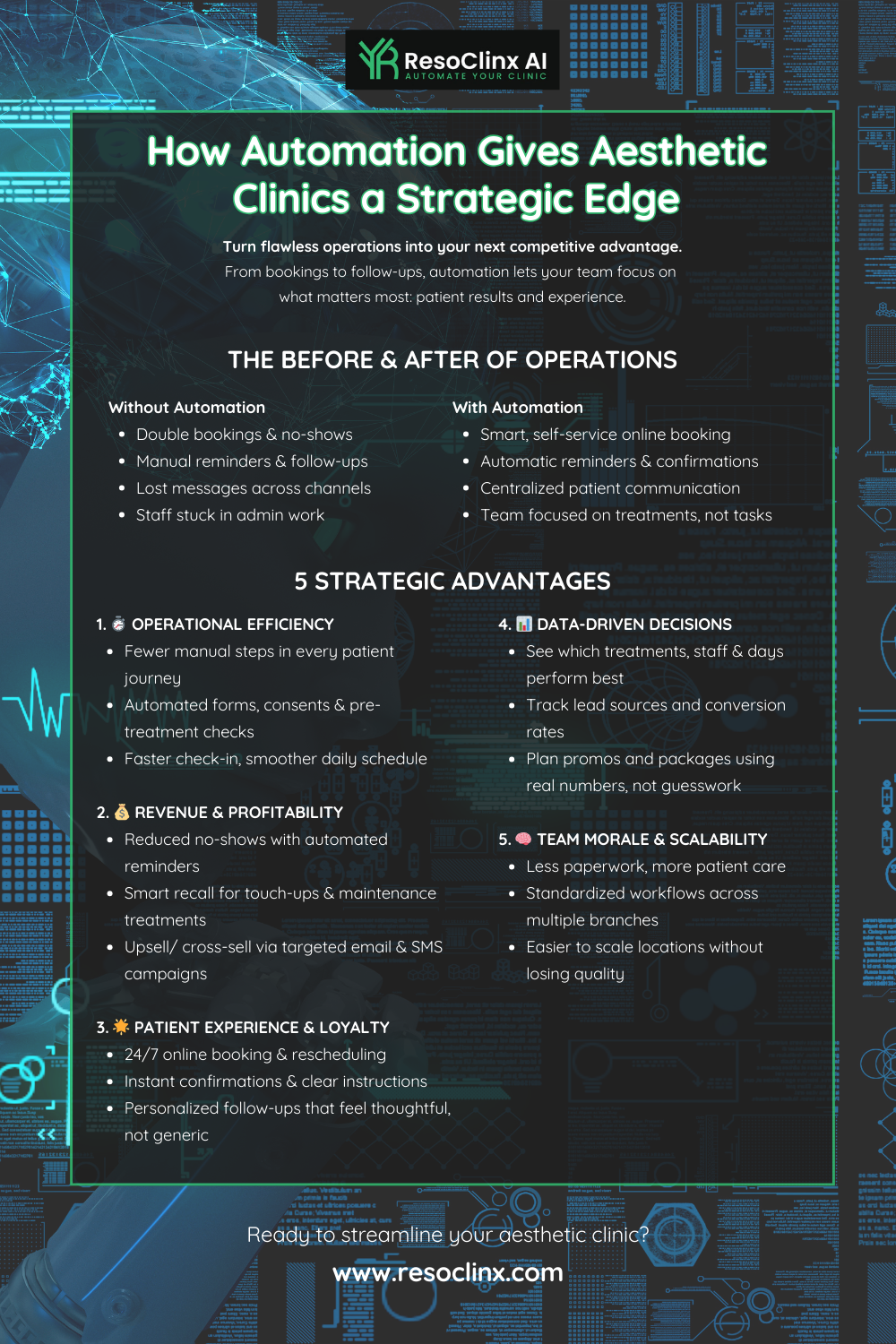
That’s where automation comes in. It’s not about turning your clinic into a machine; it’s about using technology to support your team. Automation helps you create consistent, repeatable processes so that patients receive the same standard of care and communication at every stage of their journey.
When this is set up well, you spend less time firefighting and more time on clinical work, leadership and strategic aesthetic clinic marketing.
Optimising Appointment Scheduling and Client Management
Think about your current appointment process.
Is it simple for patients to book online?
Do you still rely heavily on phone calls and manual diary entries?
Are no-shows and last-minute cancellations creating gaps in your day?
Automation can transform this area. Intelligent scheduling software can:
Show real-time availability
Send automatic confirmations and reminders via SMS or email
Allow patients to book, reschedule or cancel 24/7
Integrate with your patient management or CRM system
This not only makes life easier for patients, it reduces the administrative burden on your reception team and helps keep your diary as full and efficient as possible.
Examples of useful automations include:
Automated appointment reminders: Reduce no-shows with timely SMS or email reminders, customised by treatment type or lead time.
Online booking systems: Let patients choose times that work for them without needing to call the clinic, particularly outside opening hours.
Client relationship management (CRM) integration: Keep treatment history, preferences, notes and communication logs in one place, supporting more personalised patient experiences and targeted aesthetic clinic marketing.
Automating Patient Intake and Record Keeping
Paper forms completed in the waiting room are increasingly a relic of the past. Digital systems can streamline this step while improving accuracy and compliance.
With automation, you can:
Send digital intake and medical history forms in advance of appointments
Allow patients to complete them securely on their own devices
Automatically upload responses into your patient management system or Electronic Medical Record (EMR)
Collect and store consent forms in a structured, auditable way
This means less time spent on manual data entry, fewer transcription errors and more complete patient histories. In turn, having accurate, accessible data is essential for providing safe, personalised treatments and for meeting regulatory expectations.
Automating intake also allows your team to spend more time welcoming patients, explaining procedures and setting expectations, rather than shuffling paperwork.
Enhancing Communication and Follow-Up Processes
Consistent, thoughtful communication is a key part of patient experience and long-term loyalty. Automation helps ensure no-one is forgotten or overlooked.
You can use automation to:
Send automated post-treatment care instructions, tailored to specific procedures
Schedule follow-up reminders for reviews, top-ups or maintenance treatments
Request patient feedback and reviews after appointments
Nurture long-term patients with recall messages when they are due to return
For example, after a treatment you might automatically send:
A care pack email with post-treatment guidance
A review request that directs patients to leave feedback on your Google Business Profile, helping to strengthen local SEO for clinics
A follow-up reminder a few weeks or months later, depending on the treatment
These workflows help create a smooth, joined-up journey, where patients feel informed and looked after from the moment they book through to aftercare and beyond.
Core Components of Aesthetic Clinic Automation
When we talk about automating an aesthetic clinic, we’re not usually referring to a single piece of software. Instead, it’s a set of core systems working together to make things run more smoothly. Think of these as the building blocks of your digital clinic.
The main components typically include:
Secure patient data management and EMR integration
Intelligent scheduling and resource management
Automation for payments and financial processes
Communication tools for reminders, follow-up and marketing
Reporting and analytics to understand what is working
Bringing these elements together in a considered way allows you to build reliable workflows that support both clinical quality and business performance.
Secure Patient Data Management and EMR Integration
Keeping patient information safe, accurate and organised is fundamental for any clinic. Modern systems increasingly combine patient management with electronic medical records (EMR) to create a single, secure source of truth.
A well-designed data system should provide:
Centralised records: All relevant patient information stored in one place
EMR integration: Clinical notes, treatment plans, images and consent forms connected directly to appointments and billing
Data security: Encryption, access controls and audit trails to protect sensitive information
Compliance support: Functionality that helps you align with UK GDPR and the Data Protection Act 2018
It cuts down on a lot of manual work and reduces the chance of errors. In addition, it helps you stay compliant with UK data protection law and demonstrate responsible handling of patient data. Ultimately, having a single, secure system for patient information is non-negotiable.
Intelligent Scheduling with AI and Predictive Analytics
Scheduling can be one of the most complex and stressful aspects of running an aesthetic clinic. You need to balance room availability, practitioner time, treatment lengths and patient preferences, often across multiple locations.
Automation tools, particularly those that use AI or predictive analytics, can help by:
Suggesting optimal time slots for different procedures
Flagging high-risk no-show patterns based on past behaviour
Automatically adjusting reminder frequency for certain patients
Helping you plan staffing levels based on historic demand
Predictive analytics can help forecast busy periods, allowing you to staff appropriately, plan stock ordering and manage resources more effectively. This leads to:
Reduced waiting times
Fewer bottlenecks
Better use of treatment rooms and practitioner time
Rather than relying purely on gut instinct, you have data-driven guidance supporting your scheduling decisions.
Streamlined Payment Processing and Financial Management
Payment and financial administration can quietly consume a large amount of staff time. Automation can significantly simplify this side of the clinic.
With the right systems, you can:
Integrate payment processing with your booking and EMR software
Generate and send invoices automatically
Set up payment plans or recurring payments for courses of treatment where appropriate
Automatically send payment confirmations and receipts
Track outstanding balances and send gentle, scheduled reminders
This doesn’t just make things easier for patients by providing a smooth, transparent payment experience. It also gives you clearer real-time visibility of your clinic’s financial health, reduces time spent chasing payments and supports more predictable cash flow.
Implementing Workflow Automation for Enhanced Patient Care
Getting workflow automation up and running in your clinic can sound like a major project. In reality, it is often about gradual, structured improvements rather than an overnight transformation.
The main goal is to:
Reduce manual, repetitive tasks
Create clear, consistent processes
Support safer, more reliable patient journeys
When you design automation around the patient experience – from first enquiry to follow-up – you enable your team to spend more time on clinical decision-making, patient education and relationship-building.
Assessing Current Workflows and Identifying Automation Opportunities
Before you implement new tools, it is worth taking a clear, honest look at how things work today. Consider the key stages of the patient journey:
Initial enquiry or online search
Booking and pre-appointment communication
Arrival, check-in and consultation
Treatment and documentation
Follow-up, reviews and recall
Ask questions such as:
Where do delays, errors or frustrations tend to occur?
Which tasks are repeated many times per day?
Which processes rely heavily on individual memory or manual checklists?
Often, the best candidates for automation are:
High-frequency tasks: e.g. appointment confirmations or standard reminder emails
Rule-based processes: e.g. sending pre-treatment instructions for certain procedures
Data entry tasks: e.g. transferring information from one system to another
Repetitive communications: e.g. standard follow-up messages or recall reminders
Mapping the patient journey before you automate
Create simple flowcharts or lists showing each step, including who is responsible and what systems are used. Talk to your reception team, practitioners and nurses – they often know exactly where bottlenecks appear.
Set clear goals such as:
Reducing appointment no-shows
Cutting down administrative errors
Improving response times to enquiries
Increasing the proportion of patients who complete their recommended treatment plan
This clarity helps you focus your automation efforts on the changes that will make the greatest difference.
Selecting the Right Workflow Automation Platform
Once you understand your processes, you can look for tools that fit your clinic, rather than forcing your clinic to fit the tool.
When evaluating platforms, consider:
Ease of use: Can your team understand and adopt it without extensive technical knowledge?
Integration: Does it connect with your existing patient management, EMR, accounting and marketing tools?
Security and compliance: Does the provider support UK GDPR compliance and offer appropriate data processing agreements?
Scalability: Will it still work well if your clinic grows or adds new locations?
Support and training: Is there reliable onboarding, documentation and ongoing support?
For aesthetic clinics, platforms that offer features such as intelligent scheduling, digital forms, template-based messaging and reporting dashboards tend to be particularly useful. The objective is to choose tools that will enhance your operational efficiency and patient experience, not simply add complexity.
Training Your Team for a Seamless Transition
Technology alone does not create better workflows. The people using it are just as important.
To support a smooth transition:
Explain why you are introducing automation and how it will help both staff and patients
Provide structured training sessions and simple step-by-step guides
Encourage staff to ask questions and share feedback on what works well or needs adjusting
Start with small, manageable changes before expanding to more advanced features
Identify one or two internal “champions” who are confident with the system and can support colleagues
When staff can see that automation will reduce their admin burden rather than replace their role, they are far more likely to engage positively and help refine the new workflows.
Leveraging Technology for Future Aesthetic Clinic Success
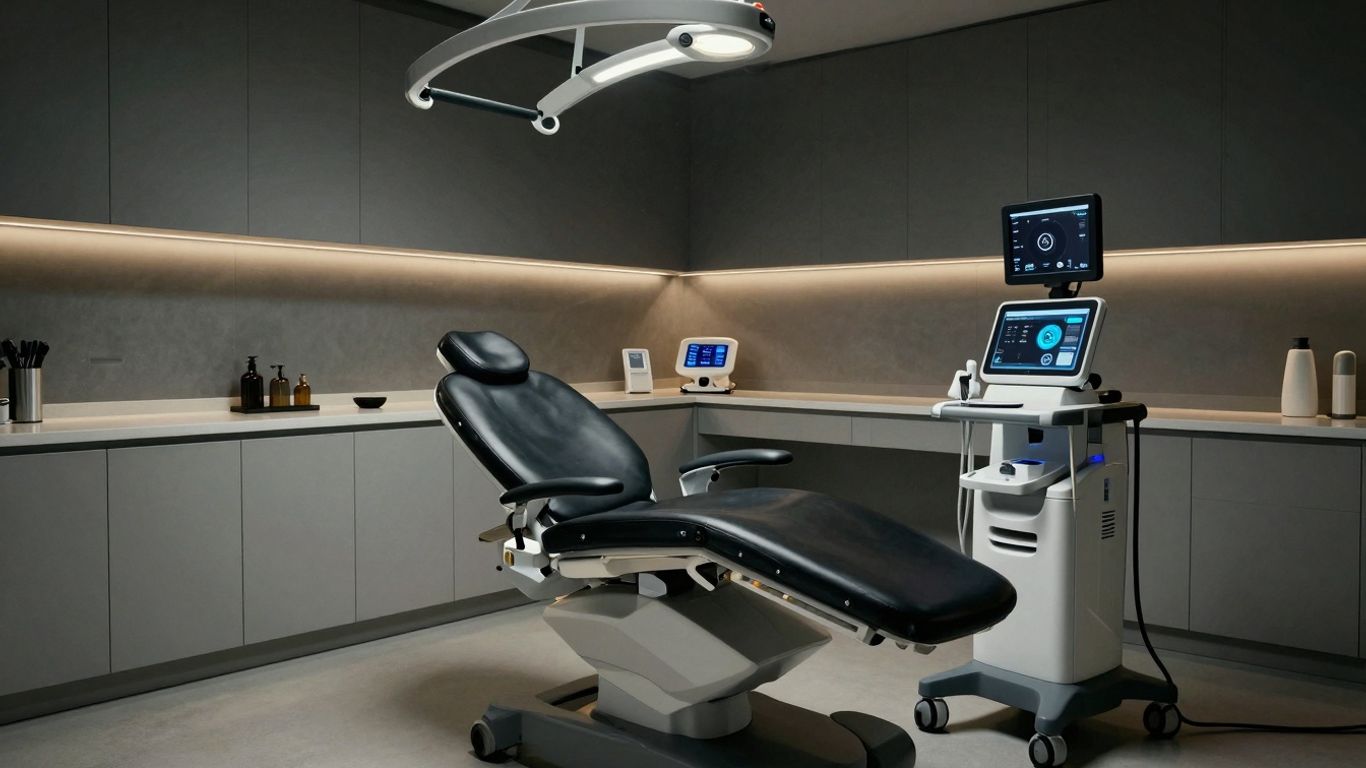
The aesthetic industry is evolving rapidly, and technology is increasingly central to how clinics operate. It is not simply about tightening processes; it is also about supporting clinical quality, patient experience and long-term marketing efforts.
Used thoughtfully, technology can:
Help you deliver more consistent treatment planning
Provide data to support evidence-based decisions
Enhance communication and visibility across channels, including your website and Google Business Profile
Support a scalable approach as your clinic grows
The goal is not to adopt technology for its own sake, but to select and configure tools that align with your clinical ethos, brand and patient expectations.
The Role of AI in Personalisation and Treatment Planning
Artificial intelligence (AI) is becoming a valuable ally in aesthetic practice. While it should never replace clinical judgement, it can support more informed and personalised decision-making.
Potential uses include:
Analysing patient data and images to help identify patterns and potential treatment options
Supporting prediction of likely outcomes based on previous similar cases
Helping clinicians standardise assessments and documentation
Providing structured treatment plans that can then be refined by the practitioner
This can move your clinic further away from a one-size-fits-all approach, helping to tailor treatments more precisely to each patient’s needs and expectations. Over time, this level of personalisation can enhance patient satisfaction and clinical outcomes.
Embracing Cloud-Based Solutions for Scalability
As clinics grow, they often need more flexible and accessible systems. Cloud-based solutions can support this by:
Allowing authorised team members to access patient records, schedules and reports securely from different locations
Reducing reliance on a single physical server or local machine
Making it easier to add new users, rooms or sites as the clinic expands
Supporting regular, secure backups managed by the provider
This kind of infrastructure helps ensure that your digital workflows remain robust and scalable, rather than becoming a barrier when you want to introduce new services or expand geographically.
Prioritising Cybersecurity in Digital Workflows
Increased digitalisation brings clear benefits but also heightened responsibility for cybersecurity. Protecting patient data is essential both ethically and legally.
Key measures include:
Using systems with encryption, role-based access and activity logs
Ensuring strong password policies and, where possible, multi-factor authentication
Keeping software updated and patched
Providing regular data protection and cybersecurity training for staff
Conducting periodic audits or reviews of your security posture
In the UK, clinics need to comply with UK GDPR and the Data Protection Act 2018. Automation should be designed with these obligations firmly in mind, and any third-party vendors should offer appropriate data processing agreements and clear information about how data is stored and protected.
The Transformative Impact of Automation on Clinic Efficiency
Automation is already transforming how aesthetic clinics operate day to day. When implemented thoughtfully, it can make processes more reliable, predictable and efficient.
Key benefits include:
Less time spent on repetitive administrative tasks
Fewer manual errors caused by rushed data entry
More time available for clinical work, patient communication and strategic planning
Better visibility of key performance indicators such as no-show rates, utilisation and revenue
Instead of constantly reacting to issues, your team can work in a more proactive, structured way.
Reducing Administrative Burden and Staff Burnout
The administrative side of healthcare can be a significant source of stress and burnout. Staff often spend large portions of their week:
Managing bookings and rescheduling
Chasing patients for information or payments
Filling out or filing paperwork
Manually compiling reports
By automating tasks such as appointment reminders, digital intake forms, standard follow-up messages and invoice generation, you free up staff to focus on patient-facing work and more interesting responsibilities.
This shift can contribute to:
Higher job satisfaction
Reduced risk of burnout and turnover
A more positive clinic atmosphere, which patients notice
Minimising Errors and Improving Treatment Accuracy
Manual processes create natural opportunities for human error – from mistyped information to misplaced forms. Automation helps minimise these risks by:
Ensuring data is entered once and reused consistently
Reducing the need for copying information between systems
Providing structured templates for notes, consents and treatment plans
Triggering automatic checks or alerts for missing information
When systems are integrated (for example, booking, EMR and billing), it is easier to maintain consistent, complete records. This directly supports:
More accurate treatment planning
Better continuity of care between practitioners
Stronger documentation if you ever need to review or audit cases
Driving Revenue Growth Through Optimised Operations
Efficient, well-automated operations naturally influence the financial performance of your clinic. Automation can contribute to revenue growth in several ways:
Optimised appointment scheduling leads to fewer gaps and no-shows
Streamlined billing and payments speed up cash flow
Consistent follow-up and recall help maintain relationships and encourage appropriate repeat bookings
Time saved on admin can be reinvested into consultations, treatments and strategic aesthetic clinic marketing
Here’s a simplified view of how automation can impact key areas:
Area of Operation | Manual Process | Automated Process | Impact |
|---|---|---|---|
Appointment Scheduling | Phone calls, manual calendar entries | Online booking, automated reminders | Reduced no-shows, improved staff time |
Patient Intake | Paper forms, manual data entry | Digital forms, direct EMR integration | Faster check-in, fewer errors, better data accuracy |
Billing & Payments | Manual invoicing, cheque processing | Online payments, automated invoicing | Quicker payment, improved cash flow, reduced admin |
Automation is not about replacing your team; it is about augmenting their capabilities so they can work smarter, not just harder.
Building Trust Through Ethical Automation Practices
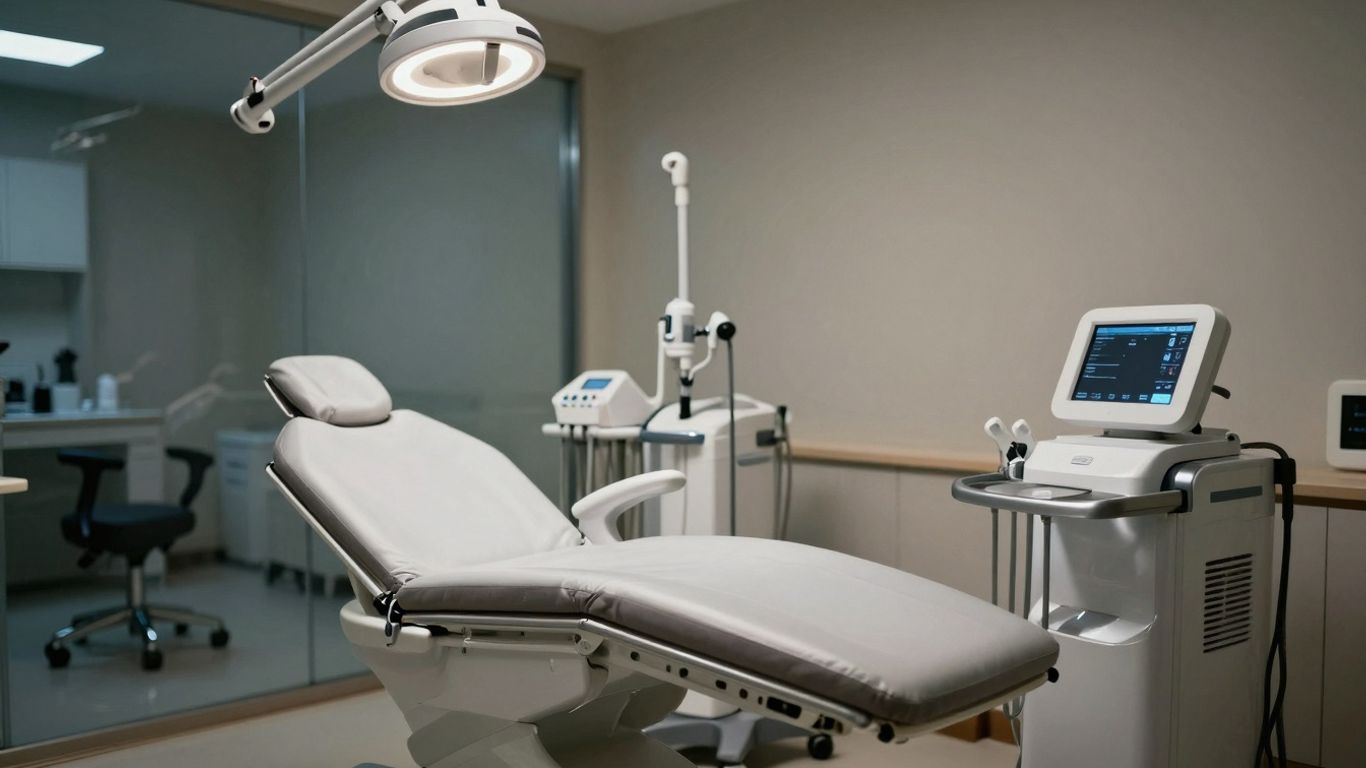
Introducing more automation into your clinic is not just a technical decision. It also has important ethical and relational dimensions. Patients and staff need to feel that technology is being used responsibly and transparently.
Building trust means:
Being clear about what is automated and why
Ensuring decisions that affect patient care remain clinically led
Protecting confidentiality and autonomy at every stage of the journey
When patients understand how your systems work and see that their information is treated with respect, they are more likely to engage positively and remain loyal to your clinic.
Maintaining Transparency in Automated Processes
It can be tempting to let software run quietly in the background, but transparency is essential for trust.
Good practice includes:
Explaining that certain processes, such as reminders or follow-up emails, are automated
Making it easy for patients to contact a real person if they have questions or concerns
Clarifying that automated tools support, rather than replace, clinical decision-making
Patients are more comfortable when they know what is happening with their data and communication. Being upfront also reinforces your clinic’s professionalism and integrity.
Ensuring Data Privacy and Compliance
Patient data is among the most sensitive information you hold. In the UK, clinics must comply with UK GDPR and the Data Protection Act 2018. Automation does not change this, but it can help you embed good practices.
Key actions include:
Implementing technical safeguards such as encryption, access controls and secure backups
Maintaining clear privacy policies that explain how data is used and stored
Ensuring all staff receive regular data protection training
Carrying out appropriate due diligence on software vendors and putting in place data processing agreements
By designing your automated workflows with privacy by design and by default, you protect your patients and your clinic’s reputation.
Area | Actions Required |
|---|---|
Data Security | Encryption, access controls, regular security assessments. |
Compliance | Adherence to GDPR/HIPAA, clear privacy policies, staff training. |
Vendor Management | Due diligence on third-party providers, clear data processing agreements. |
Balancing Technology with the Human Touch in Patient Care
While automation can streamline many aspects of clinic operations, it should never replace the human connection that sits at the heart of healthcare and aesthetics.
Technology should:
Handle routine tasks so clinicians have more time for in-depth consultations
Provide information that supports empathetic, personalised care
Create space for listening, reassurance and aftercare
A friendly greeting at reception, a practitioner who remembers a patient’s concerns, and a considered explanation of treatment options are all irreplaceably human. The most effective aesthetic clinics use automation to enhance, not dilute, this experience.
Embracing the Automated Future
Automation has the potential to reshape how aesthetic clinics operate on a daily basis. It is not about removing the human element, but about making core processes more reliable, efficient and patient-centred.
From booking appointments to managing records and follow-up, well-chosen tools can significantly reduce administrative workload and improve consistency. Clinics that invest in thoughtful, ethical automation are likely to see:
Better operational efficiency
More engaged and supported staff
Improved continuity and quality of care
Stronger foundations for sustainable growth and authority-building in their market
For UK aesthetic clinics that want to stay ahead, understanding and implementing the right automation workflows is now an important part of modern, professional practice.