

Running an aesthetics clinic means juggling a lot—consultations, treatments, follow-ups, and keeping clients happy. But what if managing appointments could be smooth, stress-free, and even help your business grow?
That’s where an online scheduling system comes in. In this post, we’ll walk you through how to get started with one, why it can be a game-changer for your clinic, and how it makes both your team’s and your clients’ lives easier. Ready to discover how a simple tool can transform the way you run your clinic? Let’s dive in.
Key Takeaways
- An online scheduling system for clinics helps sort out messy operations and makes things run smoother.
- Modern systems use AI for things like answering calls and managing appointments automatically.
- Putting a new system in place needs a plan, a careful rollout, and training for your staff.
- Using a good system can save money on admin tasks and help convert more potential clients.
- Thinking about the future means using smart automation to make your clinic more efficient and ready for growth.
Understanding The Need For An Online Scheduling System

Running an aesthetic clinic is demanding. You’re focused on providing top-notch treatments, but the day-to-day running of the business can quickly become overwhelming.
Many clinics find themselves bogged down by administrative tasks, which can slow down growth and impact the patient experience. It’s time to look at how a modern online scheduling system can make a real difference.
Addressing Operational Inefficiencies
Think about your current workflow. Are phone calls constantly interrupting consultations? Is your reception team spending a significant amount of time managing appointment diaries, sending reminders, and handling rescheduling requests?
These tasks, while necessary, take valuable time away from patient care and strategic business development. This can lead to missed appointments, double bookings, and a general sense of disorganisation that affects both staff morale and patient satisfaction.
The Challenge of Manual Processes
Manual processes are often the root cause of these inefficiencies. Relying on paper diaries, spreadsheets, or even basic digital calendars means there’s a higher chance of human error. A simple mistake in writing down a date or time can lead to a missed appointment, costing the clinic revenue and potentially alienating a patient.
Furthermore, the lack of automation means that tasks like sending out appointment reminders or follow-up messages are often done inconsistently, or not at all. This can result in a significant drop in patient retention and a less professional image for the clinic.
Enhancing Patient Experience Through Automation
Patients today expect convenience. They want to be able to book appointments easily, at any time that suits them, without having to wait for the clinic to open or for a staff member to become available. An online scheduling system provides this 24/7 accessibility.
It allows patients to view available slots, book treatments, and receive instant confirmation, all from their computer or smartphone. This not only improves their experience but also frees up your reception staff to handle more complex patient needs and provide a higher level of personal care during their visit.
A smooth, automated booking process is often the first positive impression a new patient has of your clinic.
The shift from manual to automated scheduling isn’t just about convenience; it’s about building a more resilient, efficient, and patient-centric business model that can truly scale.
Key Features Of A Modern Clinic Scheduling System
So, you’re looking to get a handle on your clinic’s scheduling and operations? That’s a smart move. A good system isn’t just about booking appointments; it’s about making your whole clinic run more smoothly.
Let’s look at what makes a modern system really stand out.
AI-Powered Reception and Call Handling
Imagine having a receptionist who’s always available, never gets tired, and handles every call with the same professional tone. That’s what AI receptionists bring to the table.
They can manage patient inquiries, book appointments, and even answer common questions, freeing up your human staff for more complex tasks. This means no more missed calls or patients waiting on hold for ages. It’s about providing a consistent, high-quality first impression, 24/7.
Seamless System Integration Capabilities
Your new scheduling system shouldn’t be a standalone piece of tech. The best ones can connect with your existing software, like your patient management system or billing software.
This stops you from having to enter the same information multiple times, which saves time and reduces errors. Think of it like all your clinic’s tools talking to each other nicely, making everything flow better.
Automated Workflow and Communication
This is where the real magic happens. Modern systems can automate a lot of the repetitive tasks that eat up your team’s day. This includes sending appointment reminders, follow-up messages after treatments, or even requesting patient reviews.
Setting up these automated workflows means your patients get the right information at the right time, without anyone on your team having to lift a finger for each individual message. It standardises communication and makes sure no patient falls through the cracks.
Automating routine tasks isn’t about replacing your team; it’s about giving them back their time to focus on what truly matters – providing excellent patient care and building relationships.
Implementing Your Online Scheduling System
Bringing a new online scheduling system into your clinic might seem like a big step, but with the right approach, it can be a really smooth process.
It’s not just about getting the software; it’s about making sure it fits well with how your clinic actually works and that your team is on board.
Strategic Planning for System Adoption
Before you even click ‘buy’, take a moment to think about what you want this system to do for you. What are the biggest headaches right now? Is it missed calls, double bookings, or just the sheer amount of admin? Pinpointing these issues will help you choose a system that actually solves them.
Think about how the new system will change your day-to-day. It’s about building a better way of working, not just adding another piece of tech. Consider mapping out your current patient journey and then figuring out where the new system fits in to make things better at each step.
Phased Rollout for Smooth Transition
Trying to change everything at once can be overwhelming. A better way is to introduce the system gradually. Maybe start with just online booking for new patients, or use it to manage appointment reminders first. This way, your team can get used to it without feeling swamped.
It also gives you a chance to iron out any small problems before they become big ones.
Here’s a possible phased approach:
- Phase 1: Core Booking & Reminders: Get the basic online booking and automated appointment reminders up and running.
- Phase 2: Patient Communication: Introduce automated follow-ups and simple inquiry handling.
- Phase 3: Advanced Features: Explore integrations, AI reception, or more complex workflow automations.
Training and Support for Your Team
Your team is key to making this work. They need to understand not just how to use the system, but why it’s being introduced. Explain the benefits – less time on admin, more time for patients, fewer errors. Make sure they get proper training, and that there’s someone they can ask if they get stuck.
Investing in your team’s understanding and comfort with the new system is just as important as the technology itself. When your staff feel confident, they can help patients use the system effectively, leading to a much better overall experience.
Remember, this is an investment in making your clinic run more efficiently and giving you and your team more time back. Taking the time to plan and implement it thoughtfully will pay off in the long run.
Maximising Benefits With Your New System
Reducing Administrative Costs Significantly
Let’s talk numbers for a second. Think about all the time your reception team, or even you, spend on the phone, answering basic questions, confirming appointments, or chasing up payments.
It adds up, doesn’t it? Studies show that clinics can see a reduction in administrative costs by as much as 50-70% within the first 90 days of implementing a good system. This isn’t just about saving money; it’s about reallocating those resources to where they matter most – patient care and business development.
Improving Lead Conversion Rates
What happens when a potential patient enquires about a treatment outside of business hours? Or when they fill out a form but don’t get an immediate, helpful response? Often, they just go elsewhere.
A modern scheduling system, especially one with AI capabilities, can act as a 24/7 virtual receptionist. It can answer queries, guide patients through booking, and even nurture leads with timely follow-ups. This means you’re capturing more of those valuable enquiries, turning more interested individuals into paying patients.
We’re talking about potentially improving lead conversion rates by 60% or more.
Reclaiming Owner Time and Reducing Burnout
This is a big one for many clinic owners. You started your clinic to help people, not to be chained to a desk managing endless admin. When your systems are automated, you get your evenings and weekends back. Imagine not having to deal with urgent patient calls while you’re trying to have dinner or spend time with family.
This shift isn’t just about convenience; it’s about preventing burnout and regaining control of your life and your business. It allows you to focus on the strategic side of things, on growing your clinic, and on enjoying the fruits of your labour.
The Future Of Clinic Operations
The aesthetic industry is moving fast, and to keep up, clinics need to think differently about how they run. It’s not just about offering great treatments anymore; it’s about how smoothly everything else works behind the scenes.
The clinics that are really going to do well in the coming years are the ones that get smart about using technology, especially AI, to handle the day-to-day stuff. This doesn’t mean losing that personal touch patients love; it’s actually about using tech to improve that personal connection.
Embracing Intelligent Automation
Think about all the repetitive tasks that take up your team’s time – answering calls, booking appointments, sending reminders, managing reviews. These are all areas where AI can step in and do a fantastic job, 24/7. This isn’t about replacing your staff; it’s about freeing them up to focus on what they do best: providing high-quality patient care and building relationships.
When your team isn’t bogged down with admin, they have more energy and time for the human side of your business, which is what patients really value.
Scaling Sustainably Through Efficiency
Growing a clinic can feel like a juggling act. More patients often mean more admin, more stress, and potentially, more staff burnout. But what if you could grow your revenue without that chaos? That’s where operational efficiency comes in.
By automating routine tasks, you create a system that can handle increased demand without breaking. This means you can take on more patients, offer more treatments, and expand your services without your operational costs spiralling out of control. It’s about building a business that can grow steadily, rather than one that feels like it’s constantly on the verge of collapse.
The System-First Approach to Growth
Many clinics focus heavily on marketing to get new patients through the door. That’s important, of course, but if your internal systems aren’t up to scratch, you’re essentially pouring money into a leaky bucket. A system-first approach means getting your operations in order before you ramp up your marketing efforts. It’s about building a solid foundation.
When your booking system is automated, your patient communication is consistent, and your administrative tasks are handled efficiently, your marketing investments work much harder. You convert more leads, provide a better patient experience, and ultimately, build a more profitable and sustainable business. It’s a smarter way to grow, ensuring that every new patient you attract adds to your success, rather than your workload.
Choosing The Right Online Scheduling System For Your Clinic
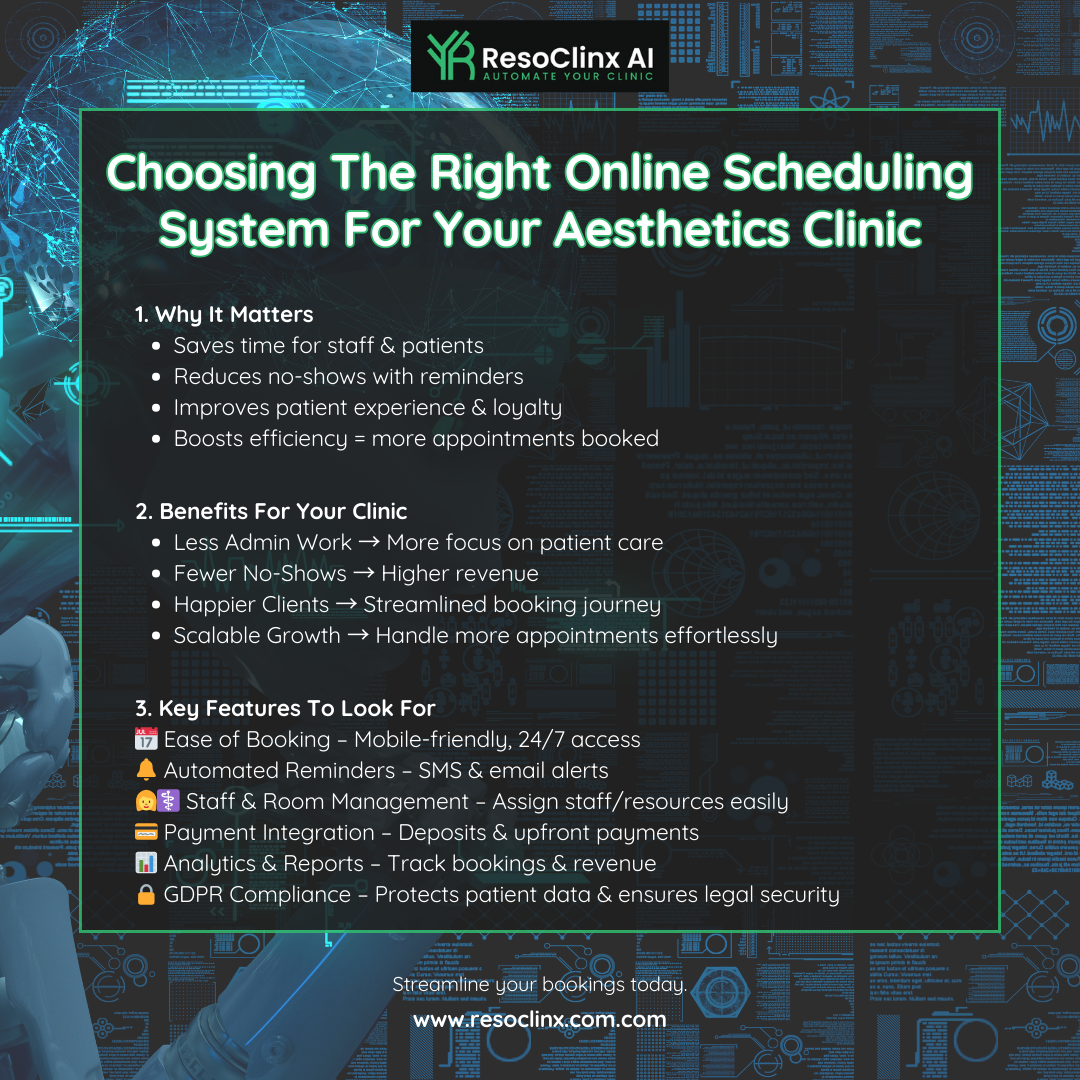
So, you’ve decided an online scheduling system is the way to go. That’s a big step, and a smart one. But with so many options out there, how do you pick the one that actually fits your clinic? It’s not just about booking appointments; it’s about finding a tool that works with you, not against you.
Evaluating System Functionality
First off, let’s talk about what the system actually does. Does it just book appointments, or does it handle more? Think about your day-to-day. Do you get a lot of phone calls asking about services or availability? A system with AI-powered reception capabilities could be a game-changer, answering queries 24/7.
What about appointment reminders? Automated texts or emails can cut down no-shows significantly. You want a system that can manage your calendar, send reminders, and maybe even handle simple patient inquiries without you lifting a finger. It’s about finding features that directly address the pain points you’re currently experiencing.
Considering Integration with Existing Tools
Your clinic probably already uses other software, right? Maybe a patient management system, accounting software, or even your website platform. The best scheduling systems play nicely with others. Trying to force a new system to work with old ones can create more headaches than it solves. Look for systems that offer integrations, meaning they can connect to your current tools.
This means your patient data can flow smoothly between systems, saving you from double-entry and potential errors. It’s like building a connected ecosystem for your clinic, rather than having isolated tools.
Assessing Provider Support and Expertise
When you’re implementing something new, especially technology, you’ll likely have questions. What happens when something goes wrong, or you just can’t figure out a setting? Good support from the system provider is non-negotiable. Do they offer phone support, email, or live chat? How quickly do they respond? It’s also worth considering if they specialise in aesthetic clinics.
A provider who understands the specific needs and challenges of your industry will be much better equipped to help you succeed. They might even have insights you hadn’t considered.
Picking the right system isn’t just a technical decision; it’s a strategic one that impacts your staff, your patients, and your bottom line. Take your time, do your research, and choose a partner that truly understands your clinic’s journey.
Moving Forward with Confidence
So, we’ve looked at how an online scheduling system can really change things for your aesthetic clinic. It’s not just about booking appointments; it’s about making your whole operation smoother and giving you, the owner, more breathing room. Think about cutting down on those admin headaches and freeing up your team to focus on what really matters – your patients.
Implementing these systems might seem like a big step, but the payoff in efficiency and peace of mind is huge. It’s about building a clinic that works for you, not the other way around. Give it a go, and see the difference it makes.