Running an aesthetic clinic or cosmetics business can get hectic. You have a constant flow of products, samples, testers, and retail stock, and keeping track of them can feel like a full-time job on its own. But what if there were a way to make it simpler – a way to know exactly what you have at a glance, and how each product supports your aesthetic clinic marketing?
This is not about magic; it is about smart organisation. In this guide, we will look at how to create a simple “memory tag” system for every cosmetic you hold in clinic or retail, so you can run your business more smoothly and support more effective, ethical marketing. It is about making your inventory work for you, not against you, so you can focus on your patients and clients.
Key Takeaways
Organise your cosmetics by type and unique features to get a clear picture of your stock and support better decision-making in your clinic.
Implement a simple tagging system, whether digital or physical, to make tracking easy and reduce guesswork for your team.
Use your organised inventory to create attractive, clear displays and highlight what makes each product special in a non-pushy, informative way.
An organised system helps you understand what customers like, so you can tailor your marketing efforts and attract more clients based on real data.
A well-organised inventory leads to a smoother client experience, building trust, credibility, and long-term loyalty.
Understanding Your Cosmetic Inventory
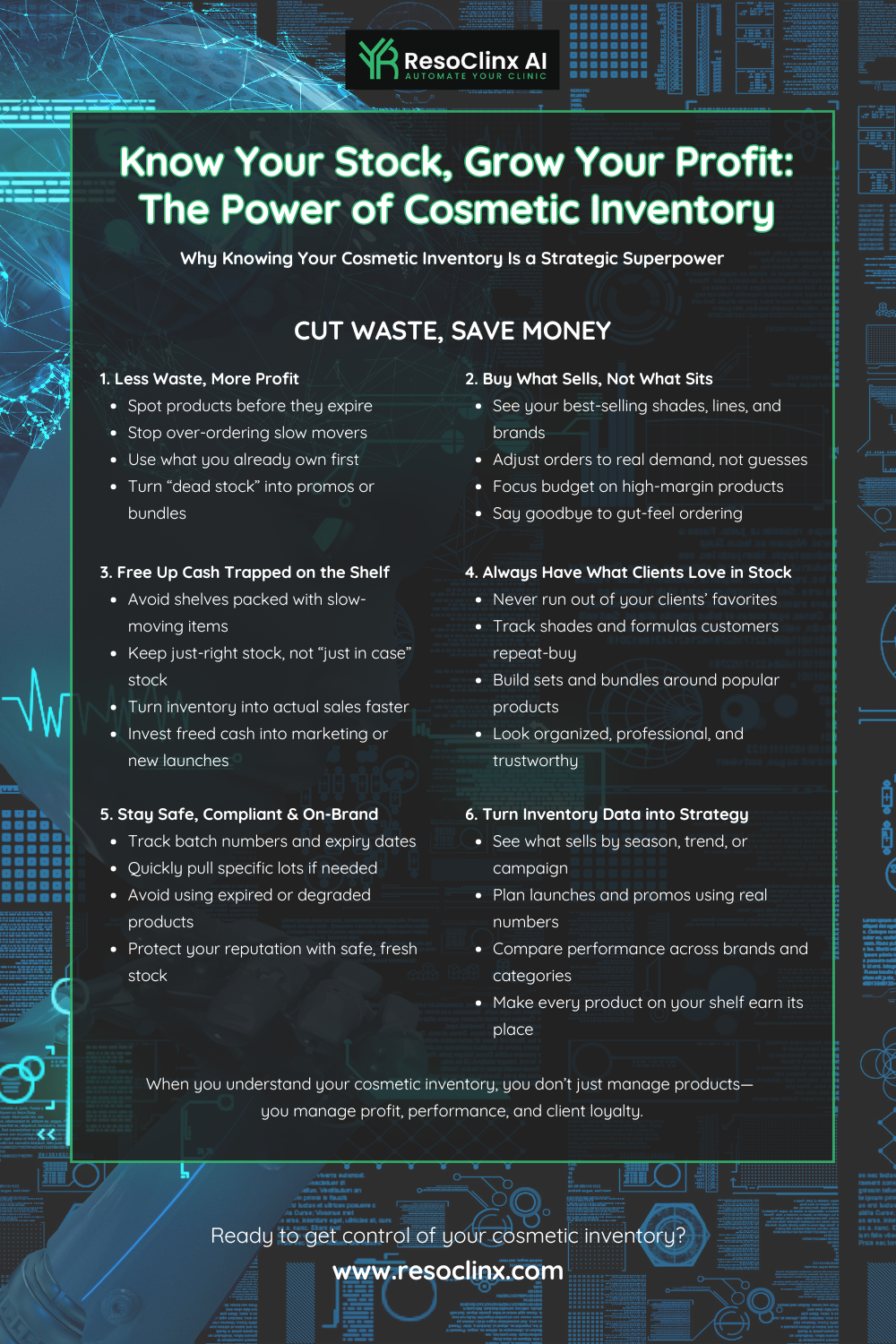
Before you can get smart with your marketing and client communication, you need to know exactly what you have. It sounds obvious, but with the sheer volume and variety of beauty and skincare products used in clinics, things can easily become muddled.
Taking the time to properly understand your cosmetic inventory is the first, and arguably most important, step towards an organised, client-focused, and compliant business. When you know what is on your shelves, in your treatment rooms, and in your stock cupboard, you can make stronger decisions about what to promote, what to phase out, and what to reorder.
Categorising Your Cosmetic Collection
Start by thinking about how you would naturally group your products. In an aesthetic clinic, you are likely to have a mix of:
Makeup
Skincare
Haircare or scalp care products
Professional-use products for treatments
Tools and accessories
Within these broad categories, create clear sub-categories. For example:
Face: foundations, concealers, powders, blush, bronzer, highlighters
Eyes: eyeshadows, eyeliners, mascaras, brow products
Lips: lipsticks, lip glosses, lip liners, lip balms
Skincare: cleansers, toners, serums, moisturisers, masks, eye creams, SPF products
Haircare: shampoos, conditioners, styling products, treatments
Tools & Accessories: brushes, sponges, applicators, mirrors, bags, reusable tools
This initial sorting helps you see the bigger picture. It becomes much easier to assess:
Where you have gaps
Where you may have overlap or duplication
Which ranges are most suitable for particular skin concerns
Good categorisation also lays the groundwork for memory tags and for clear content on your website, social media, and Google Business Profile, supporting consistent, factual information wherever patients discover your clinic.
Identifying Product Types and Formulations
Once you have your categories, it is time to look at what each product actually is and how it behaves. For example:
A foundation might be liquid, cream, stick, or powder.
A serum could be water-based, oil-based, or a gel.
A cleanser might be foam, milk, balm, or oil.
Understanding these formulations is key because it affects:
How the product is used in clinic and at home
How it is stored and how long it remains at its best
How it is recommended and marketed to different skin types and concerns
Some common formulation types to recognise include:
Liquids: foundations, serums, toners, some cleansers
Creams: moisturisers, richer foundations, eye creams, treatment creams
Gels: serums, cleansers, hair styling products
Powders: eyeshadows, blush, setting powders, some foundations
Oils: facial oils, cleansing oils, hair oils
Waxes/Balms: lip balms, some solid perfumes, cleansing balms
When your team knows these differences, they can confidently explain them to clients, supporting more informed decisions and more ethical, transparent aesthetic clinic marketing.
Recognising Unique Product Characteristics
Every product has its own unique characteristics, and these details are often what matter most to your clients. For each item, consider:
Shade or colour (e.g. “Light Neutral”, “Deep Cool”)
Finish (matte, dewy, satin, glossy)
Key ingredients (e.g. Vitamin C, niacinamide, hyaluronic acid)
Benefits and claims (e.g. hydrating, brightening, oil-controlling, fragrance-free, vegan)
Skin or hair type suitability (oily, dry, sensitive, mature, acne-prone)
Packaging (travel size, refillable, limited edition, recyclable materials)
These details should sit at the heart of your memory tag system. When you know, for example, that you have several SPF moisturisers suitable for sensitive skin, you can:
Recommend them confidently during consultations
Highlight them in content aimed at patients with sensitive or reactive skin
Ensure the same information appears accurately in your website descriptions and local SEO for clinics (e.g. on your Google Business Profile)
Keeping a close eye on these details is not just about tidiness; it is about building a foundation for smart, client-focused marketing. When you know your stock inside out, you can connect the right product with the right person at the right time.
Implementing a Memory Tag System
A memory tag system is essentially a structured way of giving every product an “identity card”. It may be a physical tag, a digital record, or both, but the principle is the same: each product carries consistent, meaningful information that your whole team can access.
Setting this up can feel like a big project at first, but it quickly becomes a game-changer for how you manage stock and how you talk about products with patients. It is not just about knowing what you have; it is about making that information easy to find, easy to use, and easy to share across all your marketing channels.
Choosing the Right Tagging Method
When we talk about tagging, it is not just about putting a sticker on a bottle. You need a method that fits your clinic’s size, systems, and team.
Consider whether you are:
A single-location aesthetic clinic with a few hundred products
A larger clinic or multi-site group with thousands of items
The scale will influence the simplest, most sustainable approach for you.
Common options include:
Physical Tags:
Simple labels, barcodes, QR codes, or colour-coded stickers. These are useful for quick visual checks, stock counts, and training new staff.Digital Tags:
Records held in an inventory management system, POS system, or clinic software, with a unique SKU or code for each product. This is where you unlock serious data and reporting.Hybrid Approach:
A combination of physical labels on shelves or products, linked to detailed digital records. This gives you the best of both worlds: quick checks in-clinic plus deep insights behind the scenes.
Whatever method you choose, the key is consistency. A tagging system that is partially used or loosely applied can be worse than no system at all. Aim for a method your team can understand, trust, and maintain.
Developing a Consistent Tagging Protocol
Once you have chosen your method, create a clear protocol. This is your rulebook: it keeps things tidy and helps every member of staff tag products in the same way.
A simple structure for each memory tag might include:
Product Name: The full, official name used on packaging.
Brand: Useful for grouping and comparison.
Category: e.g. Lipstick, Foundation, Serum, Cleanser, SPF.
Sub-Category/Formulation: e.g. Matte lipstick, liquid foundation, gel cleanser.
Key Benefit or Feature: e.g. hydrating, long-wearing, SPF 30, anti-redness.
Skin or Hair Type: e.g. oily skin, dry skin, sensitive, fine hair.
Shade or Variant: e.g. “Rose Petal”, “Medium Beige”, “Shade 3.0”.
Unique Identifier: A SKU, barcode, or internal code.
By defining these fields in advance, you remove guesswork. When a new product arrives, your team simply follows the protocol. Over time, you build a searchable database of products that supports:
More accurate stock control
Faster, more tailored recommendations in consultation
Better, more consistent aesthetic clinic marketing content
Leveraging Digital Tools for Tagging
Doing everything manually can quickly lead to errors and eat up valuable time. Digital tools can make your memory tag system smoother and more reliable.
Useful systems might include:
Inventory management software with product records, SKUs, and stock alerts
Point-of-sale (POS) systems that update stock levels automatically when products are sold
Clinic management systems that link treatments, products, and patient notes
Spreadsheet or database tools if you are starting small and want a low-cost solution
These tools can help you:
Automate tagging by generating unique SKUs or barcodes
Centralise data so all product information lives in one secure place
Track stock levels and expiry dates for retail and professional-use products
Generate reports to identify bestsellers, slow-movers, and seasonal patterns
Integrate with marketing, so accurate product details flow through to your website and your Google Business Profile, supporting local SEO for clinics
For example, a good system can automatically reduce stock when a moisturiser is sold at reception. It can also flag low stock so you reorder before you run out – vital if that product is central to a treatment protocol or aftercare plan.
Optimising Cosmetic Organisation for Marketing
Once your cosmetic collection is neatly organised, it is time to think about how this structure can support more effective marketing and better client education. It is not just about a tidy cupboard; it is about making your products:
Easy for staff to recommend
Easy for patients to understand
Easy to present consistently across your clinic, your website, and your digital listings
When everything has its place and is clearly tagged, you can quickly identify hero products, supporting products, and niche solutions for specific concerns.
Creating a Visually Appealing Display
Presentation is everything in the beauty and aesthetics world. A well-organised display is not just tidy; it is an invitation for clients to explore.
In your clinic retail area, consider:
Grouping products by type – all foundations together, all SPFs together, all serums together
Arranging by concern – e.g. pigmentation, acne-prone skin, dryness, sensitivity
Keeping packaging clean, upright, and facing forward
Using clear, discreet labels or shelf strips so products are easy to identify
Ensuring good lighting, so shades and textures look true to life
On your website, the same principles apply. Clear categories, filters (by concern, by skin type, by product type), and accurate descriptions all help patients to find the right products without feeling overwhelmed.
Highlighting Product Benefits and Features
With your inventory organised and tagged, you can highlight what makes each product special in a clear, educational way.
Instead of focusing only on ingredients, translate them into benefits. For example:
Instead of “contains hyaluronic acid”, try “helps to hydrate and plump the skin”.
Instead of “niacinamide formula”, use “supports a more even skin tone and helps calm redness”.
Your memory tag system can store these phrases so the whole team uses consistent language in:
Consultations and treatment plans
Website product descriptions
Printed or digital information sheets
Informative posts that form part of your aesthetic clinic marketing strategy
You might even create simple, clear product cards or shelf talkers summarising:
Product type
Key benefit
Ideal client or skin type
Short, client-friendly description
This is not about pushing products; it is about helping patients understand which products are appropriate and why.
Consider creating simple, clear signage or product cards that summarise key benefits. This can be done digitally on your website or physically in a store. For instance:
Product Type | Key Benefit | Target Customer | Example Tagline |
|---|---|---|---|
Hydrating Serum | Boosts moisture, reduces fine lines | Dry or mature skin | “Quench thirsty skin for a youthful glow.” |
Matte Lipstick | Long-lasting, transfer-proof | Busy individuals, evening wear | “All-day colour that stays put.” |
Vitamin C Cleanser | Brightens complexion, evens tone | Dull or uneven skin | “Reveal radiant, brighter skin.” |
Tailoring Your Message to Customer Needs
Good organisation allows for a more personalised approach to recommendations and marketing. When you understand your inventory clearly, you can better match products to:
Specific skin types or concerns
Treatment aftercare requirements
Lifestyle factors, such as simplicity, travel, or time-saving routines
For instance, if you know exactly which products are best for sensitive, redness-prone skin, you can:
Highlight them during consultations
Feature them in a blog post or information leaflet
Make sure they are correctly tagged on your website and Google Business Profile, so clients searching for those solutions can discover them
This targeted approach feels helpful and considered, rather than sales-driven, and reinforces your position as a trusted, knowledgeable clinic.
Leveraging Data for Smarter Marketing
Once your inventory is tagged and organised, it becomes a valuable source of data. You can see not just what you stock, but how it performs in real life.
Analysing Customer Preferences
Understanding what your clients prefer is essential. It is no longer just guesswork. By looking at:
Which products are bought most frequently
Which items are regularly discussed or requested in consultations
Which ranges generate the most questions or interest
you can begin to see clear patterns.
If you notice a growing interest in, for example, fragrance-free or vegan skincare, you can:
Adjust your stock accordingly
Create content that explains these options
Ensure this information appears in your local SEO for clinics, so relevant clients can find you more easily
Tracking Product Popularity and Trends
Your organised system can reveal:
Top sellers: Products with consistently high sales over time
Rising stars: Newer products that are gaining momentum
Slow movers: Items that rarely sell or only appeal to a small group
Seasonal peaks: Products that spike at certain times of year (e.g. SPF in summer, intensive moisturisers in winter)
This information is extremely useful when deciding:
Which products to feature in content
Which items to keep in core stock
Which lines might be worth phasing out or replacing
Instead of relying on instinct alone, you can base your aesthetic clinic marketing on evidence.
Personalising Marketing Campaigns
Once you know what your clients prefer and which products perform well, you can start to personalise your communication.
Rather than sending the same message to everyone, you might:
Share educational content about post-treatment skincare with patients who have had certain procedures
Highlight new shade launches to clients who regularly purchase makeup
Provide informative updates about reformulated products or improved packaging
This does not have to be promotional or discount-driven. It can simply be useful, relevant information that helps clients look after their skin and understand your recommendations. When people feel understood and supported, they are more likely to stay with your clinic long-term.
Enhancing Customer Experience Through Organisation
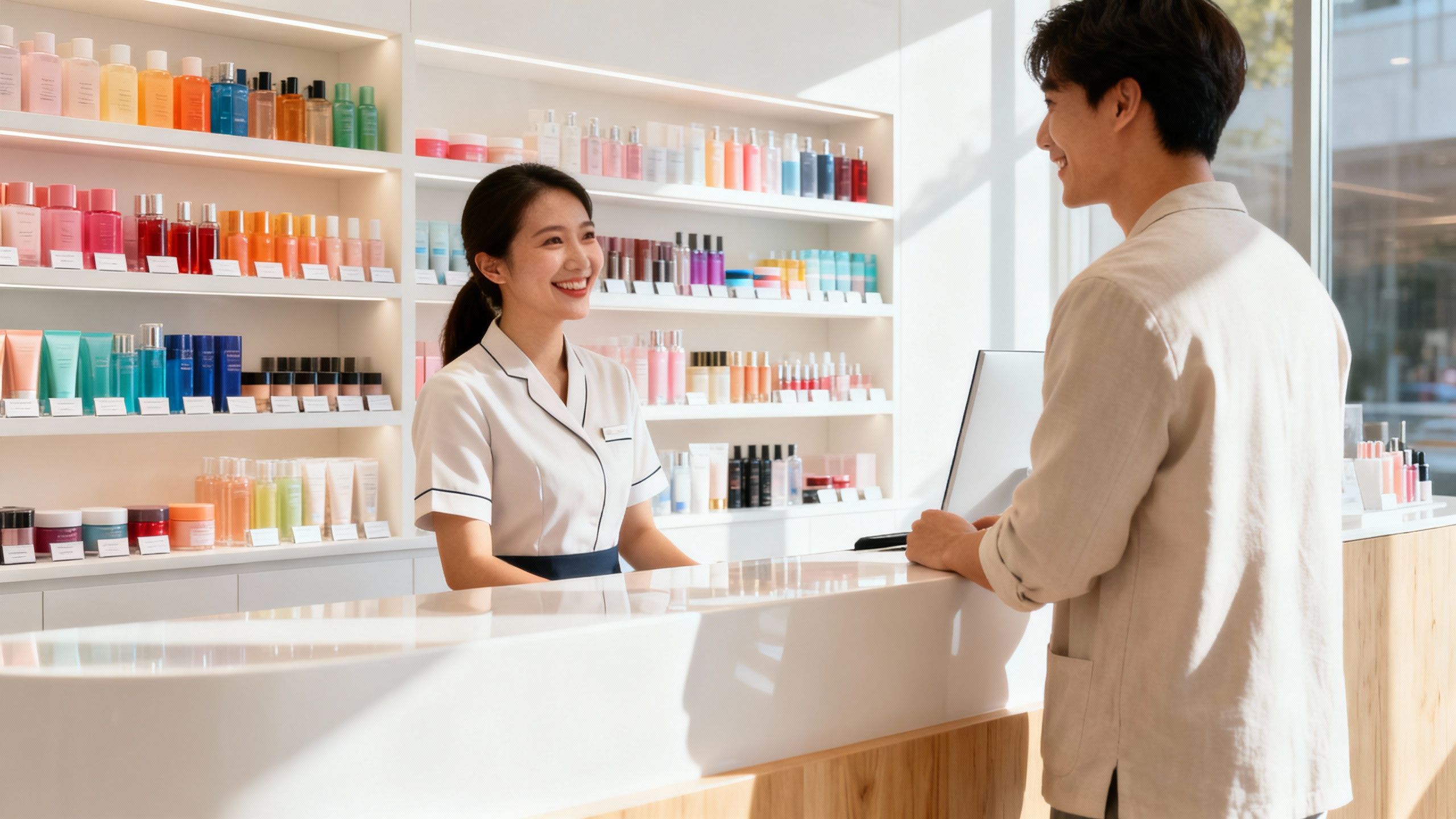
When your cosmetics are neatly organised, it has a direct impact on the client experience. It is not just about looking professional; it is about making it easy for clients to:
Find what they are looking for
Understand how to use it
Feel confident about their purchase or recommendation
If everything is in its place, your team can quickly locate the exact product discussed in consultation, and clients can see a clear, logical display that feels reassuring rather than overwhelming.
Streamlining the Shopping Journey
A well-organised retail area means clients do not have to hunt around. They can move through your offerings smoothly, with related items grouped together in a logical flow.
For example:
All SPFs in one section, sorted by skin type and finish
All moisturisers grouped, with clear indications for dry, oily, or combination skin
Professional-use products stored separately but still clearly tagged for team use
This organised approach helps clients discover relevant products they might not have considered, while still feeling guided rather than pushed.
Providing Clear Product Information
Organisation and clear information go hand-in-hand. When products are tagged and displayed correctly, it is easier to provide:
Key ingredients and their purpose
Usage instructions (e.g. morning/evening, before or after certain steps)
Skin type suitability and any cautions
Shade names and numbers, where relevant
This clarity helps clients make informed decisions without needing constant staff input. It builds confidence and supports a more transparent, ethical approach, which is crucial for clinics in the UK and elsewhere.
Building Trust Through Transparency
An organised system reflects a professional, trustworthy business. When clients see that you care about:
How products are stored
How information is presented
How consistently products are recommended and documented
they naturally feel more secure. This attention to detail can lead to:
Repeat business
Positive word-of-mouth
Stronger online reviews, which in turn support your Google Business Profile tips and local SEO for clinics
Ultimately, organisation is a practical way to demonstrate that you value your clients’ time, money, and skin health.
Future-Proofing Your Cosmetic Strategy
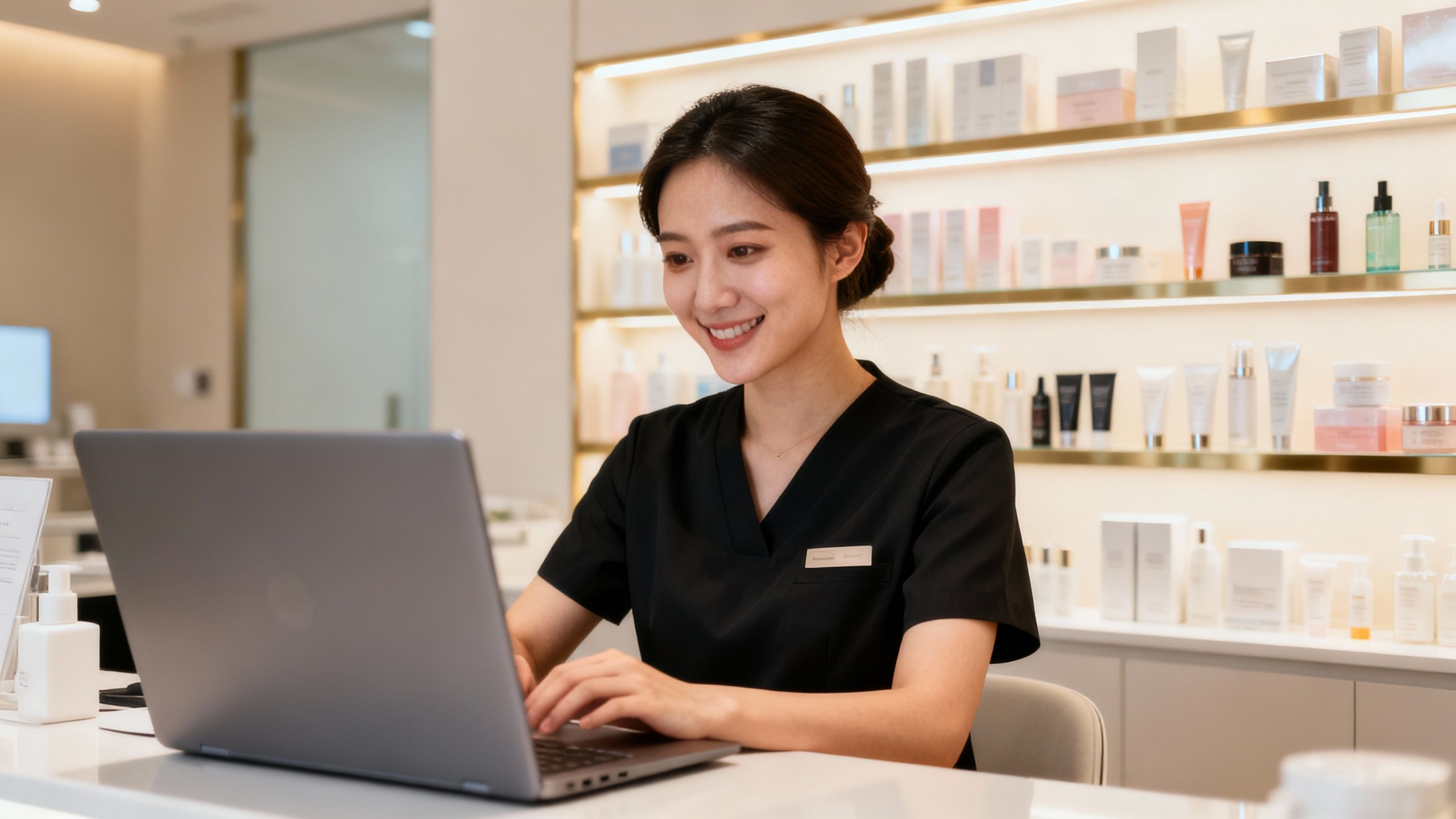
The beauty and aesthetics industry moves quickly. What is popular today can feel outdated relatively soon. To keep your cosmetic strategy strong, you need to think ahead and stay flexible.
It is not just about having great products today; it is about having systems that can adapt to new trends, new regulations, and new client expectations.
Adapting to Evolving Trends
Keeping up with trends involves more than simply watching social media. It means understanding:
Shifts in consumer preferences (e.g. towards sustainability or minimal routines)
New ingredient discoveries and formulations
Emerging technology in skincare and aesthetics
For example, the rise of clean beauty, skin barrier support, and refillable packaging reflects deeper changes in how clients think about their skin and the planet. Your memory tag system and marketing messages should evolve alongside these shifts, rather than falling behind.
You can stay ahead by:
Watching industry publications and clinical updates
Engaging with your own patient base through feedback, reviews, and consultations
Attending relevant training, events, or webinars to stay informed
Integrating New Technologies
Technology can significantly enhance both organisation and marketing. You might consider:
Inventory management software offering real-time stock levels, batch tracking, and expiry date alerts
Customer relationship management (CRM) systems to record preferences, treatment history, and skincare routines
Data analytics tools to understand what is selling, who is buying it, and when
Some clinics also experiment with virtual try-on tools for makeup, or QR codes that link to detailed ingredient lists and usage guides, helping clients access information instantly.
Used well, these technologies support safer, more personalised care and more accurate, consistent communication.
Maintaining Organisational Efficiency
Even with the best technology, solid organisation is still essential. Your memory tag system needs to be robust enough to grow with your clinic.
Consider:
Regular stocktakes to catch discrepancies early and ensure accuracy
Periodic reviews of your tagging protocol to check that it still meets your needs
Ongoing team training, so everyone understands and follows the same approach
A well-organised inventory is not just about neat shelves. It underpins:
Operational agility – the ability to respond quickly to demand or supply changes
Safer product management, including the ability to trace batch or lot numbers if a recall is ever required
A more coordinated aesthetic clinic marketing strategy, as you always know what you can responsibly recommend
Putting It All Together
Organising your cosmetic inventory is not just about tidying up; it is about building a smarter, safer, and more transparent way to connect with your clients.
By knowing exactly what you have and where it is, you can:
Tailor your marketing and communication
Make sure the right products reach the right people at the right time
Support more consistent messaging across your clinic, website, and Google Business Profile
It may feel like a significant project at the beginning, but the clarity and efficiency it brings can make a real difference to your aesthetic clinic marketing, client experience, and professional reputation. Start small, build your memory tag system step by step, and allow your data and systems to guide confident, informed decisions that help you attract and retain the right clients.