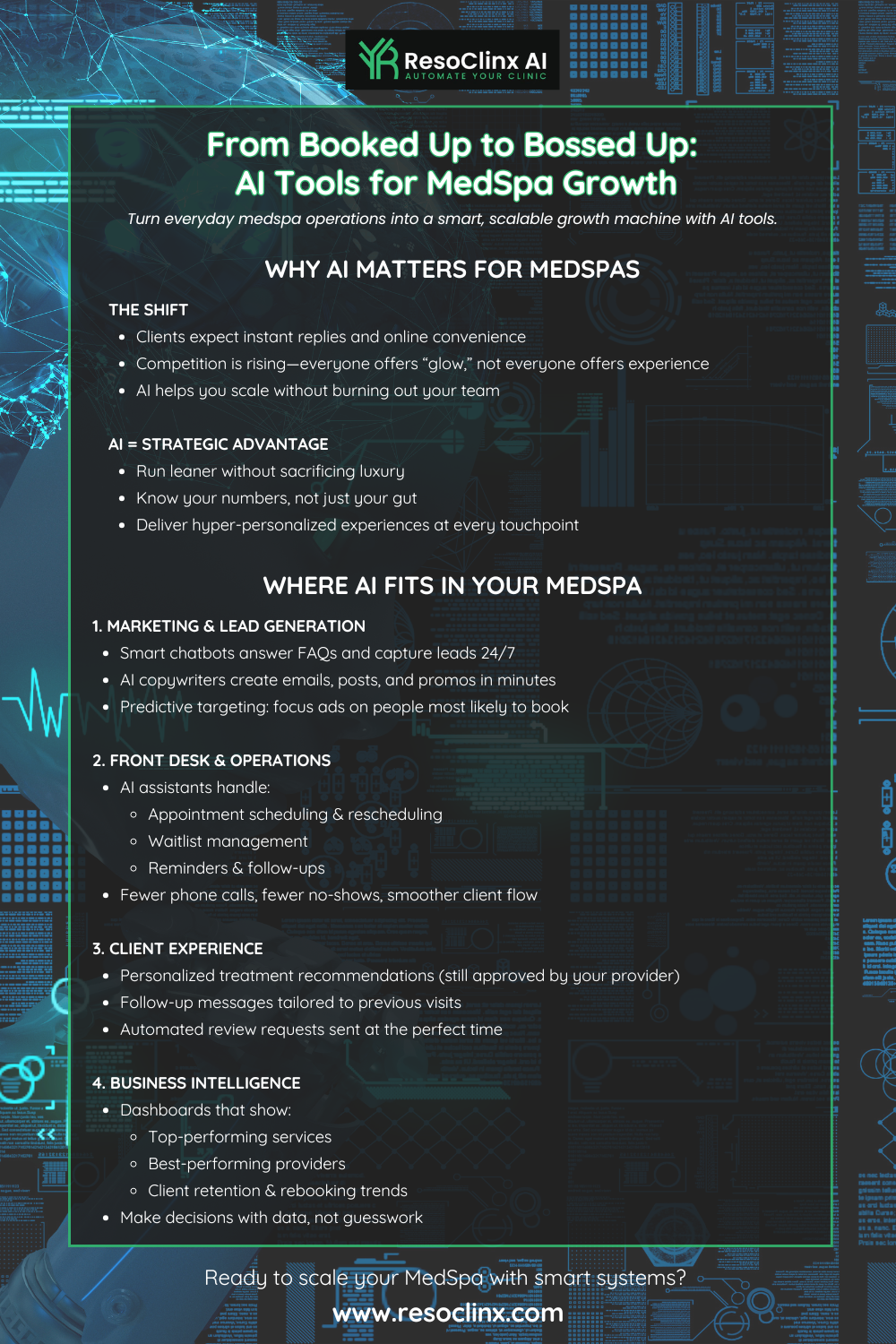
It feels like AI is everywhere right now – and for good reason. For medspas and aesthetic clinics, it is not just a buzzword; it is a practical, everyday tool that can genuinely change how you handle enquiries, bookings, and client communication.
Think about all those calls, web forms, and messages you receive. What if your clinic could respond instantly, 24/7, without putting more pressure on your front desk team? That is where AI chatbots come in. They can handle routine questions, support online bookings, and help you attract more clients even when your clinic is closed.
Used alongside your website, your Google Business Profile, and local SEO for clinics, AI chatbots can become a powerful part of your aesthetic clinic marketing – helping you stay visible, responsive, and professional at all times, without turning your website into a sales pitch.
Key Takeaways
AI chatbots can instantly engage website visitors, answer common questions, and guide them towards booking appointments, helping to ensure no genuine lead is missed.
Automating the booking process with AI reduces errors and missed opportunities, making it easier for clients to schedule services at their convenience.
AI helps personalise client experiences and marketing efforts by using data from past treatments, preferences, and behaviour, which supports better engagement and retention.
Integrating AI tools can streamline operations – from lead qualification to campaign analysis – freeing up time so your team can focus on client care rather than admin.
While adopting AI has challenges such as cost, training, and staff buy-in, starting small with user-friendly tools can lead to meaningful improvements in efficiency and client satisfaction.
Enhancing Client Communication with AI Chatbots
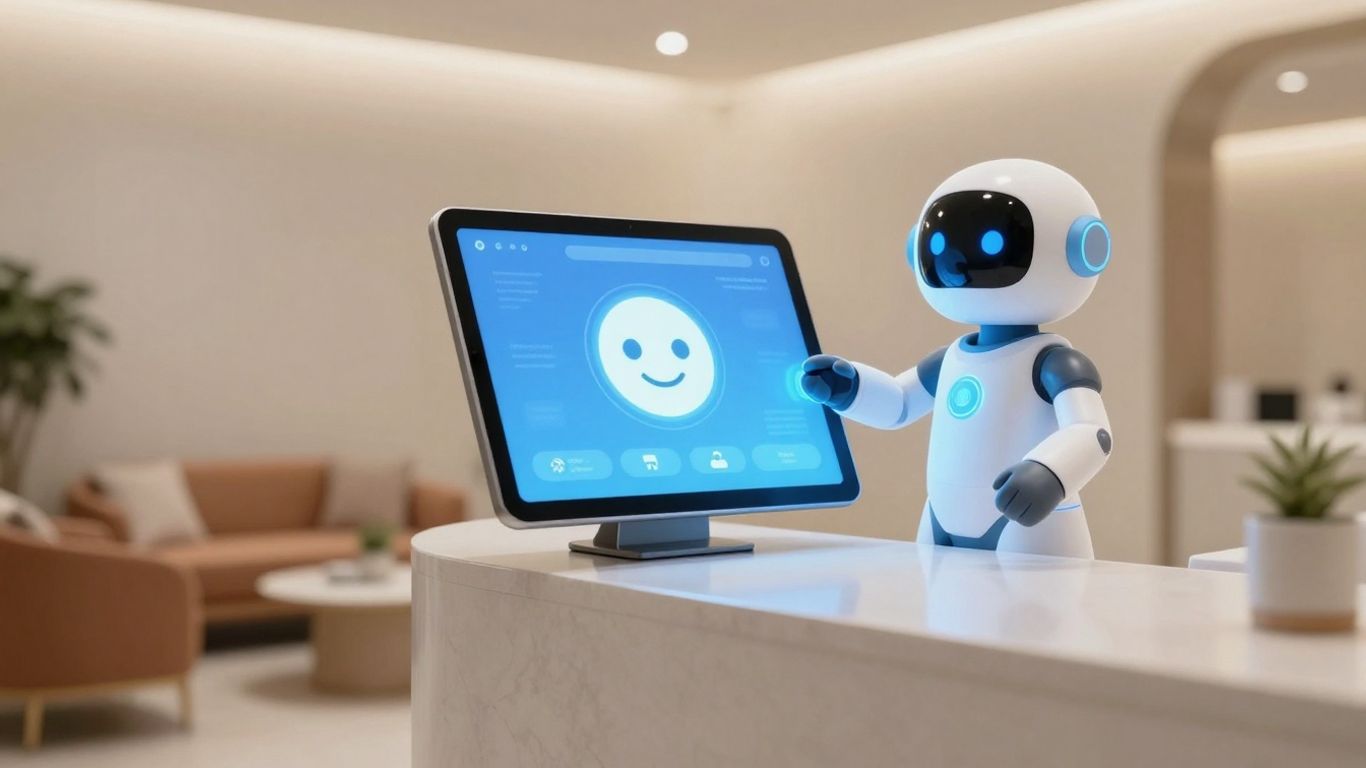
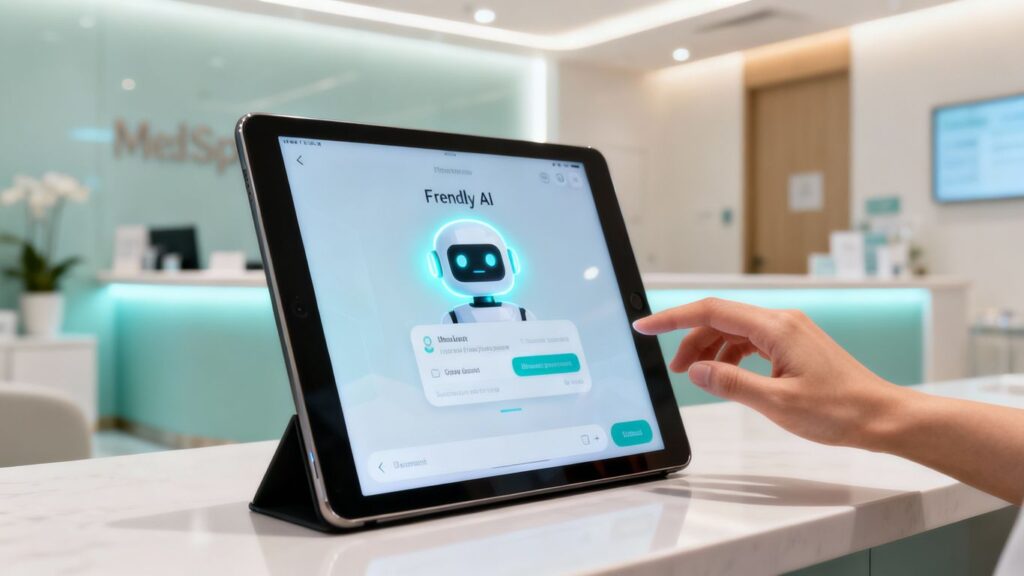
In today’s fast-moving digital environment, making sure your medspa is consistently accessible to potential clients is more important than ever. Missed calls or unanswered enquiries can easily turn into lost bookings. AI chatbots help bridge that gap by acting like a virtual receptionist who is always available, ready to greet visitors the moment they land on your website.
When someone visits your website, they are often looking for quick answers or to book a consultation. If they cannot find what they need, they may simply click away to a competitor. An AI chatbot can welcome them straight away, ask what they are interested in, and even suggest relevant treatments or services based on their questions.
This immediate interaction is important. While human teams are busy or limited to opening hours, a chatbot can respond in seconds, helping you capture interest at the exact moment someone is ready to take action.
AI chatbots can also support 24/7 availability. Your clinic might close its doors at 5 pm, but your website and social channels remain active. Potential clients often research treatments in the evening or at weekends. A chatbot can:
Answer frequently asked questions,
Provide basic information on pricing and availability,
Collect contact details, and
Book appointments directly into your schedule if integrated with your booking system.
The result is a smoother, more consistent experience where people feel that your clinic is responsive, professional, and easy to deal with, no matter when they get in touch.
Streamlining Your Booking Process
A clunky booking process is one of the quickest ways to lose a motivated client. If visitors have to phone during specific hours, wait for an email reply, or struggle with a complicated form, many simply give up. AI chatbots can streamline this entire journey.
By connecting directly to your clinic’s online booking system, a chatbot can show real-time availability, suggest suitable appointment times, and confirm bookings there and then. This removes the need for back-and-forth emails or delayed call-backs. For clients, it feels simple and convenient. For your team, it means fewer interruptions and less manual scheduling.
AI chatbots also help reduce missed opportunities. Instead of enquiries sitting in an inbox overnight, the chatbot can:
Reply instantly,
Capture contact details,
Ask simple qualifying questions (e.g. treatment interests, preferred times), and
Encourage the visitor to reserve a slot or request a call-back.
Your website becomes a constant source of structured, high-quality enquiries rather than a passive brochure.
In addition, chatbots can contribute to your overall online presence. A website where visitors get quick, relevant answers and can easily complete a booking is likely to have better engagement metrics – people stay longer, visit more pages, and interact more. All of this supports your broader local SEO for clinics, alongside your Google Business Profile and reviews, by demonstrating that users find your site useful and engaging.
Leveraging AI for Marketing Excellence
In a crowded medspa and aesthetic clinic market, standing out means being strategic with your marketing. AI tools can help you do that by making your campaigns more targeted, more personal, and less time-consuming.
AI can analyse patterns in your data – from bookings and web traffic to email campaigns – and help you understand what is actually working. Instead of guessing which message or offer might appeal, you can base decisions on how real clients behave and respond.
Personalised Client Experiences
Clients expect more than generic promotions. They want to feel that your clinic understands their interests and concerns. AI can support personalised communication by using information such as:
Previous treatments or services,
Enquiries they have made, and
How they engage with your emails, website, or social media.
With this insight, you can send targeted messages – for example, recommending skin rejuvenation options to clients who previously booked facials, or sharing information on injectables with those who have enquired about anti-ageing solutions.
The goal is not to be intrusive, but to be relevant and helpful, so clients feel that your clinic is paying attention to what matters to them.
AI-Driven Lead Scoring
Not every enquiry has the same level of intent. Some visitors are just browsing, while others are ready to book now. AI-based lead scoring helps you focus your human follow-up where it will have most impact.
AI can look at signals such as:
Website activity – pages visited, time spent, forms completed;
Email engagement – opens, clicks, replies;
Social media interaction – comments, messages, link clicks;
Chatbot conversations – types of questions asked and information provided.
Based on these behaviours, leads can be given a score. Higher-scoring leads are more likely to convert, so your team can prioritise them for personal calls, detailed advice, or tailored follow-up emails. This ensures that valuable human time is spent where it can make the biggest difference.
Optimising Digital Advertising Campaigns
AI can also help you optimise digital advertising – for example, Google Ads, Meta ads, or other paid campaigns. Instead of relying on a single advert, AI-powered tools can:
Test different headlines, images, and calls to action,
Identify which combinations attract the most relevant clicks, and
Automatically adjust budgets and targeting towards what is working best.
This means you are more likely to attract the right kind of clients at a sustainable cost, and less likely to spend budget on ads that do not perform. Over time, this data can inform your wider aesthetic clinic marketing – not only paid ads, but also the language and imagery you use on your website, emails, and Google Business Profile.
AI-Powered Client Retention Strategies
Attracting new clients is important, but retaining existing ones is often more cost-effective. AI can play a valuable role in helping your clinic stay in touch with clients in a way that feels caring, consistent, and timely.
Automated Follow-Up Communications
After a treatment, clients often appreciate a simple, thoughtful follow-up. AI can automatically send:
Thank-you emails or messages,
Aftercare advice relevant to the treatment, and
Reminders for recommended follow-up appointments.
For example, a client who has had microneedling could receive a message with aftercare tips and a prompt to book their next session in around a month. This kind of structured follow-up helps clients achieve better treatment outcomes and reinforces the sense that your clinic is organised and supportive.
Personalised Loyalty Programmes
AI can also support personalised loyalty initiatives. By analysing booking history and preferences, you can:
Group clients by interests (e.g. skin health, body contouring, injectables),
Offer rewards that are genuinely relevant, and
Acknowledge important dates such as birthdays or treatment anniversaries.
Rather than sending the same discount to everyone, AI allows you to design loyalty programmes that feel tailored, strengthening relationships and encouraging repeat bookings in a way that still feels professional and informative.
Re-engagement Campaigns for Lapsed Clients
Clients sometimes drift away simply because life gets busy, not because they were unhappy. AI can identify when someone has not visited for a while and trigger gentle re-engagement campaigns.
These might include:
A check-in message asking how they are getting on with previous treatments,
Educational content on new services that may interest them, or
An invitation to book a review or consultation.
The aim is not to push offers aggressively, but to remind clients that your medspa is there to support them when they are ready.
Integrating AI Tools for MedSpa Growth
Bringing AI into your medspa can feel like a big step, but it does not need to be overwhelming. The key is to start with clear goals and introduce tools gradually, focusing on areas where you will see meaningful, practical benefits.
Choosing the Right AI Solutions
Rather than chasing the most advanced technology, it is more effective to ask:
“What are the biggest bottlenecks in our clinic right now?”
For many medspas and aesthetic clinics, these might include:
Handling high volumes of routine enquiries,
Managing appointment bookings and reminders,
Responding consistently to reviews and messages, or
Understanding which marketing activities are driving bookings.
Once you know your main challenges, you can look for AI tools that specifically address those issues. This might include a website chatbot, review-response assistance, email automation, or simple reporting tools that help you interpret marketing data.
Implementing AI Step-by-Step
Adopting AI works best when you build in stages rather than trying to transform everything at once. A simple approach is:
Define your goal – for example, “reduce missed calls”, “improve response times to web enquiries”, or “gain better insight into marketing performance”.
Select one tool that directly supports that goal and fits your budget and technical comfort level.
Train your team so they understand how the tool works and how it helps them. Position it as support, not a replacement.
Launch and monitor – track how many bookings, enquiries, or hours saved can be linked to the AI tool.
Adjust and expand – once the first tool is working well, you can consider adding AI in other areas of your operations.
This step-by-step adoption helps your team feel confident and in control, rather than overwhelmed by change.
Measuring AI Marketing Success
To understand whether AI is truly supporting growth, it helps to track a few simple metrics over time:
Area of focus | Metric to track |
|---|---|
Appointment booking | Number of appointments booked via digital channels |
Lead generation | Number of new leads captured through your website or chatbot |
Email open and click-through rates | |
Operational efficiency | Time saved on administrative tasks |
Regularly reviewing these figures will show you what is working, where to fine-tune your approach, and how AI fits into your broader digital marketing strategy.
Overcoming AI Adoption Challenges
It is completely normal to have concerns about AI – whether that is cost, complexity, or how staff will react. These are not roadblocks; they are simply practical considerations that can be managed.
Addressing Cost Concerns
AI does not have to mean a large, upfront investment. Many tools are available on a subscription basis, and you can start with one focused use case, such as automating appointment reminders or adding a basic chatbot for FAQs.
By comparing the cost of the tool to the time it saves or the additional bookings it brings in, you can make a reasoned decision about whether it delivers value. Over time, this data helps you build a clear business case for expanding AI further, if appropriate.
Managing Staff Integration
Your team is at the heart of your medspa, and their buy-in matters. It is important to present AI as a way of:
Reducing repetitive, time-consuming tasks,
Allowing them to spend more time on face-to-face client care, and
Supporting them with information and structure.
Involve staff early, explain what the tools will and will not do, and encourage feedback. When people understand that AI is there to help rather than replace them, they are typically much more supportive.
Simplifying Technology Integration
Technology can feel daunting, especially if you already use several systems. To keep things manageable, look for AI tools that:
Integrate with your existing booking or CRM system,
Are designed for non-technical users, and
Offer clear onboarding and support.
You do not need to adopt every feature at once. Starting with the simplest, most useful functions and expanding from there helps you avoid unnecessary complexity while still gaining the benefits.
Never Miss a Patient Again
In the context of modern aesthetic clinic marketing, speed and consistency of response are key. Clients expect clinics to be reachable, informative, and organised – even outside normal opening hours.
AI chatbots offer a straightforward, practical way to support that expectation. They are not there to replace human care, but to fill the gaps when your team is busy or the clinic is closed. By handling FAQs, capturing contact details, and even supporting online bookings, they help you reduce missed enquiries, improve the client experience, and make day-to-day operations more manageable.
Used thoughtfully, alongside your website, Google Business Profile, reviews, and local SEO, AI chatbots can become a valuable part of building a trusted, authoritative online presence for your medspa – one that informs and supports patients rather than simply selling to them.