Your aesthetic clinic may deliver brilliant results, but is your website doing it justice? In today’s digital world, your online presence is often the first impression potential clients have of your business. It’s not just about having a website; it’s about having one that looks professional, works smoothly, and actively helps you attract more clients.
We’re going to look at some of the top aesthetic clinic website themes and design features that can help you stand out and increase bookings. Think of this as giving your clinic a digital makeover that supports your wider aesthetic clinic marketing, strengthens your brand and makes it easier for people to book with confidence.
Key Takeaways
Simple online booking: Your website should let people book appointments easily online. The process needs to be straightforward so clients do not get frustrated and leave.
High-quality imagery: Show off your work with great photos. High-quality images of treatments, results and your clinic environment are essential for building trust.
Social proof: Let happy clients do the talking. Including testimonials and reviews builds credibility and shows potential clients that you deliver safe, professional results.
Clear services and pricing: Clearly list all your services and prices. People want to understand what you offer and how much it costs without hunting around.
Mobile-responsive design: Your website needs to look good and work perfectly on phones and tablets, as many people will be browsing on their devices.
1. Seamless Online Booking Integration
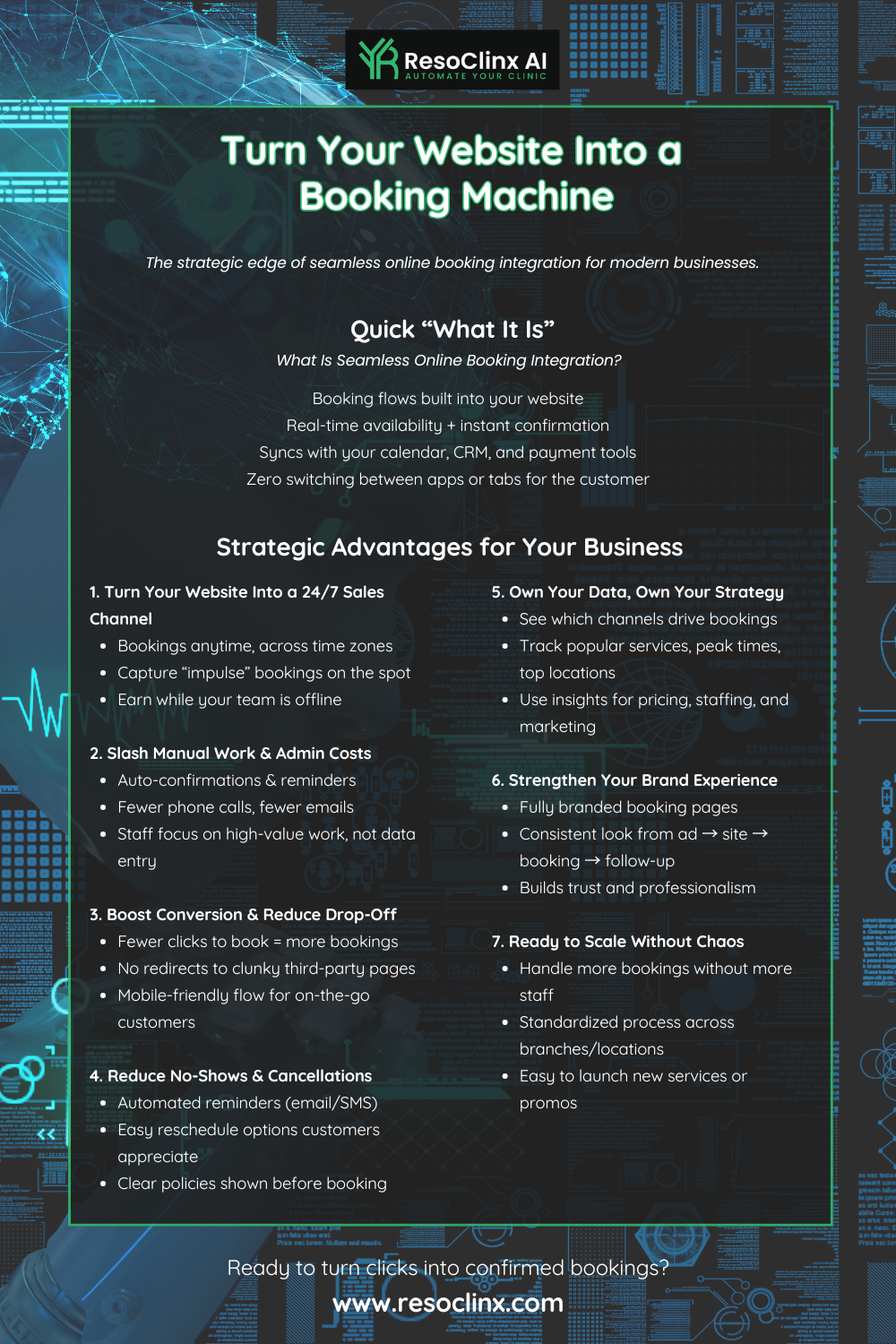
In today’s world, people expect to book treatments on their own time — whether that’s before work, after dinner, or late at night. If your website only offers booking by phone or email, you’re likely missing out on a large number of potential clients who prefer an instant, no-fuss booking system.
The best clinic website themes make online booking painless, straightforward and available 24/7. You want clients to move from browsing your services to confirming an appointment in just a few clicks. The way you implement this will depend on your booking system and software, so it’s important to choose a website setup that supports the tools you already use.
What to look for in booking integration
Here are some features to look for in a website theme that truly supports smooth online booking:
Integration with clinic software: The ability to connect with reputable third-party online booking systems or your existing clinic management software.
Real-time availability: A live appointment diary so clients can see exactly what times are free.
Automated confirmations & reminders: Automatic emails or SMS reminders to reduce no-shows and save your team time.
Choice of practitioner or treatment: Options for clients to book specific practitioners or request particular treatments.
Mobile-friendly booking forms: Booking forms that are easy to use on mobile and tablet, not just on desktop.
Secure payments or deposits: The option to take deposits or full payment securely online, in line with your clinic policy.
Online booking integration isn’t just a convenience — it helps fill your calendar, reduces administrative workload, and takes pressure off your front desk. When you’re choosing a website theme, look for one that treats online booking as a core feature, not an afterthought.
2. High-Quality Image Galleries
When potential clients land on your clinic’s website, they are not just looking for information; they’re looking for a visual representation of the results you can achieve. This is where high-quality image galleries become absolutely vital. Think of them as your digital portfolio, showcasing the transformations and improvements you have achieved for others.
It’s not enough to simply have pictures; they must be good quality. Poor lighting or low-resolution images can undermine even your best results and make your work appear less professional than it is. Investing in professional photography or ensuring your own photos are taken with good lighting and a steady hand is key. Before-and-after images are particularly powerful, because they directly demonstrate the impact of your treatments and help visitors imagine similar improvements for themselves.
How to structure your image galleries
Consider organising your galleries by treatment type. This makes it easier for visitors to find examples relevant to their specific interests. For instance, a gallery for “Facial Rejuvenation” might include before-and-after images of treatments such as chemical peels or microneedling, while a “Body Contouring” gallery could feature results from non-surgical fat reduction procedures.
Here’s a quick guide to making your image galleries work harder for you:
Showcase variety: Display a range of treatments and skin types to appeal to a broader audience.
Highlight transformations: Use before-and-after images to clearly show the results of specific treatments.
Use high resolution: Ensure all images are crisp, clear and well-lit.
Organise logically: Group images by treatment type, area of the body or concern (e.g. pigmentation, lines and wrinkles).
Obtain consent: Always obtain explicit, written permission from clients before using their images.
The visual impact of your work speaks volumes. A well-curated gallery doesn’t just show what you do; it builds trust, demonstrates your expertise and supports your positioning as an authoritative aesthetic clinic.
3. Client Testimonial Sections
In the world of aesthetic clinics, trust is everything. Potential clients are often making decisions about treatments that affect their appearance and confidence, so they need to feel sure they’re in safe, experienced hands. This is where client testimonials become incredibly powerful.
Showcasing genuine feedback from happy clients is one of the most effective ways to build credibility and encourage enquiries. Think of testimonials as mini success stories. When someone is considering a procedure, reading about another person’s positive journey can be the deciding factor.
To make your testimonial sections work harder:
Include a mix of treatments: Feature feedback on different treatments, the client experience and the overall care they received.
Use real names and photos (with consent): Where possible, include a name, initial or age range and, if appropriate, a photo. This adds authenticity.
Add video testimonials if you can: Short, well-produced videos where clients talk about their experience can be extremely persuasive.
Place testimonials strategically: Feature testimonials on your homepage, on key treatment pages and on a dedicated reviews or testimonials page.
A well-placed testimonial can turn a hesitant visitor into someone who feels confident contacting your clinic. It’s about sharing the positive impact your treatments have had on real people’s lives, in a way that is respectful and professional.
4. Service Menus and Pricing
When potential clients land on your website, one of the first things they want to know is what you offer and how much it costs. A clear, well-structured service menu is crucial. Think of it as your digital brochure, but with more flexibility and detail.
Your service list shouldn’t just be a dry list of treatment names. It’s an opportunity to highlight key benefits and help people understand which treatments may be right for them. For example, instead of simply listing “Facial”, you might show a “Radiance-Boosting Facial” with a short, clear description of who it is for and what it does for the skin.
Example structure for service offerings
You can structure your services by category, making the menu easy to scan:
Facial Treatments
Deep Cleansing Facial – £60
A targeted facial designed to deeply cleanse congested skin and improve clarity.Hydrating & Brightening Facial – £75
A treatment focused on restoring moisture, radiance and a more even skin tone.Anti-Ageing Collagen Boost – £90
A facial aimed at supporting collagen production and the appearance of fine lines.
Body Treatments
Full Body Massage – £70
A relaxing full-body treatment to ease muscle tension and promote wellbeing.Exfoliating Body Scrub – £55
A revitalising body treatment to smooth and refresh the skin.
Advanced Treatments
Laser Hair Removal (per area) – from £50
A course-based treatment aimed at long-term reduction of unwanted hair.Chemical Peel – £85
A skin-resurfacing treatment to improve texture, tone and overall skin quality.
Presenting prices clearly helps manage expectations and builds trust. If you offer treatment packages, maintenance plans or complimentary consultations, highlight these clearly. Transparent pricing is a key part of professional, patient-centred care and supports your wider aesthetic clinic marketing efforts.
5. Mobile-Responsive Design
In today’s world, most people browse the internet on their phones. If your aesthetic clinic’s website doesn’t look good and work well on a mobile device, you’re missing out on a significant number of potential clients. A mobile-responsive design is no longer a luxury; it’s a necessity.
Someone may be researching treatments while on a commute, during a lunch break or relaxing at home. If they land on your site and it’s difficult to read, navigate or book an appointment, they are likely to go back to the search results and choose a competitor.
Here’s why mobile-responsive design is so important:
First impressions: A clunky mobile experience can make your clinic seem less professional, even if your clinical standards are excellent.
Google ranking: Google now uses the mobile version of your site for indexing and ranking. If your website is not mobile-friendly, it is more likely to perform poorly in search results when people look for clinics in your area.
User experience: People expect things to work smoothly on their phones. Easy-to-tap buttons, readable text and fast loading times are key.
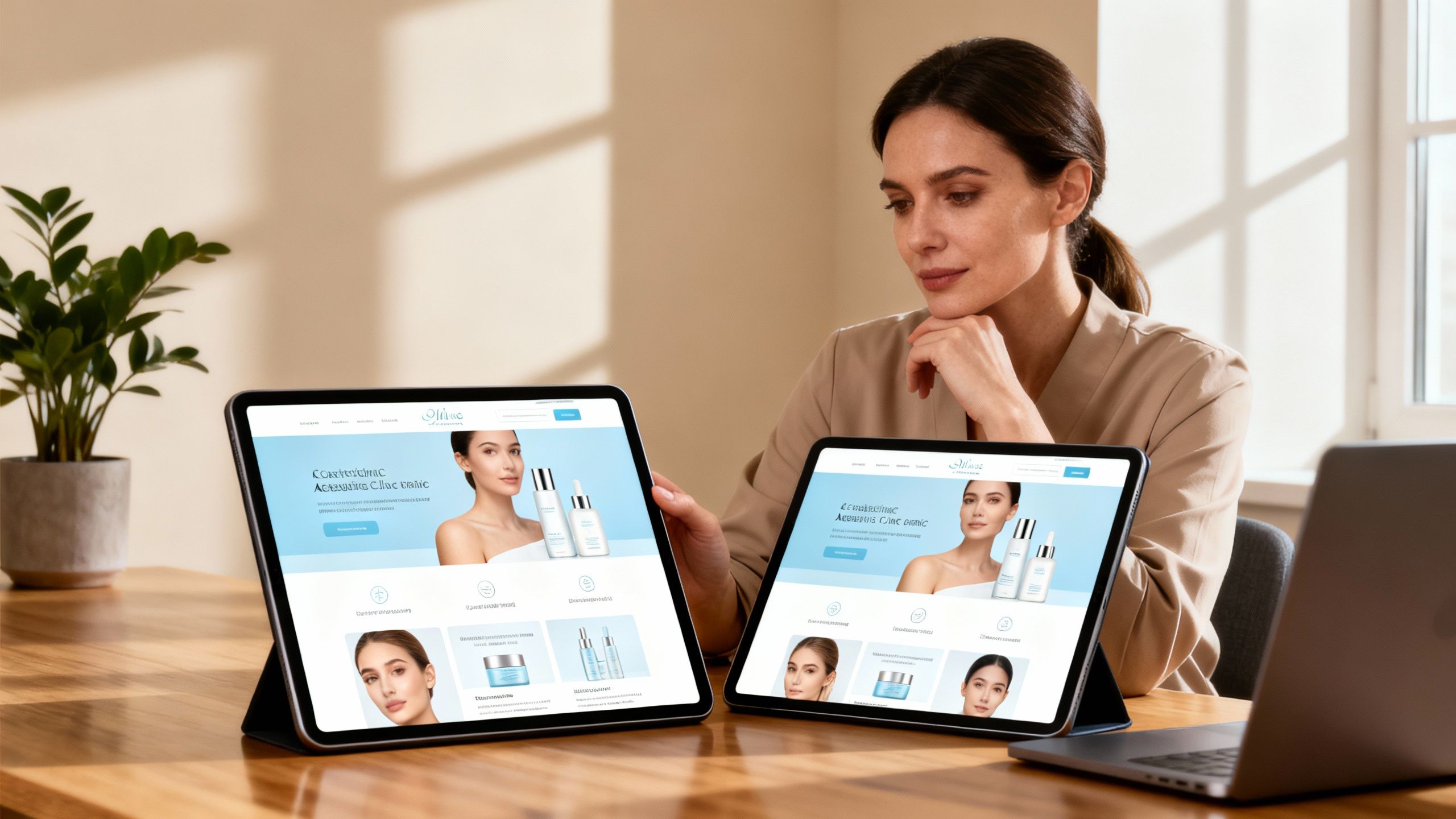
When a website is responsive, it automatically adjusts its layout to fit any screen size, whether it’s a smartphone, tablet or desktop. This means your images, content and online booking system will be easy for everyone to use, no matter how they access your site. In short, responsive design is essential for both user experience and local SEO for clinics.
6. Clean Aesthetics and White Space
When potential clients land on your aesthetic clinic’s website, first impressions matter. Just as your clinic’s reception area should be tidy and welcoming, your website needs to feel uncluttered, calm and professional. This is where clean aesthetics and ample white space make a real difference.
Think of white space not as “empty” areas, but as breathing room for your content. It helps guide the visitor’s eye, making it easier for them to find the information they are looking for without feeling overwhelmed.
To achieve a clean aesthetic:
Typography: Use clear, readable fonts. A good pairing of headings and body text can make a significant difference to how professional your site appears. Avoid fonts that are difficult to read, especially on smaller screens.
Layout: Opt for a structured layout with consistent spacing around text and images. This helps break up information and makes it more digestible.
Imagery: Ensure all images are high-resolution and consistent in style. Blurry or off-brand images can affect how trustworthy your clinic appears.
Colour palette: Stick to a limited, soothing colour palette that matches your brand. Too many clashing colours can be distracting and reduce the sense of professionalism.
The goal is to create a digital space that feels as tranquil and organised as your physical clinic. A clean, well-designed website can make it easier for visitors to focus on your treatments, expertise and results.
7. Soothing Color Palettes
The colours you choose for your aesthetic clinic’s website are more than decoration; they are a visual expression of your brand. The right colour palette can communicate how you want clients to feel when they interact with your clinic — relaxed, reassured, energised or refreshed.
For clinics focused on wellness and relaxation, soft blues, gentle greens and earthy tones often work well. These colours are associated with calm and can help visitors feel more at ease, similar to stepping into a tranquil spa. Clinics with a more clinical or high-tech focus may prefer a clean, minimalist palette with whites, greys and a single accent colour.
Here are a few ideas for colour palettes and the feelings they evoke:
Calming & serene: Soft blues, muted greens, gentle greys and creams. Ideal for spas, wellness-focused clinics and skin health practices.
Luxurious & sophisticated: Deep purples, rich golds, charcoal grey and off-white. Suitable for high-end clinics offering premium treatments.
Natural & organic: Earthy browns, muted greens, sandy beiges and soft whites. Perfect for clinics emphasising natural results and holistic approaches.
Clean & modern: Crisp whites, light greys and a single accent colour (such as a soft teal or blush). Works well for clinics with a contemporary, medical aesthetic.
When selecting your colours, consider the psychological impact each shade has. Blues can evoke trust, greens suggest health and nature, while warmer tones can feel inviting and energising. Avoid overly bright or jarring colours that clash with the sense of calm and professionalism you want to project.
A well-considered colour palette helps create a cohesive, recognisable brand identity and supports a more reassuring experience for visitors.
8. Intuitive Navigation
When potential clients land on your aesthetic clinic’s website, they should not have to guess where to click next. Intuitive navigation is key to a positive user experience, guiding visitors smoothly through your site and encouraging them to explore further.
Think of your website’s menu as the main pathway through your clinic. If it is cluttered, confusing or difficult to find, people may become frustrated and leave. A well-structured navigation system makes it easy for visitors to locate important information such as:
Your range of services and treatments
Pricing and any packages
Before-and-after galleries
Contact details and location
Your online booking system
Key elements of intuitive navigation include:
Clear labelling: Use straightforward, descriptive terms such as “Treatments”, “Pricing”, “About the Clinic” and “Book Online”.
Logical grouping: Group related services together (for example, Facial Treatments, Body Treatments, Skin Concerns).
Prominent placement: Keep your main navigation menu easy to see, typically at the top of the page.
Search functionality: For larger websites, a search bar can help users find specific treatments or information quickly.
A website that is easy to navigate suggests organisation, reliability and client focus — all qualities people look for in an aesthetic clinic.
9. Professional Portfolio Showcase
Your website’s portfolio is more than a collection of images; it is your digital showroom. This is where potential clients come to see the tangible results of your skills and artistry.
Think of your portfolio as a visual CV. High-quality images are absolutely essential. Blurry, poorly framed or inconsistent photos can detract from even the most impressive clinical work. Taking time to capture clear, well-lit images and present them consistently is a worthwhile investment.
When putting your portfolio together, aim for variety:
Show different treatment types (e.g. skin rejuvenation, injectables, body treatments).
Include a range of ages, skin tones and concerns, where appropriate and with consent.
Highlight both subtle, natural-looking improvements and more dramatic transformations, depending on your clinic’s positioning.
Before-and-after images are especially useful because they provide a clear visual representation of the transformation you can achieve. However, always remember to obtain explicit written consent from clients before sharing their images, and follow relevant UK guidance on advertising and patient confidentiality.
A professional portfolio doesn’t just show what you have done; it helps tell a story about the confidence, comfort and results your treatments can offer.
10. SEO Optimization
Making sure your aesthetic clinic’s website can be found by potential clients is a major part of attracting new business. This is where Search Engine Optimisation (SEO) comes in. In simple terms, SEO is about improving your visibility when people search for services like yours on Google and other search engines.
You can think of SEO as your digital shop window — if it isn’t visible, people are far less likely to discover your clinic.
Keyword research and content
Start by identifying the words and phrases people actually type into search engines when they are looking for treatments like yours. For example:
“aesthetic clinic [your city]”
“non-surgical facelift UK”
“laser hair removal near me”
“skin clinic for acne scars”
These keywords can be woven naturally into your headings, page content, meta titles and meta descriptions, without keyword stuffing. Regularly adding helpful, educational content — such as blog posts that answer common questions — supports both SEO and your authority as a clinic.
On-page SEO essentials
On each page, pay attention to:
Page titles and meta descriptions: Write clear, descriptive titles and meta descriptions that include relevant keywords and give users a reason to click.
Headings (H1, H2, H3): Use headings to structure your content logically, making it easier to read and for search engines to understand.
Image alt text: Add short, accurate descriptions to your images (for example, “before and after chemical peel, female patient in her 40s”). This supports accessibility and gives search engines context.
Internal links: Link between relevant pages (for instance, from a blog post on sun damage to your pigmentation treatment page) to help users and search engines discover more of your content.
Local SEO and Google Business Profile (GBP)
For clinics with a physical location, local SEO for clinics is especially important. One of the most valuable tools is your Google Business Profile (GBP).
Make sure your GBP listing is:
Complete and accurate: Include your clinic name, address, phone number, website, opening hours and key services.
Up to date: Keep your details, opening times and holiday hours current.
Visually appealing: Add high-quality photos of your clinic, team and (with consent) your work.
Encourage clients to leave honest reviews and respond to them professionally. Review quality and quantity are important signals that can help improve your visibility in local search.
A well-optimised website, supported by a strong Google Business Profile, is not just about getting more traffic — it’s about bringing in the right clients who are genuinely interested in the treatments you offer.
Your Website: The First Step to More Clients
We’ve explored how a well-designed aesthetic clinic website can make a meaningful difference to your business. It’s not just about looking attractive online; it’s about helping people find you easily, understand your services clearly and book appointments with confidence.
A thoughtful website acts as a welcoming digital front door for your clinic — building trust, showcasing your expertise and reinforcing your wider aesthetic clinic marketing efforts. When you combine seamless booking, strong visuals, clear information and solid SEO, your website becomes a long-term asset that supports steady, sustainable growth.