
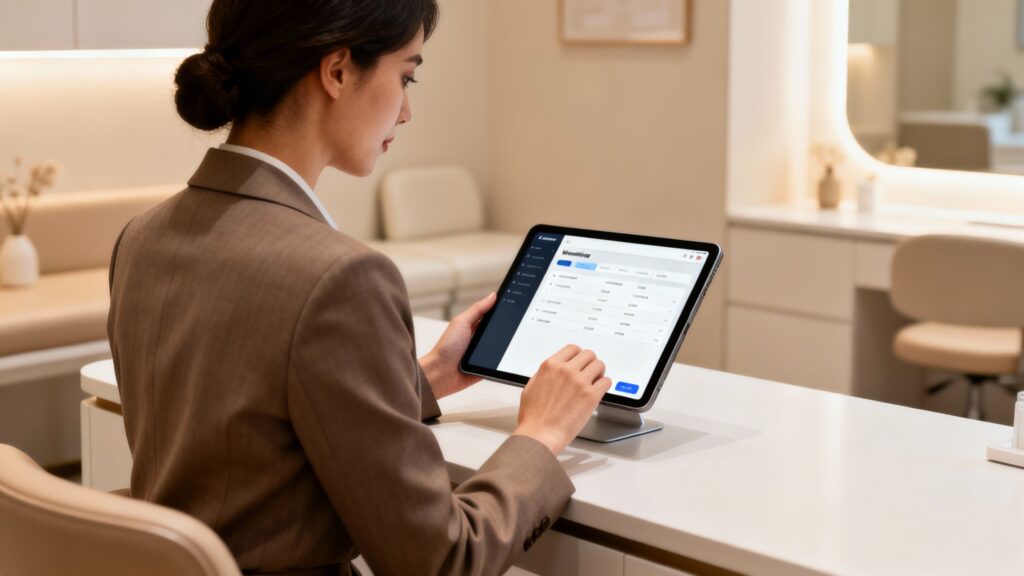
Running an aesthetic clinic can feel like you are constantly balancing client care, appointments and paperwork. It is a lot to manage day to day. Clinic workflow automation offers a practical way to make things run more smoothly. By using technology to handle repetitive, routine tasks, your team can focus on what really matters: providing safe, effective treatments and a consistently high-quality client experience.
In this blog, we will explore how clinic workflow automation supports operational efficiency, enhances the client journey, and helps aesthetic clinics build a more sustainable, scalable way of working.
Key Takeaways
Streamlining the client journey from booking to follow-up is made easier with clinic workflow automation, improving client satisfaction and helping your aesthetic clinic attract more repeat bookings.
Automating repetitive administrative tasks significantly reduces the workload on clinic staff, allowing them more time for patient care and more meaningful client interactions.
Centralising patient data and protecting it securely is a core benefit, making information readily accessible to authorised staff and supporting compliance with UK data protection requirements.
AI and predictive analytics offer smarter ways to manage schedules and personalise patient experiences, leading to smoother operations and better clinical outcomes.
Successful implementation involves assessing current processes, choosing the right tools, and getting staff on board through clear communication and proper training.
Streamlining Client Journeys with Clinic Workflow Automation
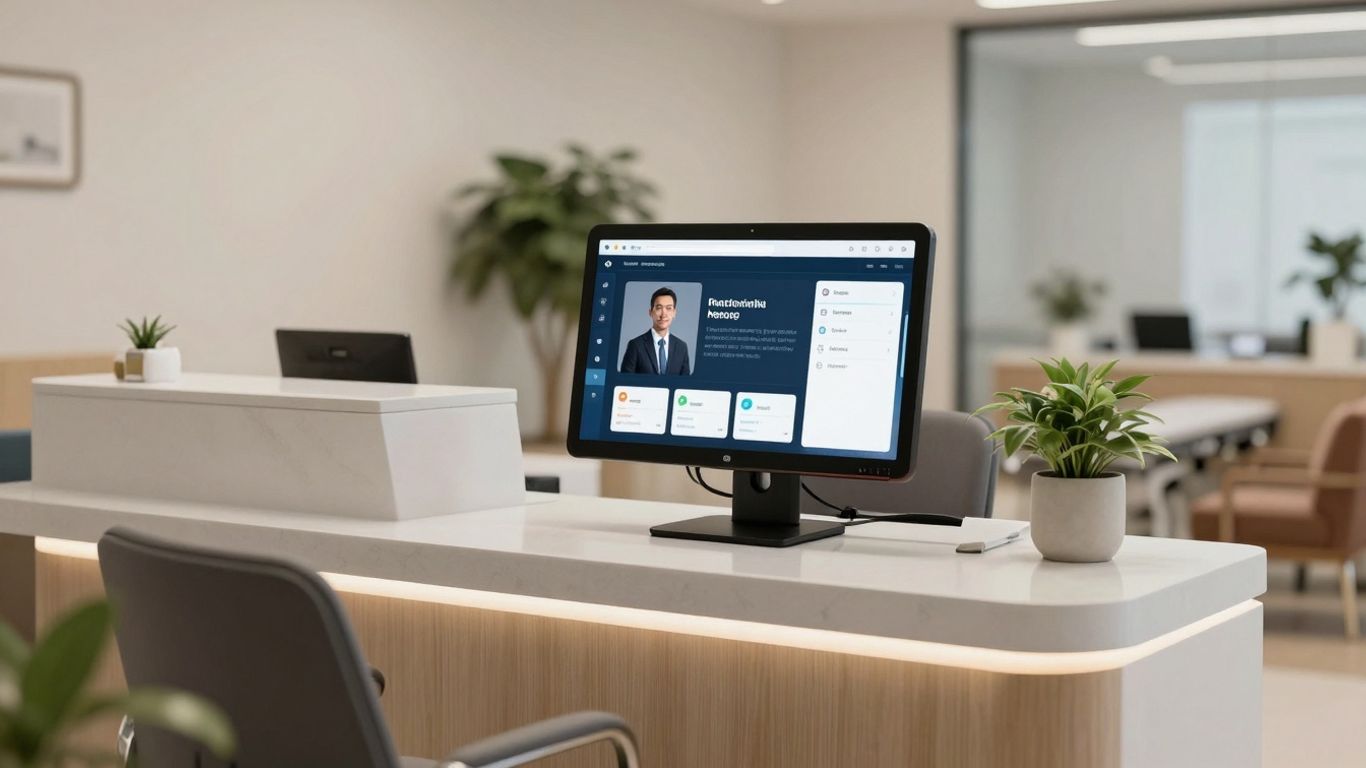
Making sure clients have a smooth experience from their first enquiry to their follow-up is essential for any aesthetic clinic. It is not just about the treatment itself, but how easy and pleasant the whole process feels. Automation can support every stage of this journey, removing unnecessary manual steps, reducing delays and ensuring communication is consistent.
Optimising Appointment Booking Processes
Booking an appointment should be straightforward. When clients can easily see availability and book online, it makes a noticeable difference to their experience. Automated systems can also send reminders, which helps cut down on missed appointments and last-minute cancellations.
This leads to:
Less lost revenue
A more reliable clinic diary
Happier clients who do not have to remember everything themselves
Key features of an optimised booking process include:
Online booking 24/7: Clients can book whenever it suits them, without relying on opening hours or phone calls.
Automated reminders: SMS or email reminders reduce no-shows and help clients feel looked after.
Rescheduling options: Self-service rescheduling gives clients flexibility while keeping your diary under control.
By making booking simpler and more transparent, you improve the client journey and free your team from constant telephone and email management.
Enhancing Patient Communication Channels
Clear, consistent communication is one of the most important factors in building trust with clients. Automation allows you to set up structured communication flows so that clients always know what is happening and what they need to do next.
Automated messages can be used for:
Appointment confirmations and reminders
Pre-treatment instructions, such as avoiding certain products or activities
Post-treatment care guidance, tailored to the procedure
Follow-up check-ins, ensuring clients feel supported after their visit
This reduces the need for your team to make repeated phone calls and manual emails, while clients benefit from timely, reliable information. Good communication is a key part of aesthetic clinic marketing as well, as it reflects professionalism and builds confidence in your clinic.
Simplifying Digital Intake and Consent Forms
Paper forms can easily be lost, misread or incomplete. Moving to digital intake and consent forms is a more efficient and secure way to collect client information.
With digital forms:
Clients can complete medical histories and consent forms on their own devices before their appointment, reducing time spent in reception.
Information can be added directly to the client record, which reduces data entry and minimises errors.
Your reception team can focus on greeting clients and managing the clinic environment, rather than chasing paperwork.
Key benefits of digital forms include:
Reduced administrative time: Staff spend less time entering data manually.
Improved data accuracy: Standardised fields reduce the risk of missing or unclear information.
Enhanced client experience: Completing forms at home feels more private and less rushed.
Better data security: Digital records can be protected with secure access controls and managed in line with UK GDPR requirements.
This shift from paper to digital is a practical first step in clinic workflow automation, and it often delivers immediate improvements in both efficiency and client satisfaction.
Elevating Operational Efficiency Through Automation
Running an aesthetic clinic involves many moving parts. From booking and confirming appointments to managing patient records and handling payments, there are numerous tasks that can consume time and energy. Workflow automation helps streamline these operations so your team can dedicate more attention to clinical care and client relationships.
Reducing Administrative Burden on Staff
Your reception and administrative team often carry a significant workload. Day-to-day responsibilities might include:
Sending appointment confirmations and reminders
Chasing outstanding payments
Manually entering client and treatment information
Managing diaries for multiple practitioners
Automation can handle a large proportion of these tasks:
Automated appointment reminders via SMS or email can significantly reduce missed appointments.
Digital intake forms collect patient information before their visit, saving time at reception.
Automated payment reminders can improve cash flow and reduce the need for manual follow-up.
By reducing the administrative burden, you give staff more time for tasks that genuinely require human judgement, empathy and communication.
Minimising Errors in Billing and Data Entry
Manual data entry is inherently prone to error. In an aesthetic clinic, mistakes in billing or patient records can cause confusion, reduce client trust and create time-consuming issues to resolve.
Automation and integrated systems help by:
Passing data smoothly from one stage to another, without repeated manual entry
Reducing the risk of typos, incorrect figures or mismatched records
Ensuring invoices, receipts and treatment notes are consistently generated and stored
Accurate data is essential for:
Financial management and reporting
Clinical decision-making, based on correct client histories
Maintaining the professional reputation of your clinic
By minimising errors, automation supports both compliance and client confidence.
Automating Repetitive Task Management
Many tasks within an aesthetic clinic are repetitive but necessary. Examples include:
Sending post-treatment care instructions
Scheduling follow-up appointments for routine reviews
Managing stock levels for consumables and skincare products
These processes do not usually require complex decision-making and are ideal candidates for automation. When repetitive tasks are automated:
Staff are less likely to experience burnout from monotonous work
Clients receive timely, consistent messages and reminders
Your clinic operates with fewer bottlenecks and delays
Importantly, automation is not about replacing staff. It is about freeing skilled professionals from routine tasks so they can focus on higher-value activities, such as personalised consultations, treatment delivery and client education.
Leveraging Technology for Enhanced Patient Care
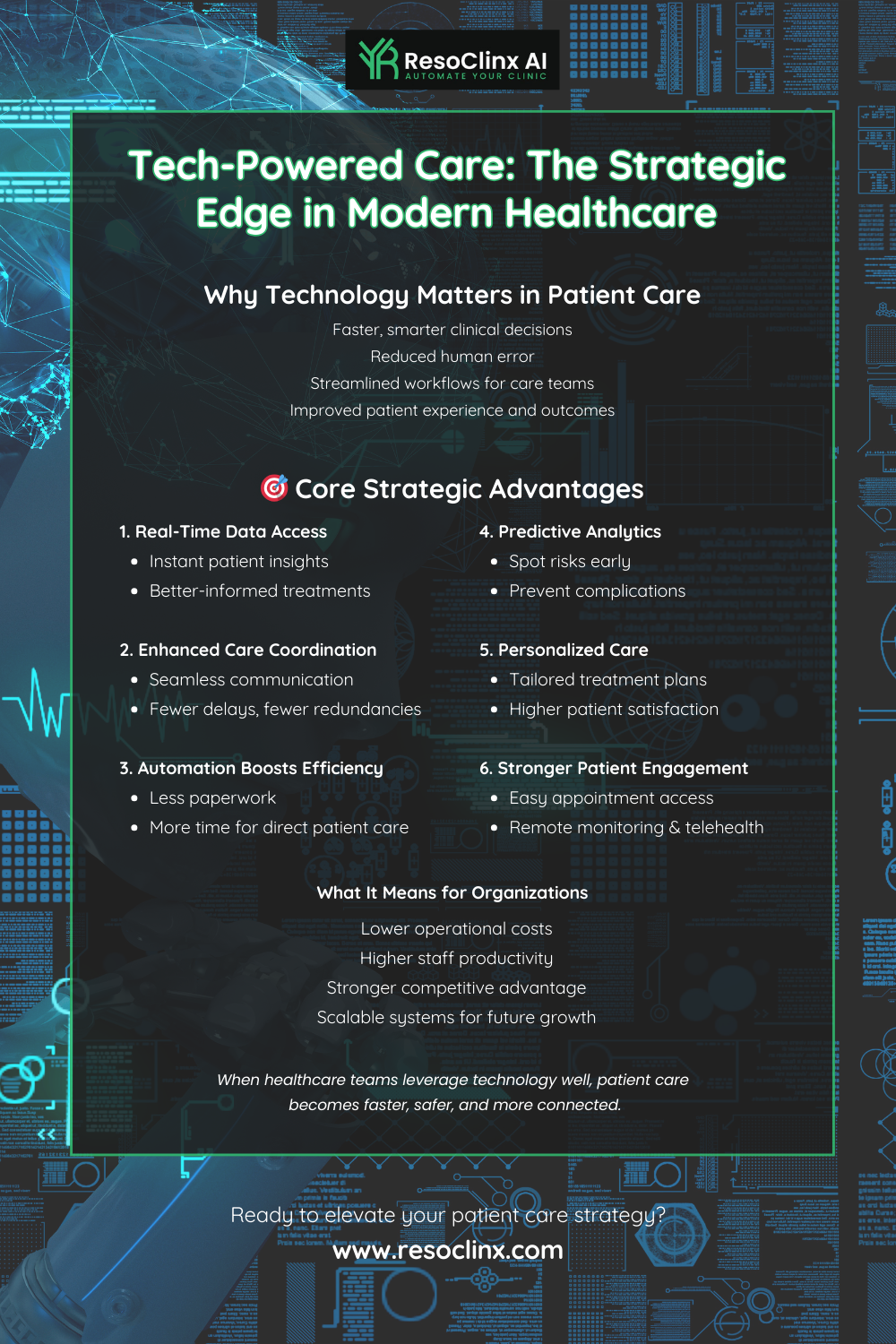
Clients now expect a seamless, connected experience before, during and after their appointments. Technology and automation help aesthetic clinics meet these expectations and deliver high standards of care, while also supporting safe and compliant record-keeping.
Centralising Patient Management and Data Security
Keeping patient records organised and secure is crucial for both care quality and legal compliance. When patient data is centralised in a single, secure system, your team gains a clearer view of each client’s journey.
Centralised data offers:
Improved access to patient history for informed treatment decisions
Reduced risk of lost or misplaced records
More efficient reporting and analysis for clinic management
Enhanced data security, with controlled access and regular backups
Protecting client data is not only a legal requirement under UK data protection law; it is also fundamental to building trust. When clients feel confident that their information is handled securely and respectfully, they are more likely to be open and honest, which supports better treatment outcomes.
Improving Treatment Plan Adherence
Once a treatment plan is agreed, helping clients follow that plan is essential for achieving good results. Technology can support adherence by keeping clients informed and engaged.
Useful approaches include:
Automated appointment and follow-up reminders, so reviews are not missed
Personalised educational content, such as guidance on aftercare and lifestyle considerations
Patient portals, providing easy access to treatment plans, recommendations and progress notes
Regular digital check-ins, using clients’ preferred communication channels
These tools encourage clients to participate actively in their treatment and aftercare, which can lead to more predictable outcomes and higher satisfaction.
Facilitating Seamless Follow-Up Care
The client journey does not end when they leave the clinic. Follow-up care is vital for monitoring recovery, addressing questions and reinforcing your clinic’s professional approach.
Automation can support follow-up by:
Sending post-treatment surveys to collect feedback and identify any concerns
Triggering scheduled check-in messages based on specific treatments or timeframes
Offering links to aftercare instructions and further guidance
This proactive style of communication shows clients that you take their ongoing well-being seriously. Over time, it can help build loyalty, positive reviews and word-of-mouth referrals.
The Role of AI in Modern Clinic Operations
Artificial Intelligence (AI) is now a practical tool in everyday clinic operations rather than a futuristic concept. You can think of AI as an intelligent assistant working behind the scenes, using data to help your clinic operate more efficiently and intelligently.
AI is particularly useful for:
Analysing patterns in booking and client data
Supporting personalised communication and recommendations
Automating tasks that are repetitive but data-heavy
The aim is not to remove the human element from your clinic, but to complement it with technology that supports better decision-making and smoother operations.
AI-Powered Personalisation for Patient Experiences
AI can analyse client data to understand preferences, past treatments and likely interests. This makes it possible to offer more tailored communication and recommendations.
For example, AI can:
Suggest relevant follow-up treatments based on previous procedures
Highlight skincare recommendations aligned with client concerns
Help segment clients for targeted educational emails or updates
Instead of a one-size-fits-all approach, AI supports personalised experiences, which can improve client satisfaction and help build long-term relationships.
Predictive Analytics for Scheduling Optimisation
Scheduling can be challenging, especially in busy aesthetic clinics. AI-powered predictive analytics can use historical data to forecast appointment demand, identify peak times and anticipate potential no-shows.
This allows you to:
Optimise your appointment book
Reduce gaps and underutilised time
Minimise last-minute cancellations
Plan staffing levels more accurately
For example:
If your current no-show rate is around 15%, predictive tools may help you bring this closer to 5% by identifying high-risk appointment types and prompting additional reminders.
If your schedule utilisation is typically 70%, automation and predictive analytics may help move this closer to 90%, maximising practitioner time and availability.
In practice, this leads to a diary that feels more controlled, predictable and aligned with both client needs and clinic capacity.
Here’s a look at how predictive analytics can impact scheduling:
Metric | Current State (Manual) | AI-Optimised | Impact |
|---|---|---|---|
No-show Rate | 15% | 5% | Reduced wasted appointment slots |
Schedule Utilisation | 70% | 90% | Maximised practitioner time |
Appointment Booking Time | 5 mins per booking | 1 min per booking (automated) | Faster service for clients |
Intelligent Automation for Workflow Refinement
AI can also enhance workflow automation by handling more complex tasks than simple “if-this-then-that” rules. This can include:
Automated reminders: Sending timely SMS or email reminders for appointments and reviews.
Digital form processing: Extracting and organising information from intake and consent forms.
Data entry support: Reducing manual input for patient details and treatment history.
Follow-up communications: Triggering personalised follow-up messages based on treatment type, risk factors or protocols.
By taking on these responsibilities, AI-enabled automation reduces the chance of human error and helps your clinic offer a more consistent, reliable experience.
AI integration isn’t about replacing the human touch in your clinic; it’s about augmenting it. By taking over the mundane, AI allows your skilled staff to dedicate more time to building rapport with patients, providing consultations, and performing treatments with greater focus and less distraction. This leads to a more efficient clinic and a more satisfying experience for everyone involved.
Implementing Clinic Workflow Automation Successfully

Introducing clinic workflow automation is a project, not a single switch. A thoughtful approach makes it much easier to implement systems that genuinely support your clinic and team.
The process typically involves:
Understanding your current workflows
Identifying the most impactful areas for automation
Selecting suitable platforms or tools
Communicating clearly with staff and providing training
Assessing Current Workflows for Automation Opportunities
Before you invest in software, it is useful to map out your current processes on paper or using a whiteboard. Start from the moment a client first contacts the clinic and follow the journey through to follow-up and recall.
Look for:
High-frequency tasks that are repeated in the same way (e.g. appointment reminders, confirmation emails)
Manual data entry, such as transferring information from paper forms to digital records
Bottlenecks, where tasks often get delayed or missed
You might categorise processes as:
Ready for Automation:
Manual data entry (e.g. patient details from forms)
High-frequency or repetitive tasks (e.g. appointment confirmations)
Clearly defined processes (e.g. standard treatment protocols and routine follow-up)
Needs Work First:
Complex decisions with inconsistent rules
Inconsistent data requirements or forms
Unclear roles and responsibilities within the clinic team
It is also valuable to speak to your team. They are closest to the daily workflow and can highlight where time is lost or where errors frequently occur. Setting clear goals—such as reducing administrative time by a set percentage or cutting booking errors—will help you measure the impact of automation.
Selecting the Right Automation Platform
Once you know what you want to automate, you can begin evaluating automation platforms and tools. Rather than choosing the first option you come across, consider your clinic’s specific needs:
Does it integrate with your existing patient management system or practice software?
Is it user-friendly for your staff, including those who may not be very technical?
Can it scale as your clinic grows or adds new services?
Does it provide robust security features and support compliance with UK data protection standards?
What support and training does the provider offer?
Look for platforms that support:
Automated appointment scheduling and reminders
Digital intake and consent forms
Integrated communication tools (SMS, email, portals)
Reporting and analytics on key metrics
Investing time in demos and trials is worthwhile. A well-chosen platform should feel like a natural extension of your team, not an extra burden.
Ensuring Staff Adoption and Training
Even the best automation system will fail if staff feel uncomfortable or do not use it correctly. Staff adoption is therefore critical.
To support adoption:
Explain why you are introducing automation, focusing on how it will make daily work easier and more efficient.
Provide role-specific training, so each team member understands exactly how they will use the system.
Offer ongoing support, such as a point of contact or regular refreshers.
Consider a phased rollout, starting with simpler automations before adding more complex workflows.
When staff see that automation reduces repetitive tasks and gives them more time for meaningful work, they are more likely to embrace the change.
Future-Proofing Your Aesthetic Clinic with Automation
The aesthetic industry evolves rapidly. New treatments, changing client expectations and increased competition mean clinics must remain agile. Automation can help your clinic adapt more easily over time, rather than reacting in a fragmented way.
Adapting to Evolving Patient Expectations
Modern clients expect:
Convenience (online booking, flexible communication)
Clear information before and after treatments
Personalised experiences rather than generic messages
Automation helps meet these expectations by:
Enabling clients to book online 24/7, with instant confirmation
Delivering structured pre- and post-treatment communications
Supporting personalised follow-ups based on treatment types or preferences
This digital-first approach does not replace human contact—it supports it by ensuring essential information and logistics are taken care of consistently.
Staying Competitive in a Growing Market
The aesthetic market is growing, and so is competition. Clinics that embrace technology and streamlined workflows often have a clear advantage.
With automation:
Administrative tasks are handled more efficiently
Staff have more time to focus on client care and consultation
The overall experience feels more professional and well-organised
This combination of operational efficiency and human connection helps your clinic stand out in a crowded field.
Utilising Analytics for Continuous Improvement
Automation and digital systems generate valuable data. Analysing this data regularly can reveal patterns that support better decision-making across your clinic.
You might examine:
Appointment data: Peak booking times, no-show rates, popular treatment slots
Client feedback: Themes in surveys and reviews, satisfaction by service type
Marketing performance: How clients find you, which channels convert best
Operational metrics: Task completion times, average time to respond to enquiries
For example, if you notice a high no-show rate at particular times or for certain treatments, you can adjust your reminders or booking policies. If data shows strong demand for specific services, you can allocate more resources or refine your aesthetic clinic marketing to highlight those treatments.
By regularly reviewing these insights, you can fine-tune your operations, improve patient care and keep your clinic competitive in a busy aesthetic market.
Here’s a look at how analytics can inform your strategy:
Area of Analysis | Potential Insights |
|---|---|
Appointment Data | Peak booking times, no-show rates, popular treatment slots |
Client Feedback | Common themes in reviews, satisfaction levels by service |
Marketing Campaign Performance | Conversion rates, cost per lead, popular channels |
Staff Performance | Task completion times, client interaction logs |
By regularly reviewing these insights, you can fine-tune your operations, improve patient care, and ensure your clinic remains at the forefront of the industry. It’s about working smarter, not just harder, to build a sustainable and successful future.
Moving Forward with Automation
Bringing automation into your aesthetic clinic is no longer a “nice-to-have”; it is becoming essential. By streamlining repetitive tasks, you are not only saving your team time, you are also making things run more smoothly for your clients. That means fewer missed appointments, quicker check-ins and a more polished experience from start to finish.
Although it can feel like a significant change at first, putting the right systems in place allows you to focus on what you do best: providing high-quality treatments, maintaining clinical standards and building strong client relationships. Over time, automation helps your clinic work more intelligently, supporting sustainable growth and a more resilient business.