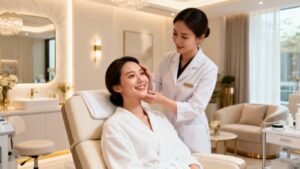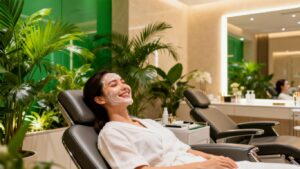

Thinking about how to run Facebook ads for your beauty salon? If you’ve never done it before, the options inside Meta’s ad platform can feel like a lot. The good news is you don’t need to be “techy” to get results—you just need a clear plan, a sensible budget, and the right setup.
This guide walks you through the process step-by-step, from deciding who you want to reach to launching your first campaign and improving performance over time. The aim is simple: help you run ads that attract the right local clients and support steady bookings—without guesswork.
Key Takeaways
Start by defining who your ideal client is, so your targeting and messaging work together.
Build ads around a clear outcome (e.g., enquiries, bookings, consultations), not vague awareness.
Use high-quality, real visuals that reflect your salon experience and results (with permission).
Keep targeting local and intentional so you don’t waste budget on the wrong audience.
Track performance weekly and make small, evidence-based improvements.
Understanding The Power Of Facebook Ads For Your Beauty Salon

Facebook (and Instagram) ads can work brilliantly for salons because they’re visual, local, and action-oriented. You’re not just putting your name “out there”—you’re placing the right message in front of people who are most likely to book, at the moment they’re deciding what to do next.
To get the most from ads, it helps to understand what they’re good at—and what they’re not. They’re not a magic switch that fixes everything overnight. But they are a reliable way to build a pipeline of local interest when you set them up strategically.
Why Your Salon Needs A Digital Marketing Strategy
A great salon experience matters—but people need to find you first. Today, many clients discover services through their phones: searching, scrolling, comparing, and saving ideas. A digital marketing strategy helps you show up consistently across those moments.
A strong strategy doesn’t have to be complicated. It simply means:
you know who you’re trying to attract,
you’re clear on what action you want them to take,
and you have a plan for what happens after they click.
When your ads are part of a wider plan (even a simple one), they stop being “random promotions” and start becoming a repeatable way to generate enquiries and bookings.
The Vast Reach Of Social Media Advertising
Social media advertising gives your salon access to a huge audience—but the real advantage is precision. Unlike traditional advertising, Meta ads allow you to control:
where your ads appear (your area),
who sees them (demographics and interests),
and how people respond (call, message, form, website click).
This matters because most salons don’t need global reach. They need the right local clients within a realistic travel distance—people who are actually able (and likely) to book.
Turning Likes Into Loyal Clients
It’s easy to focus on likes, shares, and comments because they’re visible. However, what keeps your business healthy is turning interest into appointments, and appointments into repeat visits.
Well-built Facebook/Instagram ads help by:
showcasing results and service quality,
making the next step easy (message, call, booking),
and helping you stay visible while someone compares options.
The goal is not “vanity metrics”—it’s building trust and making it simple for a potential client to move from curiosity to booking.
Laying The Foundation For Your Facebook Advertising Success
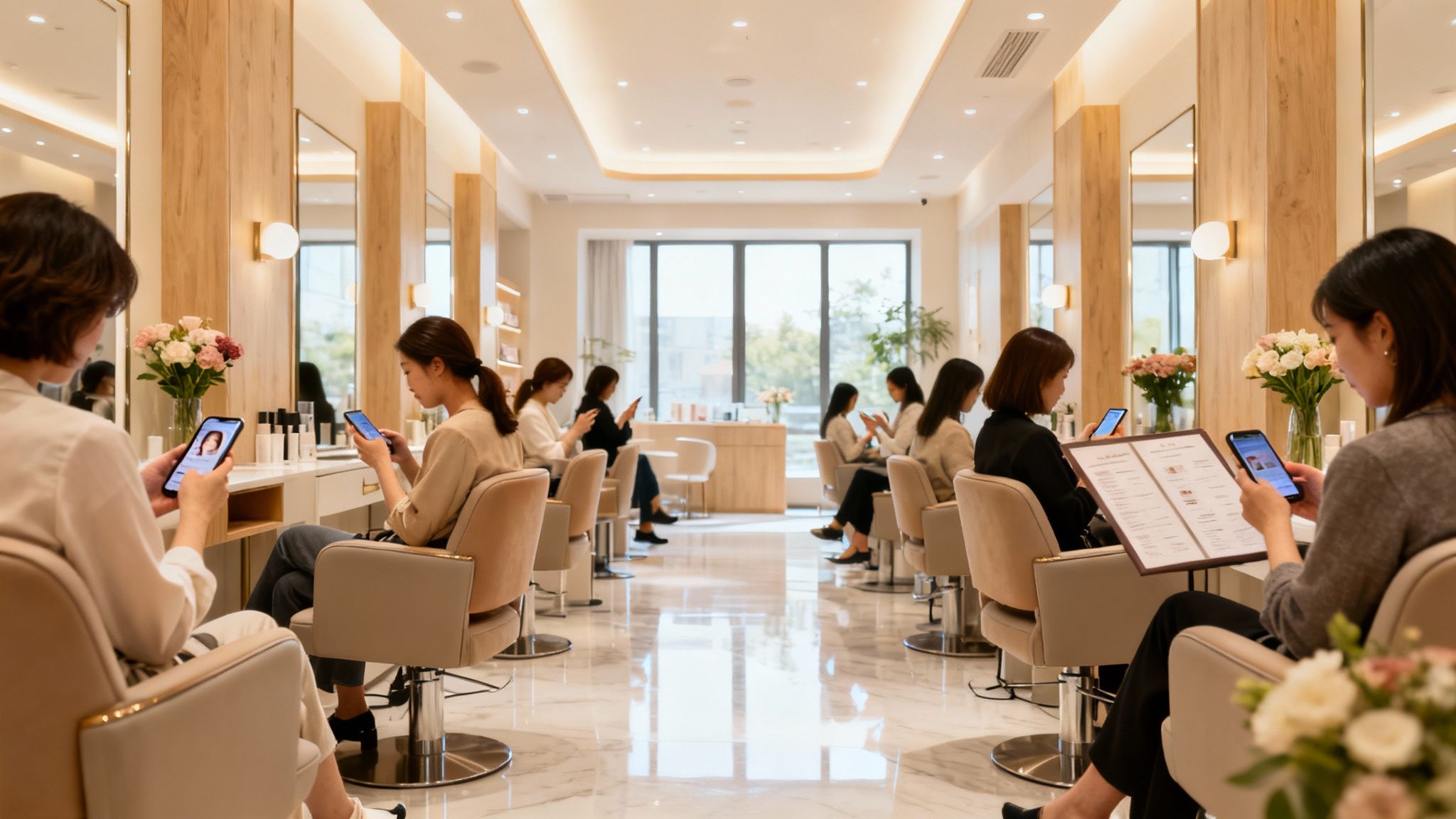
Before spending money on ads, it’s worth doing a little setup work. This is the part that prevents wasted budget and helps your ads feel relevant instead of generic.
Think of it like preparing for a busy day in the salon: when the foundation is organised, everything runs smoother.
Defining Your Ideal Client Avatar
Your ads don’t need to reach everyone. They need to reach the right people—the type of clients most likely to book, enjoy your services, and return.
Start by building a basic client profile. Consider:
Demographics
Age range
Location (and how far people typically travel to you)
Typical budget level (e.g., value-focused vs premium)
Psychographics
Lifestyle and routines (busy professionals, parents, students)
Interests (beauty, wellness, fitness, skincare)
Priorities (results, relaxation, convenience, expertise)
Pain points and goals
What they want to fix or improve
How they want to feel afterwards (confident, refreshed, polished)
When you define this clearly, your ad copy becomes easier to write—because you’re speaking to someone specific, not “everyone”.
Setting Clear Advertising Objectives
A campaign works best when it’s built around one clear purpose. Ask yourself: What do I want this ad to achieve?
Common objectives for salons include:
Enquiries (messages, calls, form submissions)
Bookings (online booking actions)
Local awareness (helping nearby people discover you)
Traffic (sending people to a service page when they need more info first)
The objective you choose shapes how Meta tries to deliver your ads. In other words, you’re telling the platform what success looks like—so it can optimise towards it.
Understanding Essential Advertising Vocabulary
Meta ads come with a bit of jargon. Knowing the basics helps you feel confident when you’re setting things up and reviewing results.
Campaign: the overall goal (e.g., awareness, leads, sales).
Ad Set: the audience, budget, schedule, and placements.
Ad: the creative (image/video + text + call-to-action).
Reach: how many unique people saw your ad.
Impressions: how many times your ad was shown (one person can see it multiple times).
CTR (Click-Through Rate): how many people clicked compared to how many saw it.
CPC (Cost Per Click): average cost each time someone clicks.
Conversion: a valuable action (booking, form submission, call, etc.).
Once these terms make sense, Ads Manager becomes far less intimidating.
Crafting Irresistible Facebook Ad Campaigns
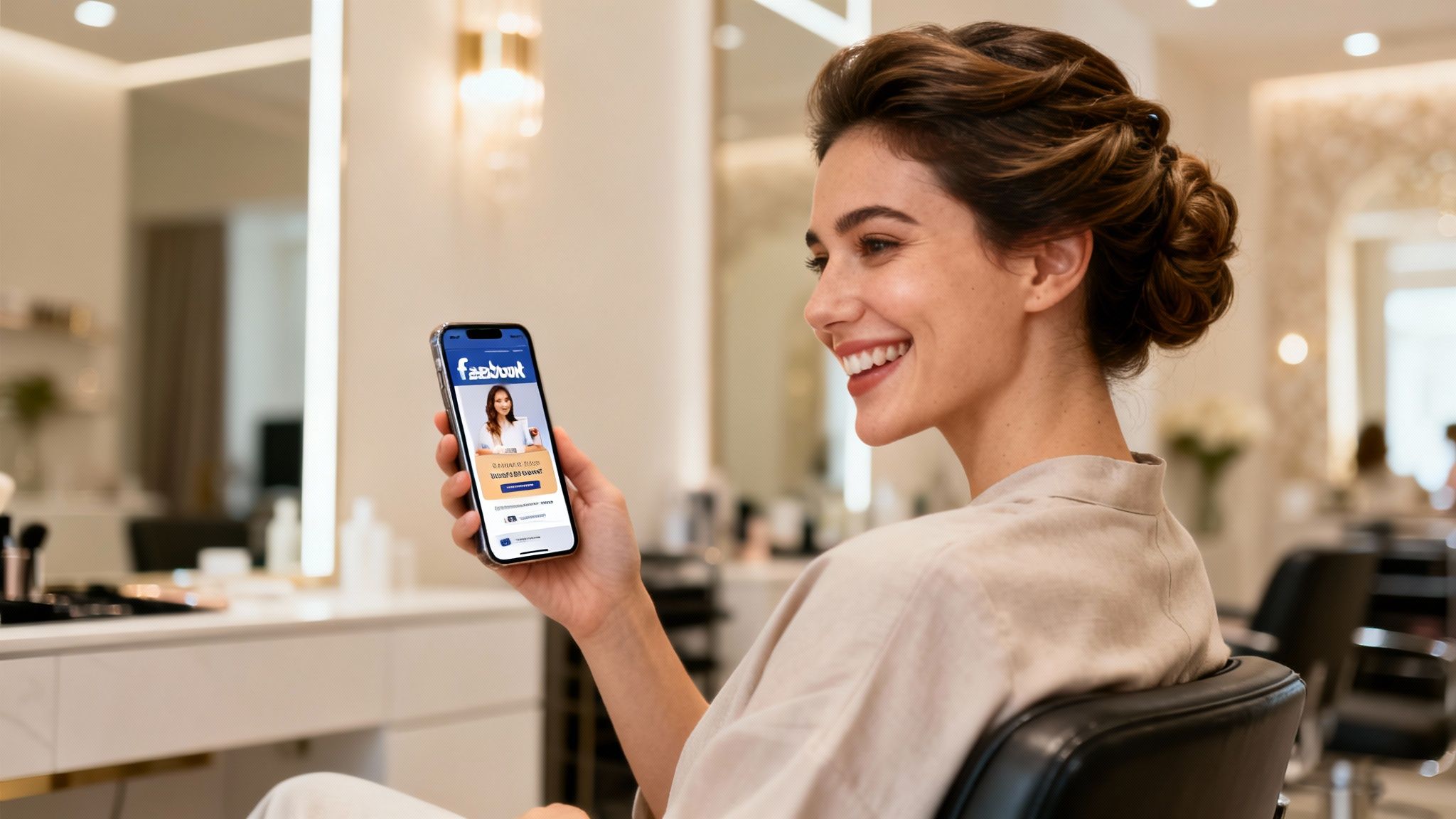
Great ads don’t feel like shouting. They feel like a helpful, timely suggestion—something that makes a person pause scrolling and think, “That’s exactly what I’ve been meaning to do.”
To get there, you need three ingredients: a clear offer, strong copy, and attention-grabbing visuals.
Developing A Compelling Offer Your Clients Can’t Resist
An “offer” doesn’t always mean a discount. It means a clear reason to take action now.
Strong, salon-friendly offer types include:
an introductory appointment package for new clients,
a seasonal service bundle (e.g., event-ready hair, skin, nails),
a consultation invitation for a higher-consideration service,
or an add-on that increases perceived value without cutting price too far.
What matters most is clarity. The offer should answer:
What is it?
Who is it for?
What happens next?
How do they book or enquire?
If the next step feels easy and worthwhile, you’ll see better results.
Writing Captivating Ad Copy
Strong ad copy is clear, friendly, and benefits-led. Instead of listing features, focus on outcomes and reassurance.
Here’s a simple structure that works well:
Hook: call out the situation or desire (“Hair feeling dull?”, “Skin looking tired?”, “Need a self-care reset?”)
Outcome: what they’ll get (“leave feeling refreshed and confident”)
Proof/credibility: a short trust signal (“qualified team”, “local salon”, “tailored approach”)
Next step: one clear action (“Send us a message to check availability” / “Book online”)
Also, keep early lines punchy. Meta sometimes truncates longer text, so make sure your key point appears in the first 1–2 lines.
Use emphasis sparingly but intentionally: highlight the outcome, the offer, and the next step.
Selecting Eye-Catching Visuals For Your Ads
People decide whether to stop scrolling in seconds. Your visual matters as much as your words—sometimes more.
What tends to work best for salons:
real client results (with written permission),
clean, well-lit photos of your space or treatment setting,
short videos showing the experience (tools, textures, finishing touches),
“day in the salon” clips that build familiarity and trust.
Avoid overly busy designs. A calm, premium visual often performs better than cluttered graphics because it feels more authentic.
UK note (important): If you use before-and-after images or reference results, be responsible in how you present them. Use written consent, avoid implying guaranteed outcomes, and ensure your messaging doesn’t pressure quick decisions—especially for appearance-altering treatments.
Targeting The Right Audience For Your Beauty Services
Targeting is where many salon ads succeed or fail. If your targeting is too broad, you pay for the wrong people. If it’s too narrow, delivery can become inconsistent.
A good approach is specific but not restrictive: define your local area clearly, then layer in sensible demographics or interests that match your service.
Leveraging Facebook’s Targeting Capabilities
Meta allows targeting by location, age, interests, and more. But you don’t need to use everything at once. Start with a simple, logical setup that matches your client avatar.
If you’re running multiple services, consider separate ad sets by service type. A laser-focused audience for nails may not be ideal for skin treatments, and vice versa.
Defining Location And Demographic Parameters
Most salons do best when ads focus within a realistic travel radius. In the UK, many clients won’t travel far for routine appointments—so set your location thoughtfully.
Start with:
your town/city or postcode area,
then a radius that matches typical client behaviour (often 2–10 miles depending on area and service type).
Demographics can help refine further:
age ranges that align with the service,
and language if you serve specific communities.
Be careful not to over-filter. If your audience is too small, performance can become patchy.
Utilising Interest-Based Targeting Effectively
Interests can help Meta find people who are more likely to care about what you offer. Think about what your ideal clients follow or engage with.
Examples:
skincare, wellness, beauty, salons, self-care
haircare brands, beauty retailers, lifestyle magazines
fitness, yoga, pilates (often overlaps with wellness-minded clients)
If you’re not sure which interests are best, start broad and refine based on results. The best interest set is the one that produces enquiries or bookings, not just clicks.
Setting Up And Launching Your First Facebook Ad
Once your foundations are in place, the build process becomes straightforward. Meta’s platform is structured in a predictable way—so if you follow the steps in order, you’ll stay in control.
Navigating Facebook Business Manager
You’ll usually manage ads through Meta Business Suite and Ads Manager (which many people still refer to as “Business Manager”). This is where your page, ad account, payment settings, audiences, and campaigns live.
If you’re setting this up for the first time, ensure:
your salon’s Facebook Page is connected,
you have admin access,
and your payment method is added securely.
Choosing The Right Campaign Objective
When you create a campaign, Meta asks what result you want to optimise for. Choose the objective that matches your real-world goal.
As a starting point:
If you want messages, calls, or enquiry forms, choose an objective designed for leads/enquiries.
If you want bookings and you have tracking set up, choose an objective that optimises for completed actions.
If you want people to read about a service first, traffic can be appropriate—provided the page is strong and the next step is obvious.
Choosing the right objective helps Meta deliver your ads to people who are more likely to take that specific action.
Configuring Ad Sets And Placements
Your ad set is where you define:
audience (location, age, interests),
budget (daily or lifetime),
schedule (start/end dates),
and placements (where the ad appears).
If you’re new, it’s often fine to start with automatic placements, then review performance by placement later. Many salons perform well in Facebook and Instagram feeds, Stories, and Reels—especially when your visuals are strong.
Before publishing, double-check:
the location radius is correct,
the age range fits the service,
the booking or enquiry link works,
and your call-to-action matches the next step you want.
Once you publish, Meta reviews the ad before it goes live. After it’s running, give it time to collect data before making big changes.
Optimising Your Facebook Ad Performance
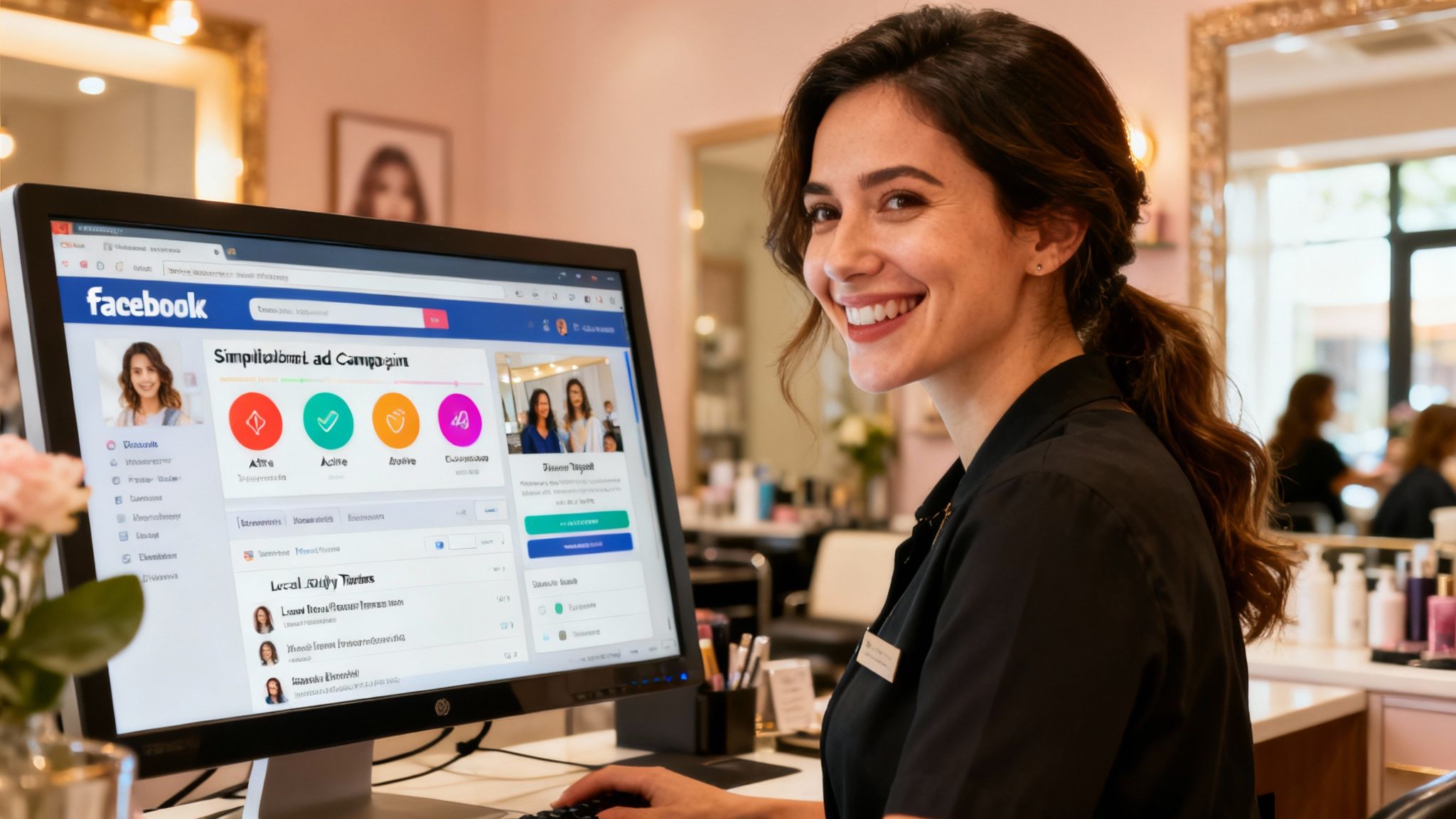
Launching is only the beginning. The best salon ad results come from monitoring, learning, and improving. You don’t need constant tweaks—just consistent attention and small, smart adjustments.
Understanding Key Performance Metrics
You don’t have to track everything. Focus on what indicates meaningful progress:
CTR (Click-Through Rate): shows whether your ad is interesting enough to act on.
CPC (Cost Per Click): helps you understand efficiency when comparing ads.
Cost per result: the most practical metric (cost per enquiry, cost per booking).
Conversions: the clearest signal that ads are driving business outcomes.
Reach and impressions help you understand delivery. However, don’t chase numbers that don’t connect to bookings or enquiries.
Testing And Refining Your Ad Campaigns
Improvement comes from testing one change at a time. That way, you know what caused the result.
High-impact tests for salons include:
a different image (results photo vs salon environment),
a different hook line (problem-led vs outcome-led),
a different offer framing (consultation vs package),
a different call-to-action (message vs booking link).
Let a test run long enough to gather meaningful data. If you change things too quickly, it becomes hard to know what’s actually working.
The Importance Of Consistent Monitoring
Set aside a short weekly review slot (even 20–30 minutes) to check performance. Look for patterns:
Which ads produce the best enquiries?
Which audiences respond most?
Which offers lead to actual bookings rather than curiosity clicks?
Over time, this creates a repeatable “playbook” for your salon—so ads become less stressful and more predictable.
Metric | Campaign A (Original) | Campaign B (Optimised) |
|---|---|---|
Reach | 5,000 | 6,500 |
CTR | 1.5% | 2.2% |
Conversions | 15 | 25 |
Cost Per Result | £12.00 | £9.50 |
This kind of consistent attention means your ad spend is always working as hard as possible for your beauty salon, bringing in those new clients and keeping your business thriving.
Wrapping Up Your Facebook Ad Journey
Running Facebook ads for your beauty salon can feel unfamiliar at first, but it becomes manageable when you approach it step-by-step. Define your ideal client, choose a clear objective, create a strong offer with clean visuals, and keep your targeting local. After launch, focus on results that matter—enquiries, bookings, and cost per result—then refine based on what the data tells you.
Consistency wins. Small improvements made regularly will almost always outperform occasional big changes made at random.