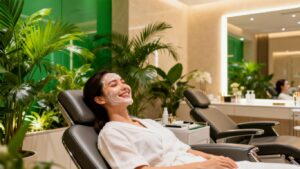
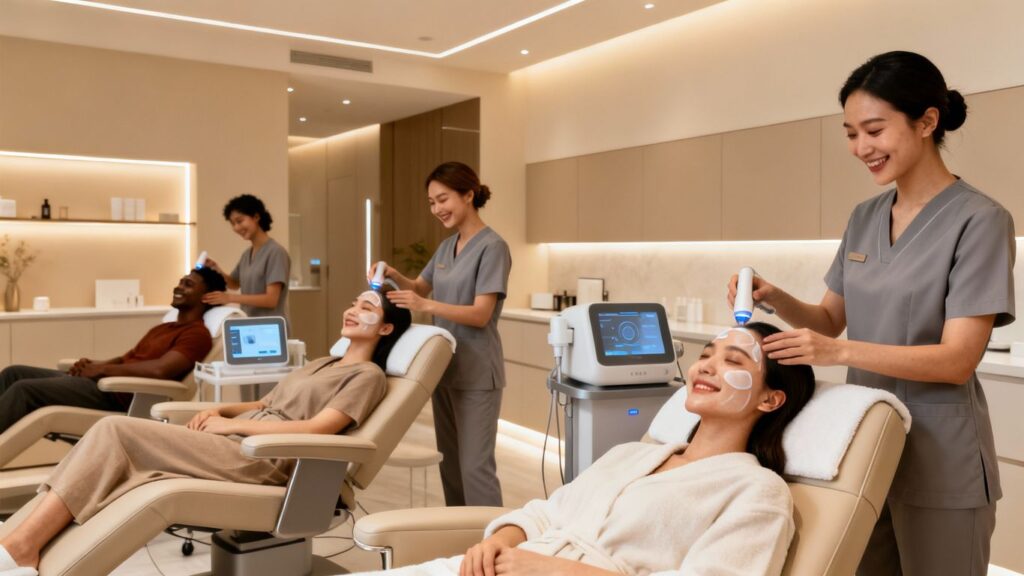
More people are looking for ways to feel confident in their appearance and support their overall wellbeing. Medspas (sometimes called medical spas) offer a wide range of aesthetic treatments designed to do exactly that—often combining a relaxing environment with clinically led services.
But delivering great treatments is only part of the picture. Many clinic owners also want to improve how patients discover the clinic, ask questions, book consultations, and follow through with their care plan. That’s where Artificial Intelligence (AI) can be genuinely useful—when it’s used thoughtfully and ethically. This article explains what med spa services are, why demand is growing, and how AI can support patient engagement, treatment planning, and clinic operations without replacing the human expertise that safe aesthetics depends on.
Key Takeaways
Medspas offer treatments focused on improving appearance and wellbeing, from advanced skin care to injectables and device-led procedures.
AI can support patient engagement by providing faster responses, better enquiry handling, and smoother booking experiences.
Some AI tools can assist with skin analysis and documentation, supporting more consistent treatment planning.
Operational AI can reduce manual admin through automated reminders, follow-ups, and structured record management.
When used responsibly, AI can help clinics attract new patients and retain existing ones through relevant, personalised communication—while keeping clinical decision-making firmly human-led.
Understanding Med Spa Services And Their Growing Appeal
What Are Med Spa Services?
Med spas—short for medical spas—sit somewhere between a traditional day spa and a clinical treatment setting. They often combine the calming feel of a spa with treatments that are delivered (or overseen) by appropriately trained medical and aesthetic professionals.
Depending on the clinic, med spa services may include:
Professional facials and medical-grade skincare guidance
Chemical peels and advanced exfoliation
Microneedling and skin rejuvenation treatments
Laser or light-based treatments (e.g., hair reduction, pigmentation support)
Injectables such as anti-wrinkle treatments and dermal fillers (where suitable and legally provided)
Body contouring or skin-tightening services (device-dependent)
What makes med spa services distinct is the focus on results-led aesthetics, often supported by consultation, assessment, and careful aftercare—rather than purely relaxation-based treatments.
The Evolving Landscape of Aesthetic Treatments
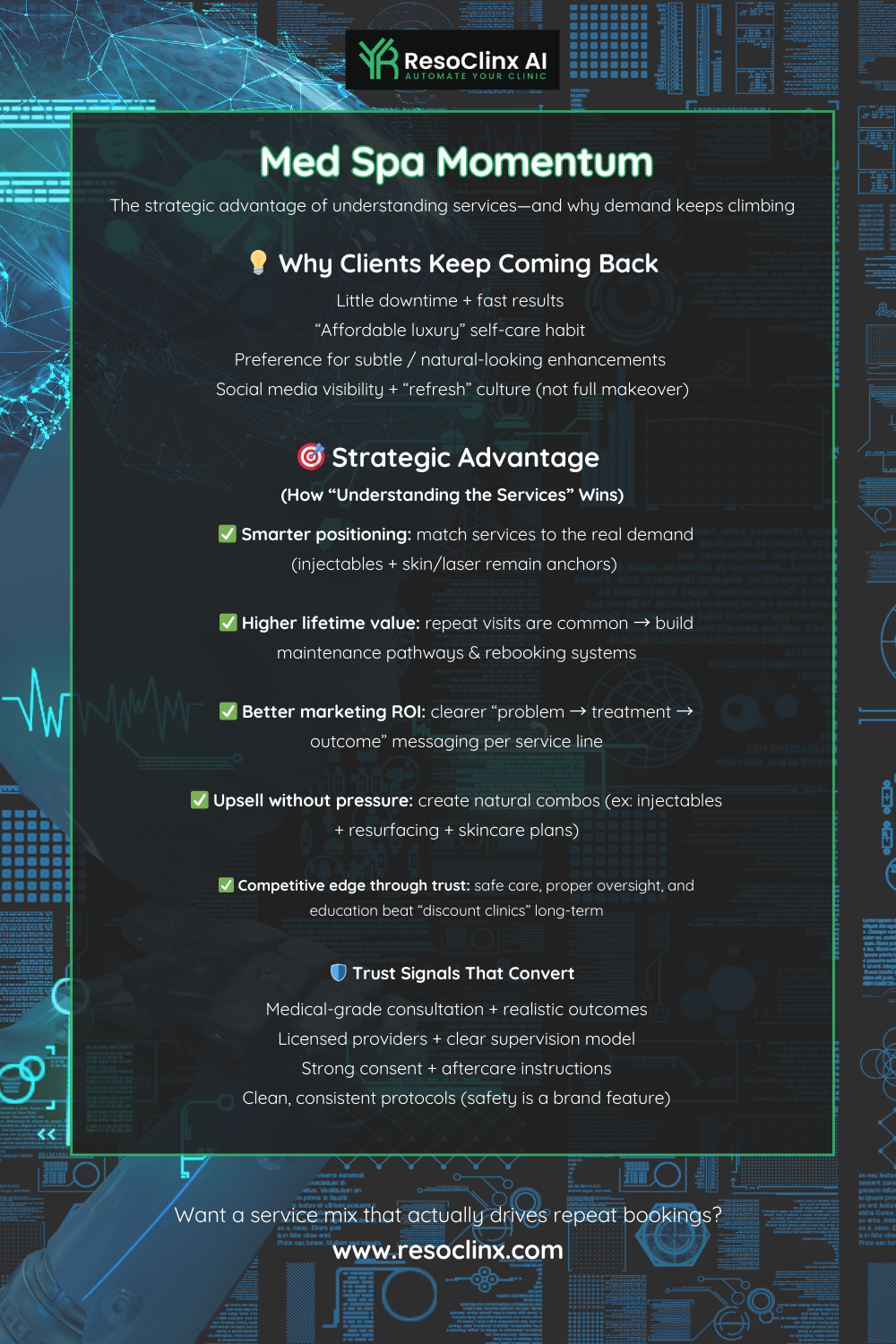
Aesthetic medicine has shifted dramatically in recent years. Treatments that once felt “exclusive” are now more mainstream, and patients are increasingly informed. Many people want subtle changes, refreshed skin, and natural-looking outcomes rather than dramatic transformations.
At the same time, new techniques and devices have created more options—often with less downtime. As a result, clinics need to keep pace with:
Emerging treatment methods and best practices
Safer, more inclusive approaches for different skin tones and concerns
Patient expectations around consultation quality and transparency
The growing importance of trust, education, and informed consent
This is exactly where technology—including AI—can help support consistent processes, better communication, and improved patient experience.
Why Clients Are Choosing Med Spas
Patients often choose med spas because they want treatments that feel both professional and personalised. Many also prefer a setting that is less intimidating than a hospital clinic, while still offering clinical standards and clear consultation pathways.
Common reasons patients choose med spas include:
Personalised care based on their skin goals and medical suitability
Access to advanced devices and medical-grade skincare
Greater confidence from trained practitioners and clinical oversight
Convenience: a “one place” setting for multiple concerns
A structured treatment journey with aftercare and follow-up support
In short, med spas appeal because they combine expertise, comfort, and outcomes—when done responsibly.
Leveraging AI For Enhanced Patient Engagement
Patient engagement starts long before a consultation. People often browse, compare, and ask questions online first. AI can support that journey by making access to information faster, clearer, and more consistent—while still ensuring that sensitive decisions remain clinician-led.
AI Chatbots For Instant Support
A patient might have questions outside clinic hours—pricing ranges, appointment types, aftercare basics, or whether a consultation is needed first. A well-designed AI chatbot can offer instant, structured answers and guide the patient to the right next step.
Done well, chat support can:
Provide 24/7 responses to common questions
Reduce repetitive enquiries reaching the front desk
Help patients feel supported rather than ignored
Direct complex or sensitive questions to the clinic team
Important note: chatbots should avoid making medical claims or giving individual medical advice. They work best when used for general guidance, service explanations, and triage to a consultation.
Virtual Consultations And AI Scheduling
As a next step after an enquiry, AI can also help make booking and consultation workflows easier. Many clinics now offer virtual consultations for suitability screening, general guidance, or initial discussions—where appropriate.
AI-supported scheduling tools can help by:
Offering appointment times based on availability and service type
Reducing booking back-and-forth
Sending confirmations and pre-visit instructions automatically
Flagging when longer appointments are needed (e.g., complex consultations)
This doesn’t replace human judgement—but it can reduce friction so patients are more likely to complete the booking process smoothly.
Personalised Treatment Plans Driven By AI
One of the most valuable uses of AI in aesthetics is supporting consistency and personalisation. Some tools can analyse structured information—such as skin assessment results, treatment history, and recorded preferences—to help a clinic suggest a logical treatment journey.
AI-assisted planning can support:
More consistent documentation and treatment notes
Recommendations that reflect patient goals and history
Better continuity across multiple appointments
Clearer long-term treatment mapping (where clinically suitable)
AI should never “decide” a medical aesthetic plan. The safest approach is to treat AI as decision support—with final clinical responsibility resting with trained practitioners.
AI-Powered Diagnostics And Treatment Optimisation
AI can also support aesthetic assessment and treatment setup—particularly where consistency and measurement matter. This is an area where clinics must be especially careful: AI can assist, but clinical judgement and patient safety always come first.

Advanced Skin Analysis With AI
Skin analysis has traditionally depended on practitioner observation, patient history, and experience. AI-supported imaging tools can help standardise assessments by measuring certain features under consistent conditions.
Depending on the platform and imaging setup, AI-assisted skin analysis may support:
Identifying patterns in pigmentation, texture, redness, or visible dryness
Comparing baseline images over time to track progress
Supporting patient education with clear visuals and measurable changes
Improving consistency across different practitioners in the same clinic
This can be particularly helpful for explaining why a plan is recommended. When patients can see structured evidence (photos, measurements, comparison views), it often improves clarity and confidence.
Optimising Laser Settings With Artificial Intelligence
Energy-based devices (like lasers or IPL) require careful parameter selection. Some tools can support clinicians by combining assessment data and treatment protocols to suggest starting ranges or highlight risk considerations.
Used responsibly, AI support can help:
Promote consistency in parameter selection
Reduce preventable errors through protocol prompts
Support safer decision-making for different skin types and concerns
That said, device settings should always be chosen by appropriately trained professionals, following manufacturer guidance, clinical protocols, and individual patient suitability. AI is best positioned as a support tool, not an “autopilot.”
Predictive Analytics For Treatment Outcomes
Predictive analytics uses patterns from historical and clinic-specific data to estimate outcomes—such as likely response, number of sessions, or risk factors that warrant extra caution.
In aesthetics, predictive tools may help clinics:
Set more realistic expectations about timelines and results
Identify when a patient may benefit from a slower or gentler plan
Improve treatment sequencing across multiple concerns
Strengthen follow-up planning and aftercare guidance
It’s important to frame predictions carefully. Outcomes in aesthetic medicine vary widely, and responsible messaging should avoid guarantees. Predictive analytics is useful for planning and communication, not certainty.
Streamlining Operations With AI Integration
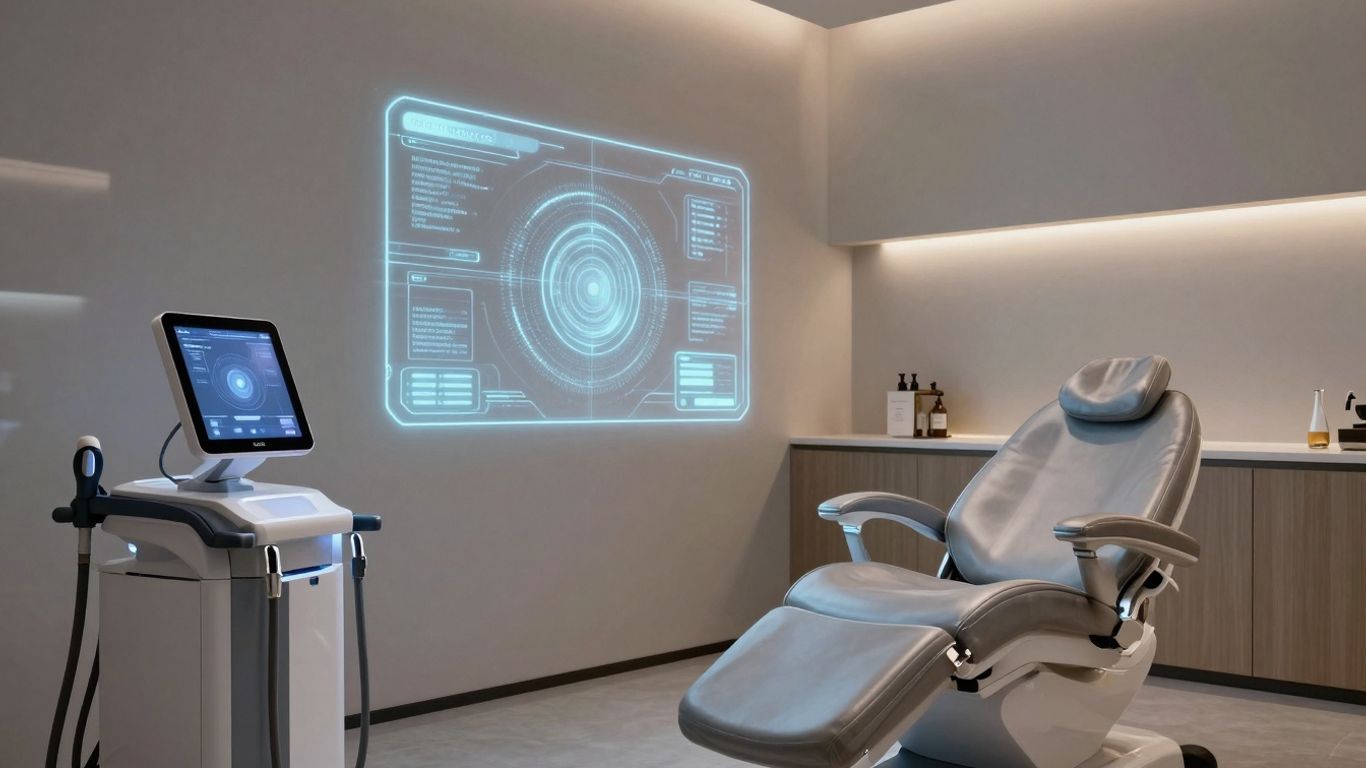
Running a med spa involves constant coordination—enquiries, appointment management, consent and documentation, aftercare instructions, stock, staffing, and more. AI can help streamline routine admin so your team has more time for patient-facing care.
AI For Efficient Patient Data Management
Patient records and consultation notes are essential—but they can also be time-consuming. AI tools can support more structured documentation and reduce manual organisation.
In practical terms, AI may assist with:
Sorting and retrieving records more efficiently
Creating consistent note templates for common services
Reducing admin workload through smart form handling
Supporting secure storage and controlled access to sensitive data
For UK-based clinics, it’s also important to ensure data handling aligns with UK GDPR and the Data Protection Act 2018, especially because health data is treated as special category information. Clear policies, staff training, and secure systems matter as much as the tool itself.
Automated Reminders And Follow-Ups
Missed appointments disrupt schedules and reduce continuity of care. Automated reminders—sent via SMS or email—can reduce no-shows and help patients stay on track.
Beyond reminders, follow-ups can support safer care by:
Checking on recovery and comfort after treatment
Sharing consistent aftercare guidance
Encouraging patients to report concerns promptly
Supporting rebooking when clinically appropriate (e.g., planned session intervals)
The key is to keep communication helpful and patient-centred, not pushy.
AI Virtual Assistants As Digital Receptionists
AI virtual assistants can act as “digital receptionists” by managing routine enquiries and guiding patients through basic steps like booking links, clinic details, or consultation explanations.
They are particularly useful for:
Handling common questions outside office hours
Reducing missed messages or enquiry backlogs
Routing sensitive enquiries to a human team member
Supporting consistent information across channels
The goal isn’t to remove human contact—it’s to ensure that when patients do reach your team, staff are free to provide warm, informed, high-quality support.
The Future Of Med Spa Services With AI

AI isn’t a single tool—it’s a category of capabilities that is becoming more common across healthcare and consumer services. In aesthetics, the clinics that benefit most will likely be those that use AI with clear boundaries, careful governance, and a strong focus on patient experience.
Emerging AI Technologies In Aesthetics
We’re already seeing developments that go beyond basic scheduling and chat. In the near future, more tools may support:
Improved imaging analysis and progress tracking
Smarter documentation and consent workflows
Better integration across booking, CRM, and clinical notes
Decision support that highlights contraindications or aftercare risks
As these tools develop, clinics will need to evaluate them based on safety, evidence, transparency, and whether the tool genuinely improves clinical and operational consistency.
The Role Of AI In Personalised Marketing
Patients don’t want more noise—they want relevance. AI can support more thoughtful communication by helping clinics understand what information is most useful at each stage: awareness, consideration, consultation, treatment, and aftercare.
Used responsibly, AI can help clinics:
Share educational content aligned with patient interests
Provide reminders for consultation steps (without pressure)
Improve the timing and relevance of communication
Support consistent, informative messaging across channels
The most effective approach is to treat marketing as education: helpful, accurate, and respectful of patient choice.
Ensuring Data Privacy And Ethical AI Use
As AI becomes more integrated into clinic workflows, privacy and ethics must remain a priority—not an afterthought.
Best practices include:
Being transparent about what data is collected and why
Using secure systems with appropriate access controls
Avoiding AI tools that store or reuse patient images without clear agreements
Keeping clinical decisions with qualified professionals
Documenting processes for complaints, corrections, and patient requests
Trust is a competitive advantage in aesthetics, and ethical AI use supports that trust.
Attracting New Patients Through AI-Enhanced Marketing
Attracting new patients isn’t about being louder—it’s about being clearer, more helpful, and easier to engage with. AI can support that by improving relevance and removing friction from discovery to booking.
Targeted Promotions Based On AI Insights
Broad, generic promotions often perform poorly because they’re not aligned with what patients actually want. AI tools can help clinics segment communication based on real behaviours—such as past enquiries, treatment interests, and appointment patterns—so messages feel more relevant.
Examples of patient-centred targeting include:
A seasonal skincare education email for people who’ve previously asked about dryness or texture
A follow-up information pack for those who enquired but didn’t book
Reminders about consultation steps (what to bring, how to prepare, what happens next)
The goal is to offer information that can attract more patients by being genuinely useful—not by being overly promotional.
AI-Driven Content Creation For Engagement
Creating consistent, high-quality content is hard—especially when clinics are busy. AI can help generate drafts, outlines, and topic ideas based on common questions. This can support education-first content such as:
“What to expect from your first aesthetic consultation”
“How to prepare for a chemical peel”
“Aftercare basics for injectable treatments”
“How many sessions might laser hair reduction take?”
AI should be treated as a starting point. Clinics should always ensure content is accurate, aligned with clinical standards, and consistent with brand tone.
Building Patient Loyalty With Personalised Offers
Patient loyalty is built through trust, results, communication, and consistency—not discounts alone. AI can help clinics maintain better continuity by supporting personalised aftercare information, reminders for planned treatment journeys, and educational follow-ups that match the patient’s goals.
Ways AI can support loyalty include:
Sending tailored aftercare reminders for specific services
Sharing education related to the patient’s ongoing plan
Prompting timely follow-up where clinically appropriate
Supporting a “known and remembered” experience through better records
When patients feel understood and supported, they are more likely to return and recommend the clinic to others.
Embracing AI for MedSpa Success
AI is not a magic solution, and it shouldn’t be used to replace the human relationship at the centre of aesthetic care. But it can help clinics work more consistently, respond more quickly, and reduce admin burden—especially in areas like enquiry handling, booking workflows, structured documentation, and patient follow-up.
If you’re considering AI, start with one practical use case (for example, appointment reminders or a chatbot for general enquiries). Measure what changes—patient satisfaction, staff workload, and operational consistency—then expand carefully. The best results come from tools that support your team, protect patient data, and keep clinical judgement exactly where it belongs: with trained professionals.