
If you run a clinic or aesthetic practice, you’re probably always thinking about how to attract more clients, reduce no-shows and keep your existing patients coming back. There are many channels available – email, social media, paid ads – but one that’s often underused in aesthetic clinic marketing is SMS.
SMS marketing gives you a direct, personal line to your patients’ mobile phones – a device most people check several times per hour. Used thoughtfully, it can support your local SEO for clinics, complement your Google Business Profile activity and help you communicate more clearly with clients at every stage of their journey.
This blog will walk you through how to use SMS in a professional, compliant and patient-friendly way, without turning your messages into constant sales pitches.
Key Takeaways
SMS marketing for clinics cuts through the clutter of emails and social media, helping your messages be seen quickly.
Clear, concise and personalised SMS messages are more likely to encourage bookings and responses.
Respecting client preferences, timing and opt-out choices builds trust and keeps your subscriber list healthy.
Using SMS for appointment reminders, follow-ups, targeted offers and feedback can significantly improve client retention and attract new patients.
Staying compliant with UK GDPR and PECR, and making use of newer SMS features, helps your clinic get the most from this evolving channel.
Harnessing SMS Marketing for Clinic Growth
Understanding the Power of Direct Communication
In today’s busy digital landscape, getting your message noticed can feel challenging. Patients are exposed to emails, social media ads and notifications all day long. SMS stands out because it offers immediacy and simplicity: most people read a text message within minutes of receiving it.
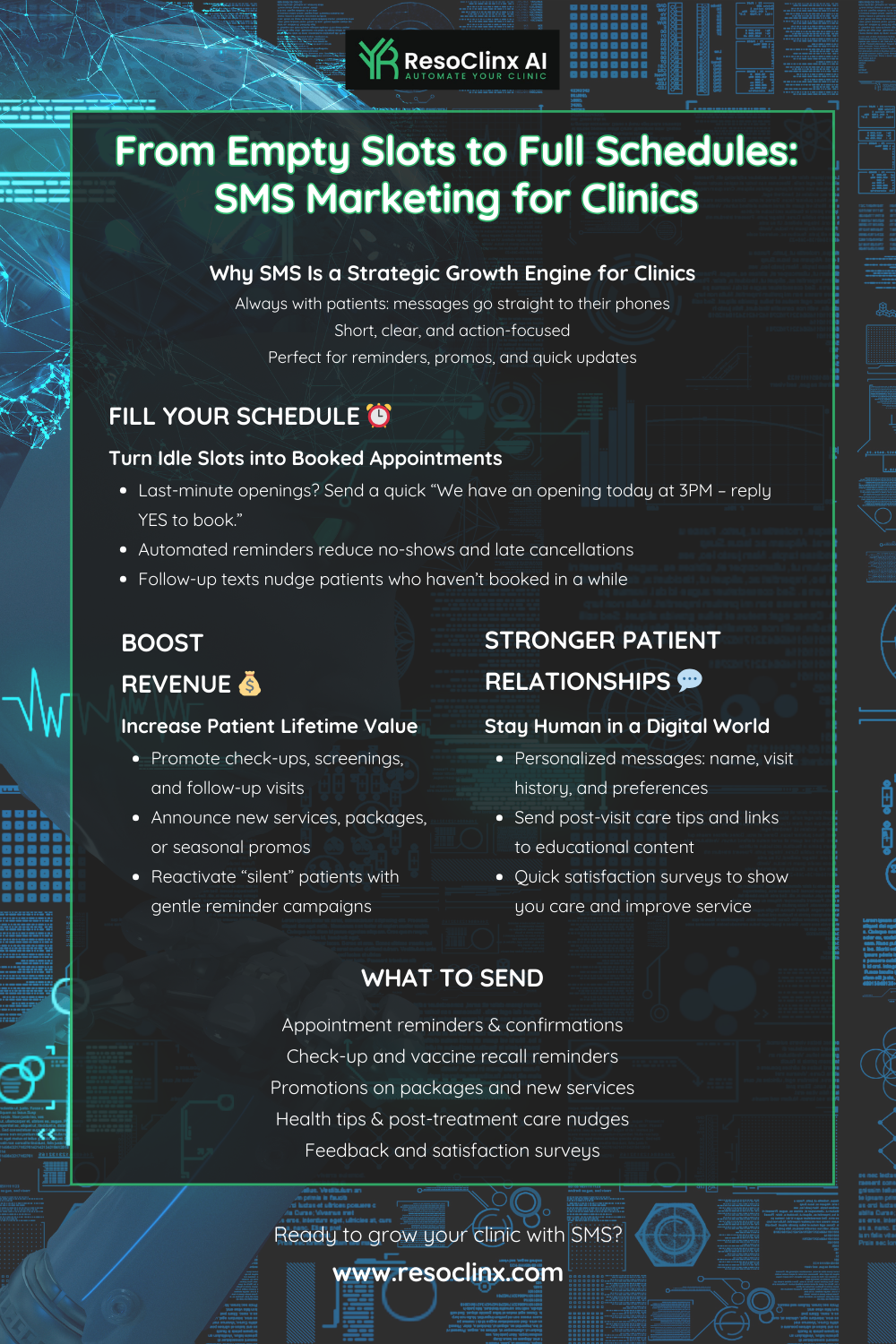
For clinics and aesthetic practices, this is especially valuable. SMS can support:
Appointment reminders that reduce no-shows.
Urgent updates, such as changes to opening hours or clinician availability.
Time-sensitive information, such as pre-treatment instructions or short-term promotions.
This directness is not only about attention – it’s also about relationships. Compared with mass emails, a well-crafted text message can feel more personal and relevant. When clients see that your messages are helpful, respectful and timely, SMS becomes part of a trusted communication routine, rather than a source of interruption.
From a broader marketing perspective, SMS also complements your Google Business Profile and other local marketing efforts. For example, after a successful treatment, you might send a brief SMS inviting the client to leave a review on your GBP listing or check your opening hours there. This keeps your local visibility and reputation aligned across channels.
Maximising Engagement with Text-Based Outreach
SMS marketing isn’t just about sending messages; it’s about encouraging meaningful actions. The format works best when the effort required from the recipient is low – a quick read, a tap on a link, or a simple reply.
When planning your SMS outreach, consider:
Relevance: Does this message genuinely matter to this client at this time?
Timing: Is this being sent at a reasonable hour and at a sensible point in their treatment journey?
Clarity: Is it instantly obvious what the message is about?
The psychology is simple: short, focused messages that arrive at the right moment feel easy to respond to. A patient glancing at their phone for a few seconds can still read your reminder, tap to confirm their visit, or click through to your booking page. That ease is what makes SMS such a powerful part of aesthetic clinic marketing.
Crafting Compelling SMS Campaigns
SMS marketing is a direct line to your clients, but to make it effective you need to send the right message, at the right time, to the right person. This section looks at how to make your SMS campaigns truly connect.
The Art of the Concise and Engaging Message
Think of SMS as a postcard rather than a long letter. You have limited space, so every word must earn its place. Long, rambling messages are likely to be skimmed or ignored.
Focus on:
Plain, accessible language – avoid jargon or overly technical terms.
One clear purpose per message – reminder, update, or specific offer.
A single, simple action – such as clicking a link or replying with one word.
Examples of concise messages:
New treatment announcement:
“New! Our revitalising facial is now available. Book your treatment today: [link]”
Limited-time offer:
“This weekend only: 20% off all injectables. Call us to book: 01234 567890”
Appointment reminder:
“Hi [Name], this is a reminder for your appointment tomorrow at 10:00. Reply YES to confirm or call 01234 567890 to reschedule.”
The most effective SMS messages are short, specific and clearly beneficial for the patient. They respect the client’s time and make it easy to take the next step.
Personalisation and Segmentation Strategies
Sending exactly the same message to every contact is a missed opportunity. Your patients have different needs, treatment histories and preferences. By segmenting your list, you can align your SMS with each client’s aesthetic goals and stage in their journey.
You might segment by:
Demographics:
Younger clients interested in acne or skin clarity.
Older clients focused on rejuvenation and anti-ageing.
Treatment history:
Clients who have had injectables and may benefit from a top-up reminder.
Clients who have had skin treatments and might be interested in maintenance plans.
Interests and concerns:
Clients who prefer subtle, natural results.
Clients focusing on specific areas (e.g. pigmentation, scarring).
Example segment-based messages:
Injectable clients:
“Hi [Name], we’re offering a special price on wrinkle-relaxing injections this month. Book your consultation here: [link]”
Skin treatment clients:
“Hi [Name], prepare your skin for summer with our advanced peel. Enjoy 15% off this month. Call 01234 567890 to book.”
Thoughtful segmentation makes your SMS feel relevant and personalised, which improves engagement and supports your wider local SEO for clinics by driving more consistent patient activity and reviews.
Incorporating a Clear Call-to-Action
Every SMS should answer the question: “What do I want the client to do next?”
A clear call-to-action (CTA) removes ambiguity. Whether you want them to confirm an appointment, book a treatment, or read important information, spell it out in simple terms.
Effective CTAs include:
Book now:
“Ready for smoother skin? Book your laser session here: [link]”
Call the clinic:
“Questions about our new treatment? Call us on 01234 567890.”
Visit your website or GBP listing:
“View our full treatment list and opening hours on our Google Business Profile: [link]”
Reply to confirm:
“Your appointment is scheduled for Tuesday at 14:00. Reply C to confirm or call us to rearrange.”
Make sure the CTA is consistent with the message and easy to follow. This directness is what makes SMS particularly useful compared with many other marketing channels.
Best Practices for SMS Engagement
Getting your SMS strategy right means more than just sending messages; it means sending the right messages, at the right time, in the right way.
Respecting Client Preferences and Timing
Most people do not want to receive marketing messages late at night or very early in the morning. As a general guideline, sending messages between 10:00 and 20:00 is usually more acceptable.
Points to consider:
Timing: Mid-morning or early afternoon often works well, for example around lunchtime.
Day of week: For weekend promotions, sending a message on Thursday or Friday gives patients time to plan.
Context: A reminder the day before an appointment is helpful; a promotional offer right after a major holiday may be less welcome.
You might also adjust timing to suit your audience. For example, if your clients are mainly working professionals, early evening messages may be more effective than early morning. Respecting timing helps your SMS feel like useful communication, not intrusion.
Balancing Promotions with Valuable Content
It’s easy to let SMS become purely promotional, but clinics that only send offers risk higher unsubscribe rates. Aim for a balance of:
Promotional messages: Special offers, seasonal packages, or new service launches.
Practical reminders: Appointment confirmations, pre- and post-treatment instructions.
Informative content: Short tips on skin care or treatment aftercare, updates on clinic hours, or changes in staff.
Engagement messages: Short feedback requests or quick surveys.
For example, alongside offers, you might periodically send:
“Hi [Name], after your treatment, remember to use SPF 30+ daily to protect your results. If you have any concerns, reply to this message or call us on 01234 567890.”
This mix reinforces your role as a trusted clinical expert, not just a marketer.
Ensuring Easy Opt-Out Options
A straightforward opt-out process is essential for both good practice and UK compliance. Patients must be able to stop receiving marketing messages easily.
Add a simple line such as:
“Reply STOP to unsubscribe.”
Honour opt-out requests promptly and keep your records up to date.
Make sure opt-out information is clear in every marketing SMS, not only in a welcome message.
This protects your clinic legally and shows that you respect patient preferences, which is vital in healthcare-focused aesthetic clinic marketing.
Leveraging SMS for Client Retention and Acquisition
SMS can support both client retention and new client acquisition when used thoughtfully. Rather than viewing it as just a reminder tool, see it as part of the end-to-end client journey.
Building Trust Through Consistent Communication
Regular, relevant communication helps build trust. Patients come to rely on your messages for reminders, guidance and updates. Over time, SMS becomes part of how they experience your brand.
Ways to build trust through SMS:
Welcome messages for new patients, setting expectations and signposting useful resources.
Service updates, such as new treatments that align with their previous choices.
Educational snippets, such as brief aftercare guidance or seasonal advice.
For example:
“Hi [Name], thank you for visiting us today. If you have any questions about your aftercare, reply to this message or call 01234 567890.”
Consistent, helpful SMS communication reinforces your clinic as a reliable and professional provider, which in turn helps you attract more clients through word-of-mouth and reviews.
Driving Bookings with Targeted Offers
Because SMS is typically read quickly, it’s ideal for time-sensitive offers. When used carefully, these messages can fill gaps in your diary and make your marketing more efficient.
Consider these examples:
Offer Type | Example Message | Potential Impact |
|---|---|---|
Birthday Special | “Happy Birthday, [Client Name]! Enjoy 15% off any treatment this month.” | Increased bookings during client’s birthday |
Last-Minute Deal | “We have a cancellation today at 2 PM! Book now and get 20% off your facial.” | Fills empty slots, generates immediate revenue |
Enhancing the Client Journey
SMS can support multiple stages of the client journey, from first booking to long-term loyalty. For example:
Post-treatment follow-up:
“Hi [Name], we hope you’re feeling well after your treatment yesterday. If you have any questions about aftercare, reply to this message or call us.”
Re-engagement campaigns:
“Hi [Name], we haven’t seen you in a while. If you’d like to review your skin plan or discuss new options, book a consultation here: [link].”
Referral programmes:
“If you’ve been happy with your treatment, you’re welcome to refer a friend. When they book, you both receive a small thank-you. Ask in clinic for details.”
Used in this way, SMS becomes a supportive touchpoint at key moments, rather than a one-off marketing blast.
Navigating Compliance and Future Trends
Adhering to Regulatory Guidelines
In the UK, SMS marketing for clinics must comply with UK GDPR, the Data Protection Act 2018 and the Privacy and Electronic Communications Regulations (PECR). These frameworks govern how you collect, store and use personal data, and how you send electronic direct marketing.
In practice, this means:
Consent where required:
Obtain clear, recorded consent before sending marketing messages, unless you are relying on a specific legal exemption.
Transparency:
Clearly identify your clinic in every SMS and explain why you’re contacting the patient.
Opt-out options:
Provide a simple way to stop marketing messages (e.g. “Reply STOP to unsubscribe”) in every marketing SMS.
Prompt action:
Honour opt-out requests quickly and update your records.
These steps are not only about avoiding regulatory issues; they also show patients that you take privacy seriously, which is crucial in healthcare settings.
Exploring Advanced SMS Features
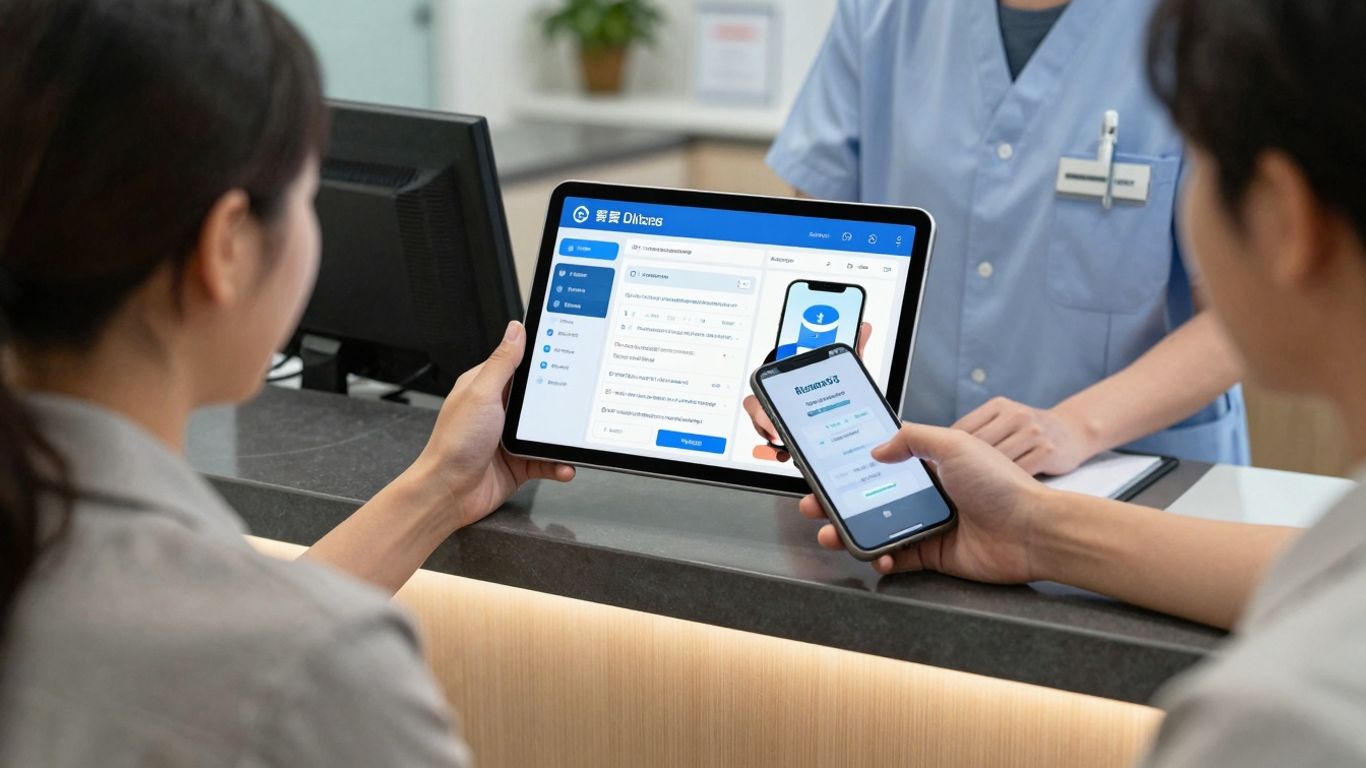
SMS has evolved beyond simple text-only messages. Depending on your platform and patient preferences, you may be able to use richer formats to improve engagement:
MMS (Multimedia Messaging Service):
Share before-and-after images, treatment details or short educational clips, where appropriate and with consent.
Short links:
Use shortened URLs to direct patients to online booking, treatment information or your Google Business Profile.
Two-way messaging:
Allow clients to reply directly to confirm appointments, ask simple questions or request a call-back.
Personalised offers:
Use client data, such as treatment history, to send tailored promotions or reminder messages.
The goal is not to use every feature available, but to choose those that genuinely improve patient experience and make your communication clearer.
Building a Robust Subscriber List
Your SMS marketing will only be as strong as the quality of your subscriber list. A smaller list of engaged, consenting patients is far more valuable than a large list of people who did not actively opt in.
Ways to grow a healthy list:
Online booking forms:
Include a clear SMS opt-in checkbox, explaining what clients can expect (e.g. reminders, post-treatment advice, occasional offers).
In-clinic sign-up:
At reception, use a simple form or tablet to let clients update their contact and preference details, including SMS consent.
Post-treatment follow-up:
When patients share positive feedback, ask if they’d like to receive SMS updates and reminders.
Always record how and when consent was given and review your list periodically to remove outdated or inactive records. A well-maintained, permission-based list is one of the most valuable assets in aesthetic clinic marketing.
Your Next Steps with SMS Marketing
SMS marketing can play a meaningful role in how your clinic communicates with patients. Used well, it provides a direct, personal channel for appointment reminders, aftercare guidance and carefully targeted offers that support long-term client relationships.
Rather than treating SMS as a standalone tactic, see it as part of a wider digital strategy that includes:
A strong Google Business Profile with accurate information and regular updates.
Local SEO for clinics, so patients can easily find you when searching for treatments in your area.
A clear, user-friendly website and booking system.
Focus on consent, relevance and timing, monitor how patients respond, and refine your approach over time. When SMS is used thoughtfully, it becomes a reliable, low-friction tool for improving patient experience and supporting sustainable growth for your aesthetic practice – without turning your communication into constant sales messaging.