
Getting patients back through the door after a long gap can feel challenging. It is easy to pour all your energy into attracting new faces, but there is often a goldmine in your existing patient list. This guide focuses on how to re-engage ‘lost’ patients with a structured, ethical campaign to reactivate dormant patients. It is not about gimmicks or pressure; it is about smart aesthetic clinic marketing, sustainable growth, and building genuine long-term relationships.
Key Takeaways
Dormant patients are a major opportunity – they already know your clinic and may only need a reminder to rebook.
Reactivation is often more cost-effective than acquisition – it usually costs less to bring back an existing patient than to attract a completely new one.
Segmentation and personalisation matter – tailoring your messages and offers to different patient groups makes your reactivation campaign far more effective.
Use multiple communication channels – combining email, SMS, phone calls, and sometimes direct mail helps you reach more patients in the way that suits them best.
Track your results carefully – monitoring metrics like reactivation rate, revenue and ROI ensures you understand what is working and where to adjust.
Understanding The Value Of Dormant Patients
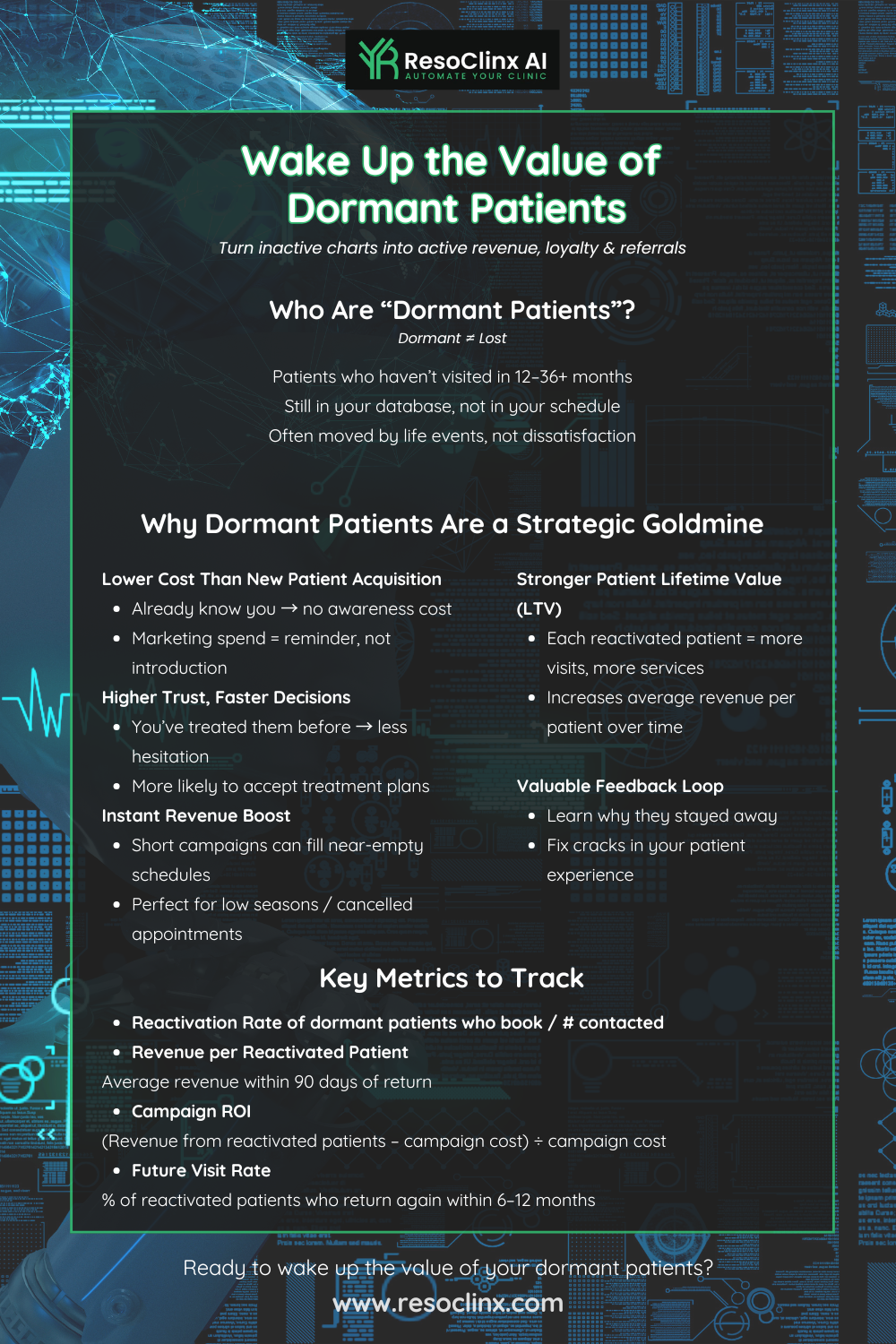
It’s easy to get caught up in chasing new clients, but there is often untapped value within your existing database. Your existing patients – especially those who have not visited for a while – are incredibly important. Reactivating dormant patients is usually far more cost-effective than trying to attract more clients from scratch.
These patients:
Already know your clinic and your team
Have experienced your treatments
Have at least some level of trust in your standards and results
Because of this, the barrier to booking is lower. Bringing them back into the fold typically requires a well-timed, relevant prompt, rather than an entirely new marketing push. For aesthetic clinics, where trust and safety are central, building on existing relationships is often one of the most effective ways to grow.
Identifying Your Lost-To-Follow-Up Patients
First things first, you need to know who your dormant patients actually are. These are patients who have not booked an appointment beyond their recommended follow-up date and who do not have any upcoming bookings.
You can usually identify them via your patient management or booking system by looking for patients who:
Have not had a treatment or consultation within a specific timeframe (for example, the last 12–18 months)
Do not have any future appointments scheduled
May have missed, cancelled, or repeatedly rescheduled without rebooking
Here’s a simple way to start identifying them:
Review your patient database: Filter for patients with no appointments booked in the last 12–18 months.
Check treatment history: See who has not returned for a recommended follow-up or maintenance treatment.
Note cancelled or no-show appointments: These patients might benefit from a gentle, supportive reminder to rebook when it suits them.
By defining what “dormant” or “lost-to-follow-up” means for your clinic, you create a clear group you can focus your reactivation efforts on.
The Financial Impact Of Inactive Clients
Inactive clients represent missed and preventable revenue. Over time, a significant percentage of patients will naturally become inactive. If you are not actively trying to bring them back, that income simply disappears.
Consider a simplified example:
Patient Status | Average Spend Per Visit | Potential Annual Revenue (per 100 patients) |
|---|---|---|
Active Patient | £250 | £25,000 |
Dormant Patient (Reactivated) | £200 | £20,000 |
Even if reactivated patients spend slightly less per visit, the cumulative value is substantial when you look at the volume across your full database. If you have hundreds (or even thousands) of inactive patients, a well-run reactivation campaign can have a significant impact on annual turnover.
Why Reactivation Outperforms Acquisition
Acquiring new patients involves more effort and higher costs. You are:
Competing for attention in a crowded market
Building trust from scratch
Often investing in paid advertising, content, and other marketing activity
Reactivating existing patients, however, means you are working with warm leads who already have a relationship with your clinic. The cost of re-engaging a past patient is typically much lower than acquiring a brand-new one.
Reactivation is about:
Nurturing relationships you have already built
Reminding patients why they chose your clinic in the first place
Helping them continue their treatment journey safely and confidently
As a result, reactivation is often a more efficient and more profitable strategy for growing your aesthetic clinic while maintaining high clinical standards.
Crafting Your Reactivate Dormant Patients Campaign
So, you’ve identified your dormant patients – those who haven’t booked an appointment in a while. Now it is time to build a structured campaign to bring them back.
This is not about sending out generic emails to your entire database. Instead, it is about a thoughtful, strategic approach that fits within your overall aesthetic clinic marketing plan. Think of it as reconnecting with people who already know and trust your clinic, and giving them a clear reason to return.
Defining Campaign Goals And Objectives
Before you send a single message, you need to be clear about what you want to achieve. Clear goals will shape your campaign and make it easier to measure success.
Examples of goals and objectives include:
Increase appointment bookings:
Aim for a specific percentage increase in appointments from your dormant list within a set timeframe (for example, a 15% increase over the next quarter).Boost revenue from dormant patients:
Set a target for total revenue generated from reactivated patients over a defined period (for example, £10,000 in the next six months).Re-engage specific patient segments:
Focus on bringing back patients who have not had a particular treatment in over a year, or those who previously booked high-value services.
Defining clear, measurable objectives ensures your campaign is purpose-driven rather than ad-hoc.
Segmenting Your Patient Database
Not all dormant patients are the same. Some may simply have been busy, while others may have:
Moved to a competitor
Changed their circumstances or priorities
Lost track of their treatment maintenance schedule
Segmenting your database allows for a more targeted and effective approach.
Useful segmentation categories include:
Last Appointment Date:
Group patients based on how long it has been since their last visit (for example, 6–12 months, 12–24 months, over 24 months).Treatment History:
Segment by treatment type. Someone who had anti-wrinkle injections may respond differently to a message than someone who booked a skin treatment or facial.Patient Value:
Identify your high-value patients – those who spent more or visited more frequently – and consider a slightly more personalised or premium approach.Engagement Level:
Look at whether they opened your previous emails, clicked links, or never engaged at all. This helps decide how warm or cold the relationship is.
This level of segmentation helps you craft more relevant, personalised messages that feel appropriate and considered rather than generic.
Personalising Your Outreach Strategy
Once you have segmented your list, it is time to personalise your communication. Generic messages rarely cut through, particularly in an industry where trust and personal care are so important.
Consider:
Using their name and treatment history:
“We noticed it has been a while since your last [specific treatment], and we wanted to check in to see how you are getting on.”Acknowledging their preferences:
If you know they prefer a particular practitioner, clinic location, or treatment type, mention it.Tailoring offers to each segment:
For example, you might provide a review appointment or a treatment plan update for injectable patients, or a seasonal skin package for skincare patients.
Personalisation shows that you see them as a person, not just a number on a list, which makes it much more likely they will respond positively.
Effective Communication Channels For Reactivation

So, you’ve got your list of patients who haven’t been in for a while. Now the question is how to reach out in the most effective way. Different patients will respond best to different channels, and for most clinics a multi-channel approach works well.
Combining email, SMS, phone calls, and sometimes direct mail allows you to:
Meet patients where they are most comfortable
Reinforce your message without being intrusive
Provide options for quick responses and easy booking
Leveraging Email And SMS Campaigns
Email and SMS are your primary tools for quick, efficient communication with dormant patients. They are ideal for:
Appointment reminders
Carefully selected offers or updates
Educational content or clinic news
Links to online booking pages or your Google Business Profile (GBP) listing
Some practical tips:
Emails:
Use emails for more detailed information, such as explaining a new treatment, sharing a blog post, or outlining a treatment review pathway.
Include clear calls-to-action, such as “Book your appointment online” or “Reply to this email to arrange a review”.
SMS:
Reserve SMS for short, important messages such as appointment reminders, schedule changes, or a brief prompt to rebook.
Keep the tone professional but friendly and always include a clear action (for example, a booking link or number to call).
It is important not to bombard patients with too many messages. A well-timed, relevant email or SMS is far more effective than frequent but generic communication.
The Power Of Personalised Phone Calls
While automation is helpful, a personal phone call can be especially powerful when reconnecting with inactive patients. This is often the most effective method for:
High-value patients
Long-standing patients
Individuals who may have specific concerns or questions
A good call allows you to:
Build rapport:
Have a real conversation and show genuine interest in their wellbeing and treatment outcomes.Address concerns directly:
Answer questions about results, side effects, or new treatment options in a calm, professional way.Provide personalised guidance:
Discuss appropriate next steps, maintenance plans, or updated treatment options.
A well-handled phone call feels human, supportive, and respectful, which is essential for maintaining trust in an aesthetic setting.
Utilising Direct Mail And Special Offers
In a world dominated by digital communication, a thoughtfully designed physical letter or postcard can stand out. Direct mail can be particularly effective when:
You want to signal something special, such as a new clinic opening, new technology, or a limited seasonal package
You are targeting patients who are less responsive to email
You want to create a sense of care and attention through a tangible piece of communication
For example:
A postcard reminding them about the benefits of maintenance treatments
A letter inviting them to a treatment review consultation, with clear, non-pushy information
Direct mail adds a layer of personal touch that complements your digital activity and can support both reactivation and broader local brand awareness.
Compelling Offers To Encourage Return Visits
Once you are back in touch, you still need to answer the question in your patient’s mind: “Why should I come back now?” Thoughtful, ethical offers can help patients make that decision.
The key is to create offers that are:
Relevant to their previous treatments and goals
Time-bound but not aggressive
Clear and easy to understand
In line with clinical safety and UK advertising guidelines
Exclusive Discounts And Packages
Well-structured discounts for returning patients can be effective when used carefully. They signal that you value their past business and would like to continue their treatment journey with them.
Examples include:
Welcome back offer:
“Welcome back to our clinic. Enjoy 15% off your next facial treatment when you book before the end of next month.”Package treatments:
“Radiant Skin Duo: Book a microdermabrasion session and receive a complimentary LED light therapy treatment for just £X.”
Packages encourage patients to commit to a plan, which can support better results and more predictable revenue, while still being patient-centred.
Loyalty Rewards And Early Access
People appreciate being recognised for their loyalty. A structured loyalty programme can reward ongoing engagement and help prevent patients from becoming dormant again.
You might:
Offer points for each treatment that can be redeemed towards future services
Provide tiered benefits (for example, added perks after a certain number of visits)
Give existing patients early access to new treatments or events
Example ideas:
Loyalty perk:
“Book 5 treatments, get your 6th at half-price.”Early access:
“Be the first to try our new vitamin C infusion facial – early access appointments available to returning patients this month.”
These approaches help patients feel like valued members of your clinic community, not just occasional customers.
Birthday Treats And Special Occasion Offers
Simple, personal touches go a long way. Acknowledging a patient’s birthday or other key occasions is a respectful way to reconnect.
You might offer:
A birthday-month voucher towards treatment
A complimentary add-on, such as a mask or LED session with a booked treatment
A seasonal refresh package for times of year when patients often reassess their skincare, such as spring or post-holiday
Examples:
Birthday offer:
“Happy Birthday from all of us at the clinic. Enjoy a £20 treatment voucher this month as a thank you for choosing us.”Seasonal special:
“Spring Refresh Package: A revitalising skin peel and hydrating mask for just £X throughout April.”
The aim is to make patients feel remembered, not pressured, and to gently remind them of the benefits they enjoyed previously.
Measuring The Success Of Your Reactivation Efforts
Once your reactivation campaign is live, it is crucial to understand whether it is actually working. It is not enough to send messages and hope for the best. You need to track the numbers so you can refine your approach over time.
Good measurement helps you:
Identify which tactics are most effective
Decide where to invest more time and budget
Demonstrate the return on your marketing efforts
Key Performance Indicators For Campaigns
There are several key performance indicators (KPIs) worth monitoring:
Reactivation rate:
The percentage of dormant patients contacted who book an appointment or return for a service. This shows how effective your outreach is.Conversion rate:
The proportion of patients who respond to your campaign and actually complete a booking or treatment.Appointments scheduled:
A straightforward count of how many bookings can be directly attributed to your reactivation efforts.Patient retention rate (post-reactivation):
Of those who return, how many continue to book over the following months? This shows whether your engagement strategies are working long term.Cost per reactivation:
Total campaign cost divided by the number of successfully reactivated patients. This helps you compare reactivation with other marketing activities.
Tracking these KPIs provides a clear, objective picture of how well your campaign is performing.
Tracking Revenue And ROI
Ultimately, a successful reactivation campaign should increase revenue in a sustainable way. Keep an eye on:
Total revenue generated from reactivated patients:
Include income from their initial return visit and, if you wish, any follow-up treatments within a defined period.Average revenue per reactivated patient:
This helps you understand their typical value and refine your offers accordingly.Return on Investment (ROI):
Calculate this by taking the profit generated from reactivated patients, subtracting the campaign cost, and dividing by the campaign cost.
For example:
If your campaign cost £500 and brought back patients who generated £2,500 in revenue, your ROI would be:
(£2,500 − £500) ÷ £500 = 4
In other words, for every £1 spent, you received £4 back.
This sort of calculation helps you judge whether your reactivation strategy is financially sound.
Utilising Patient Reactivation Software
Manually tracking all these metrics can become complex as your clinic grows. Patient reactivation or practice management software can streamline the process by:
Automatically identifying patients who have not booked within your chosen timeframe
Sending automated, personalised emails or SMS based on your rules
Integrating with your online booking system
Providing dashboards that show key KPIs and revenue figures
Good systems also help you manage appointment reminders, recall schedules and consent documentation, making it easier to maintain both efficiency and compliance. The end result is less manual work for your team and clearer visibility of what is actually driving reactivation.
Sustaining Patient Engagement Post-Reactivation
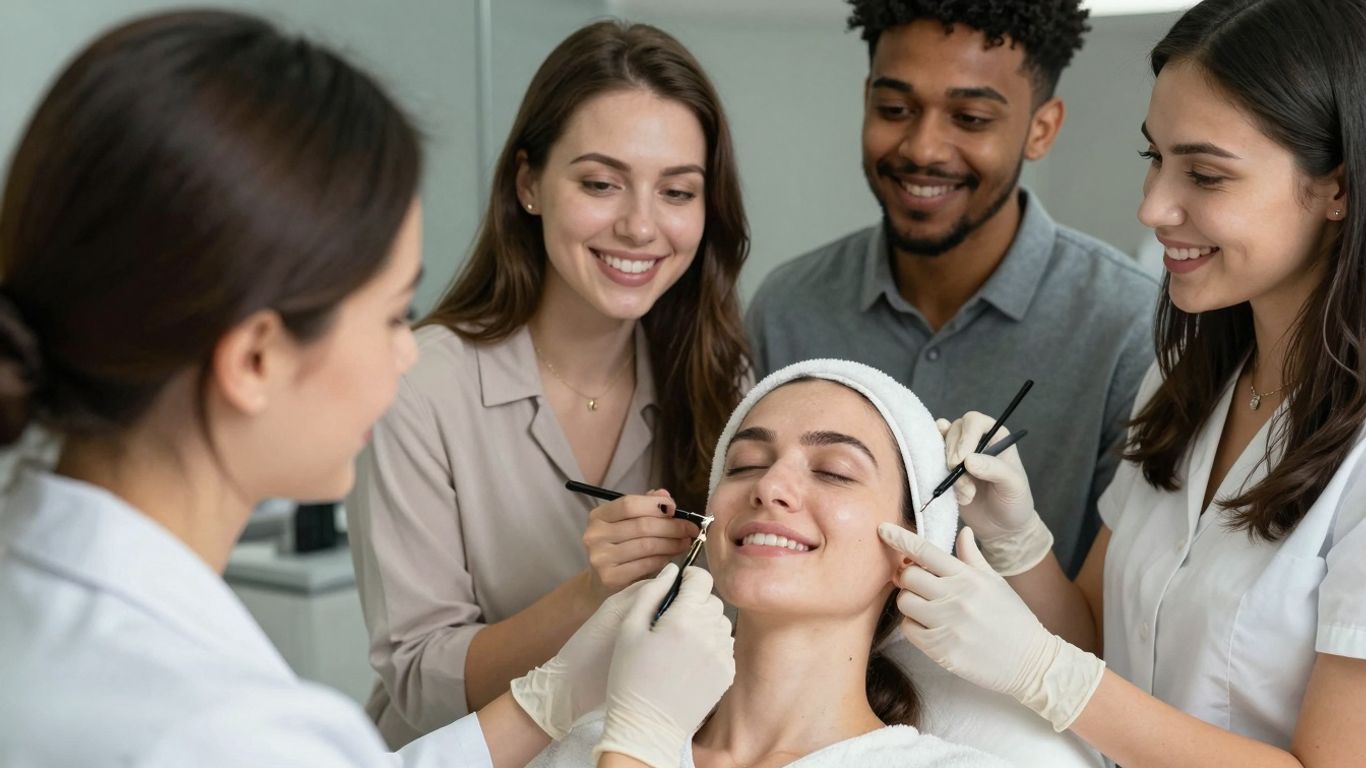
So, you’ve successfully brought some patients back into the fold. That is an excellent step – but the job is not finished. Keeping them engaged is where you see long-term benefits for both your patients and your clinic.
After a successful reactivation, the focus should shift from one-off bookings to ongoing relationships. The aim is to make it natural for patients to return when they need maintenance, follow-up or new treatments.
Implementing Ongoing Communication Strategies
Think of your reactivated patients as a garden you have just brought back to life. Now you must maintain and nurture it.
Helpful ongoing communication strategies include:
Regular newsletters:
Share clinic updates, new technologies, team news, and evidence-based skincare advice. Keep the content educational and relevant rather than overly promotional.Personalised check-ins:
A brief email or SMS after treatment to see how they are doing shows you care about outcomes and comfort, not just bookings.Appointment reminders and recalls:
Automated reminders for upcoming appointments and recall messages when it is time for a review or maintenance treatment help reduce attrition.Educational content:
Provide guidance on post-treatment care, skin health, and treatment options. This positions your clinic as a trusted source of information, not just a provider of procedures.
By staying in touch in a measured, respectful way, you reduce the likelihood of patients slipping back into inactivity.
Encouraging Reviews and Referrals
Happy patients are powerful advocates. Encouraging them to share their experiences can support both reactivation and local SEO for clinics.
You can:
Ask for reviews at appropriate times:
After a successful treatment and follow-up, politely ask if they would consider leaving a review on your Google Business Profile or another appropriate platform. Provide simple instructions or a direct link.Highlight the value of honest feedback:
Emphasise that reviews help other patients make informed choices and help you continually improve your service.Introduce a referral incentive (if appropriate):
Offer a small, transparent thank-you (such as a modest treatment credit) for patients who refer friends or family, ensuring any scheme complies with UK advertising and regulatory guidelines.
These actions help build social proof and make it easier for both dormant and new patients to feel confident when choosing your clinic.
Maintaining a High Standard of Care
Ultimately, the best way to keep patients coming back is to consistently deliver excellent clinical care and patient experience. Every stage of their journey matters – from first enquiry through to aftercare.
Focus on:
Consistent treatment quality:
Ensure all practitioners are appropriately trained, insured, and up-to-date with current best practice and guidance.Thorough, personalised consultations:
Take time to understand each patient’s goals, medical history, and expectations. Offer realistic advice and treatment plans.Clear, proactive aftercare:
Provide written and verbal aftercare instructions, along with a clear route for patients to contact the clinic if they have concerns.A calm, professional environment:
From reception to treatment rooms, ensure the clinic feels welcoming, clean and safe.
When patients feel consistently well cared for, they are more likely to stay engaged, follow treatment plans, and recommend your clinic to others.
Bringing Patients Back: A Smart Move
So, we’ve talked about how getting those old patients back through the door isn’t just a nice idea; it is genuinely a smart business move. It is typically more cost-effective than finding new patients, and you are working with people who already understand and trust your clinic.
By combining:
Clear goals
Thoughtful segmentation and personalisation
Multiple communication channels
Ethical, relevant offers
Robust measurement and continuous improvement
you can design a reactivation campaign that supports both patient outcomes and clinic sustainability. Rather than relying solely on constant new patient acquisition, you are making the most of relationships you have already worked hard to build.