
Thinking about what clients expect at a med spa consultation – and how you can use that process to attract more clients? For many people, the consultation is their first real step towards their aesthetic goals, and for your clinic it’s a crucial moment to build trust, demonstrate expertise and support your wider aesthetic clinic marketing strategy.
A consultation is not just about booking a treatment. It’s about giving clear, ethical advice, checking that a client is suitable, and setting realistic expectations. When this process is structured, consistent and supported by AI and digital tools, it becomes easier to manage, easier to scale and far more effective.
In this guide, we’ll walk through what typically happens at a med spa consultation, how your team can manage it with confidence, and how technology – including AI, CRM and your Google Business Profile (GBP) – can support a better experience for both you and your clients.
Key Takeaways
- A thorough consultation involves understanding a client’s medical history and analysing their skin to create a safe, personalised treatment plan.
- Clear communication about realistic outcomes, procedure details, and potential risks is vital for managing expectations and supporting informed consent.
- Technology, including AI for appointment setting, virtual consultations and better data management, is making the initial med spa experience more accessible, efficient and client-friendly.
- Post-consultation steps should include clear aftercare advice, support with scheduling treatments, and guidance on follow-up and ongoing care.
- A well-executed consultation process, supported by team training, client feedback and consistent messaging, contributes significantly to a med spa’s reputation, client satisfaction and long-term success.
Understanding The Initial MedSpa Consultation

Setting the Stage for Success
Getting the initial consultation right is the foundation of a successful med spa. It is far more than a quick chat. It is your first opportunity to:
- Connect with a potential client
- Understand their concerns and goals
- Demonstrate your clinical expertise and professionalism
Think of the consultation as a handshake that sets the tone for everything that follows. A well-managed consultation:
- Builds trust from the outset
- Helps clients feel heard and understood
- Supports a consistent client journey, from enquiry through to aftercare
When your consultation process is structured and repeatable, it also becomes a powerful asset in your local SEO for clinics and broader aesthetic clinic marketing. Clients who feel looked after from day one are more likely to return, refer and leave positive reviews.
What to Expect During Your First Visit
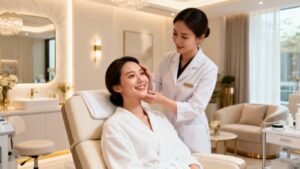
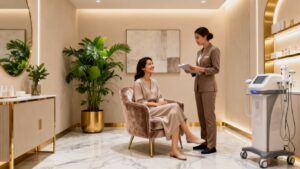
When a new client arrives for their first consultation, there is typically a clear, repeatable process. From the client’s perspective, it often includes:
- Initial paperwork
Clients complete forms that cover their medical history, allergies, current medications, and the treatments or concerns they are interested in. - One-to-one discussion
You or a trained team member have a structured conversation with the client to explore:- Their main concerns and goals
- Any previous treatments
- Timescales and budget
- Lifestyle factors that may affect treatment choices
- Information and questions
Clients will usually want to know:- What treatment options are available
- What results they can realistically expect
- How long results may last
- What the costs and timelines will be
It is very much a two-way interaction. The client is assessing whether they trust your clinic, and you are assessing whether you can safely and effectively help them.
Your Role in a Productive Consultation
Your role – or your team’s role – in making a consultation productive is significant. A strong consultation is built on:
- Preparation – reviewing forms and any previous notes in advance
- Active listening – not just waiting to speak, but really hearing the client’s concerns
- Honesty and clarity – being realistic and straightforward about outcomes, risks and costs
- Education, not pressure – focusing on explaining options rather than “selling” a specific treatment
A good consultation is not just about filling the diary. It is about educating the client, protecting their safety and building a long-term relationship based on trust.
| Aspect of Consultation | Key Actions |
|---|---|
| Preparation | Review client intake forms beforehand. |
| Engagement | Ask open-ended questions about goals and concerns. |
| Information | Clearly explain treatment options, benefits, and risks. |
| Expectation Setting | Discuss realistic outcomes and timelines. |
The Crucial Role of Client Assessment
Getting to know your client properly is the first major step in recommending the right treatments. It is not about booking them in for the most expensive service. It is about understanding:
- What they actually need
- What is clinically appropriate
- What will realistically work for their skin and lifestyle
A thorough assessment is one of the clearest ways to show that your med spa is professional, ethical and safety-focused.
Detailed Medical History Review
Before any treatment begins, it is essential to go through a client’s medical background in detail. This is not just a formality. It can highlight important factors that may affect:
- Their suitability for certain procedures
- Their recovery time
- The risk of complications
Key areas include:
- Allergies: Knowing about sensitivities (for example to certain medications, ingredients or anaesthetics) helps avoid adverse reactions.
- Medications: Some medicines can affect healing, bruising, or interact with certain treatments.
- Medical conditions: Conditions such as diabetes, autoimmune disorders or bleeding disorders require careful consideration and sometimes consultation with the client’s GP.
- Previous treatments: Understanding what they have had done before – and how they responded – helps inform a safer and more realistic plan.
A structured medical history review supports informed consent and demonstrates that your clinic prioritises safety over sales.
Comprehensive Skin and Condition Analysis
Once the medical history is clear, the next step is a detailed skin assessment. This should be more than a quick glance. Using good lighting, appropriate tools and, where relevant, photography helps you make an accurate evaluation.
A strong analysis might include:
- Skin type identification: Is the client’s skin oily, dry, combination or sensitive?
- Fitzpatrick scale assessment: Understanding how their skin reacts to sun exposure is vital for treatments such as lasers and peels.
- Condition assessment: Identifying issues such as acne, rosacea, hyperpigmentation, or signs of ageing.
- Texture and tone: Looking at smoothness, pore size, fine lines, and overall evenness of complexion.
This stage also presents an opportunity to educate the client about their skin, which supports your positioning as a trusted expert rather than just a treatment provider.
Tailoring Treatment Plans to Individual Needs
With the client’s medical history and skin analysis complete, you can begin to build a personalised treatment plan. This plan should take into account:
- The client’s goals and priorities
- Clinical suitability and safety
- Budget and timescales
- Any important events or deadlines (e.g. weddings, holidays)
An effective treatment plan will:
- Explain why certain treatments are recommended
- Clarify what results are realistic
- Outline how many sessions may be needed
- Highlight any downtime or lifestyle adjustments
This collaborative approach helps clients feel involved and informed, and it clearly differentiates your med spa as one that offers tailored, ethical care rather than one-size-fits-all packages.
Managing Client Expectations Effectively
It is easy for clients to be influenced by social media filters, celebrity treatments and dramatic “before and after” photos. Part of your role is to align expectations with what is medically appropriate and achievable for that individual.
When expectations are managed well, clients feel more satisfied, even with gradual or subtle results.
Realistic Outcome Discussions
When a client has a vision in their head, your role is to gently guide that vision towards what is clinically realistic. Key principles include:
- Be honest about what can and cannot be achieved.
- Use plain language to explain how treatments work.
- Show before-and-after photos of similar cases, while emphasising that results vary.
- Avoid “guarantees” – focus on likelihood, not promises.
- Aim to under-promise and over-deliver, not the other way round.
Realistic outcome discussions support informed decision-making and help prevent disappointment or complaints later.
Explaining Procedure Details and Potential Risks
Every treatment – even those that feel routine to you – involves steps, sensations and risks the client may not be familiar with. Taking time to explain these carefully is non-negotiable.
Consider covering:
- What the procedure involves: Break it down step by step in simple terms.
- How long it takes: Give a clear idea of the time commitment, including any numbing or preparation.
- Preparation needed: Explain what clients should do or avoid (for example sun exposure, certain skincare products or medications) before treatment.
- Potential side effects: Discuss common, mild reactions such as redness or swelling, as well as rarer but more serious risks, and explain how your clinic manages them.
A well-informed client is usually a more confident and calmer client. When people understand what to expect, they are less anxious, more cooperative and more likely to follow aftercare properly.
Building Trust Through Clear Communication
Trust is at the heart of any successful client relationship in a med spa. You build that trust through clear, consistent and empathetic communication, such as:
- Active listening: Pay attention to both the words and the underlying concerns.
- Empathy: Acknowledge worries with phrases like, “It’s completely understandable to feel nervous about that.”
- Plain language: Avoid unnecessary jargon; explain terms where needed.
- Consistency: Ensure information matches what is on your website, social media and in your written materials.
By managing expectations upfront and communicating openly about procedures and risks, you create a positive and transparent environment. This leads to more satisfied clients, fewer misunderstandings and a stronger reputation in your local area.
Leveraging Technology for Enhanced Consultations
In today’s digital landscape, clients expect convenience, clarity and quick responses. Technology can play a major role in meeting those expectations without losing the human touch.
Used thoughtfully, digital tools can:
- Streamline enquiries and bookings
- Support virtual consultations
- Help you manage data through CRM systems
- Strengthen your local SEO for clinics, especially when combined with a strong Google Business Profile
The Power of AI in Appointment Setting
Artificial intelligence (AI) can simplify the initial contact point and make it easier and quicker for clients to book a consultation. For example, AI-powered tools can:
- Answer frequently asked questions 24/7
- Help potential clients find available appointment slots that suit their schedule
- Capture basic information before they speak to a human
- Send automated reminders to reduce no-shows
This frees up your team to focus on more complex or sensitive conversations, whilst ensuring no genuine enquiry is left waiting for a response.
Virtual Consultations: A Modern Approach
Virtual consultations have moved from a novelty to a mainstream option. They:
- Remove geographical barriers, enabling you to speak to clients outside your immediate area
- Provide an option for busy clients who struggle to attend in person immediately
- Allow you to pre-qualify leads, so that in-person time is used efficiently
Virtual consultations can be particularly useful for:
- Initial treatment discussions and expectation setting
- Reviewing suitability before inviting clients in for a full assessment
- Providing follow-up advice after certain procedures
Handled well, they become part of a flexible, client-centred consultation process that supports both accessibility and efficiency.
Utilising CRM for Seamless Data Integration
A robust Customer Relationship Management (CRM) system is the backbone of a digitally enabled consultation process. It allows you to:
- Store and update client information securely
- Record consultation notes and treatment plans
- Track appointment history and communication
- Send personalised follow-up messages and reminders
When your CRM is integrated with your online booking system, AI tools and email or SMS reminders, you gain a clear view of each client’s journey. This supports:
- More consistent communication
- Better client retention
- Clearer reporting on your aesthetic clinic marketing activities
Don’t forget your Google Business Profile (GBP)
Alongside your website and CRM, your Google Business Profile is a vital part of local SEO for clinics. Make sure it includes:
- Accurate contact details and opening hours
- A clear description of your clinic and services
- High-quality photos of your premises and treatment rooms
- Regular updates and posts, for example about consultation availability or new services (without making medical claims)
Many clients will see your GBP listing before they ever visit your website, so a complete and up-to-date profile supports both credibility and discoverability.
Post-Consultation Next Steps
After a productive consultation, the next stage is to guide clients smoothly towards their first treatment and any necessary follow-up. At this point, clients should leave with:
- A clear treatment plan
- Written or digital aftercare information
- An understanding of costs, timelines and next appointments
Understanding Aftercare Recommendations
Aftercare is not an afterthought. It is an essential part of achieving safe and effective results. Your aftercare guidance might include:
- Immediate post-treatment care:
Instructions for the first 24–48 hours, such as avoiding heat, strenuous exercise, specific skincare products or make-up, and how to manage mild discomfort. - Longer-term care:
Guidance on sun protection, skincare routines, and when it is safe to resume certain activities. - What to watch for:
Clear advice about normal side effects versus warning signs, and exactly how and when to contact the clinic.
Providing aftercare in both verbal and written/digital formats helps clients remember and follow instructions. It also signals that you care about their results and safety, not just the treatment itself.
Scheduling Your First Treatment
Once a client has agreed a treatment plan, aim to make scheduling as simple as possible. Helpful approaches include:
- On-the-spot booking:
Offer to book the first treatment before they leave, using a tablet or desktop booking system. - Clear explanation of packages:
If you have treatment packages, explain them clearly so clients can decide what best suits their goals and budget. - Agreed follow-up point:
If the client needs time to think, agree on a specific time for a follow-up call, email or message rather than leaving it open-ended.
A straightforward booking process supports a smooth client journey and reduces the chance of missed opportunities.
Follow-Up and Ongoing Support
The relationship with your client does not end once the consultation is over. Well-timed follow-up can:
- Reinforce trust and professionalism
- Provide an opportunity to address questions or worries
- Reduce cancellations or no-shows
Useful follow-up touchpoints include:
- A confirmation message after the consultation summarising the agreed plan
- A reminder 24–48 hours before the first treatment, including any pre-treatment instructions
- A check-in message after treatment, asking how they are feeling and reminding them of key aftercare points
This proactive approach helps clients feel supported and cared for, and it strengthens your reputation for service and safety.
Maximising Your MedSpa’s Consultation Process
Once your basic consultation process is in place, the next step is to refine and optimise it. The goal is to ensure every client has a consistent, professional experience, regardless of who they see or when they attend.
Strong consultation processes are not just operational. They are an important part of your brand, reputation and aesthetic clinic marketing.
Training Your Team for Excellence
Your team is the face of your med spa, and their consultation skills directly impact client satisfaction and bookings. Ongoing training can cover:
- Active listening techniques: Ensuring staff genuinely understand client concerns.
- Product and treatment knowledge: So they can confidently explain benefits, limitations and risks.
- Managing expectations: Helping staff feel confident saying “that may not be the right option for you” when necessary.
- Handling objections: Providing practical responses to questions about cost, downtime or safety without pressure.
Practical methods include:
- Role-play exercises using common scenarios
- Shadowing more experienced team members
- Regular reviews of consultation forms and scripts to keep them clear and client-focused
A well-trained team does more than answer questions. They anticipate needs, clarify misunderstandings early and help clients feel genuinely looked after.
Gathering Client Feedback for Improvement

You cannot improve what you do not measure. Collecting structured feedback after consultations helps you:
- Identify strengths to build on
- Spot recurring issues that need attention
- Track changes over time as you refine your process
Simple tools such as short email or SMS surveys can ask clients to rate:
- Clarity of information
- Professionalism and friendliness
- Comfort level during the consultation
- Understanding of the proposed plan
For example, you might use a simple scale of 1–5 for specific aspects, along with one or two open-ended questions. This feedback is extremely valuable for improving both client experience and your conversion rate from enquiry to treatment.
Consider a simple rating system alongside open-ended questions. For example:
| Aspect of Consultation | 1 (Poor) | 2 (Fair) | 3 (Good) | 4 (Very Good) | 5 (Excellent) |
|---|---|---|---|---|---|
| Welcome & Greeting | ☐ | ☐ | ☐ | ☐ | ☐ |
| Information Provided | ☐ | ☐ | ☐ | ☐ | ☐ |
| Professionalism | ☐ | ☐ | ☐ | ☐ | ☐ |
| Overall Experience | ☐ | ☐ | ☐ | ☐ | ☐ |
The Long-Term Benefits of a Stellar Consultation
Investing time and resources in your consultation process has long-term benefits for your clinic:
- Increased client retention: Clients who feel heard, informed and safe return more often.
- Higher conversion rates: Clear, confident explanations and realistic outcomes encourage clients to proceed with appropriate treatments.
- Stronger brand reputation: Word-of-mouth and online reviews improve when consultations are handled professionally and consistently.
- Fewer complaints and misunderstandings: Managing expectations and documenting advice reduces the risk of disputes.
Over time, a well-structured consultation process becomes a cornerstone of a thriving med spa, supporting professional standards, client trust and sustainable growth.
Conclusion
Integrating AI and digital tools into your med spa’s consultation process isn’t about trends – it’s about making enquiries, bookings and follow-up smoother and more consistent. The foundations still matter most: clinical safety, ethical, realistic advice, clear communication and genuine respect for each client’s goals.
For UK aesthetic clinics, combining a structured consultation process with the right technology, well-trained teams, client feedback and a strong Google Business Profile is a practical way to build authority and attract the right clients, while keeping the human element of care at the centre.